Category: Flash Fiction

  • “Attica Forke” by Philip Dean Walker

    “Attica Forke” by Philip Dean Walker

    In “Attica Forke,” Philip Dean Walker treats the reader to a sensory experience centered on delicate cuisine and meandering memory—and perhaps, just the tiniest tidbit of self-indulgence. The narrative style is sly and cheeky, but also, lush and generous. Let yourself sink your teeth into this delicious flash fiction and enjoy, enjoy, enjoy.  —Court Harler


    Attica let the penne rest on her tongue. There was a fresh, buoyant, somehow elastic quality to it—the texture was firm, yet also tender. It was a quiet, unassuming pasta. Al dente didn’t quite capture its consistency, but she couldn’t think of any other way to describe it. She had not added any Parmesan cheese (emulsified with a garlic butter finish) because the chef at Scarpetta preferred that his dishes be served “naked,” which meant without any garnish added after they left his kitchen. Attica agreed.

    She rolled the penne around in her mouth. Each vertical ridge seemed to slope down farther toward an even more flavorful taste, the sauce dripping off onto the back of her tongue. A light tomato and basil sauce lent a predictable flavor and it clung nicely to the pasta, but there was something else. Some other elusive flavor. Attica tried to coax it out. There was something spring-like and victorious about the sauce that set it apart from your typical Italian pasta dish. It was innovative, yet still familiar. She concentrated harder, took another forkful, and brought it quickly to her mouth, hoping that a rough, ravenous chew might finally yield the secret ingredient. She bit down and, yes, there it was again, unmistakably.

    The taste seemed perched outside of the normal realm of saucery: that tricky task of concocting a perfectly melded, delectable sauce, something upon which any ambitious chef might stake his entire professional life—getting out of bed quietly in the morning so he doesn’t wake up his wife, coming into the restaurant early in order to amass all the necessary ingredients, the overhead kitchen lights casting a shiny tint on all the stainless steel cookery and on the floors, mopped and waxed to a royal gleam the night before because, undoubtedly, the kitchen must be the cleanest part of any restaurant, a holiness sprinkled over the place, like a recently scoured church, still giving off the lemony smell in a charwoman’s wake; and so he begins, mixing in just the right amount of ground carrots, fresh plum tomatoes, chili powder, celery salt, minced garlic cloves, cumin, dried basil, a pinch of sugar, a hint of oregano for tradition’s sake—not too much though, you don’t want to overplay it like, at first, Attica had thought her grandmother Poli had done with her own sauce, overpowering and invasive as if the Italian Army itself had lathered themselves up in it before boarding one of Mussolini’s fabled trains, before she’d come to actually appreciate Poli’s sauce for being just as obvious and wonderful as the old woman behind it—heated up at just the right temperature, bringing it all to a slow boil, red bubbles sputtering just below the placid surface, to get all the ingredients talking to each other in a language they all knew, a conversation to which they were all contributing equally, the sonorous language of the sauce, this sauce, with its goldenrod aftertaste—was that it?—its sweet, playful flavor, a taste that was almost like a garden after a warm late spring rain, the kind of gentle storm that comes abruptly out of nowhere on a sunny day and leaves behind it the flowers dewy and glistening; it was almost…rosy.

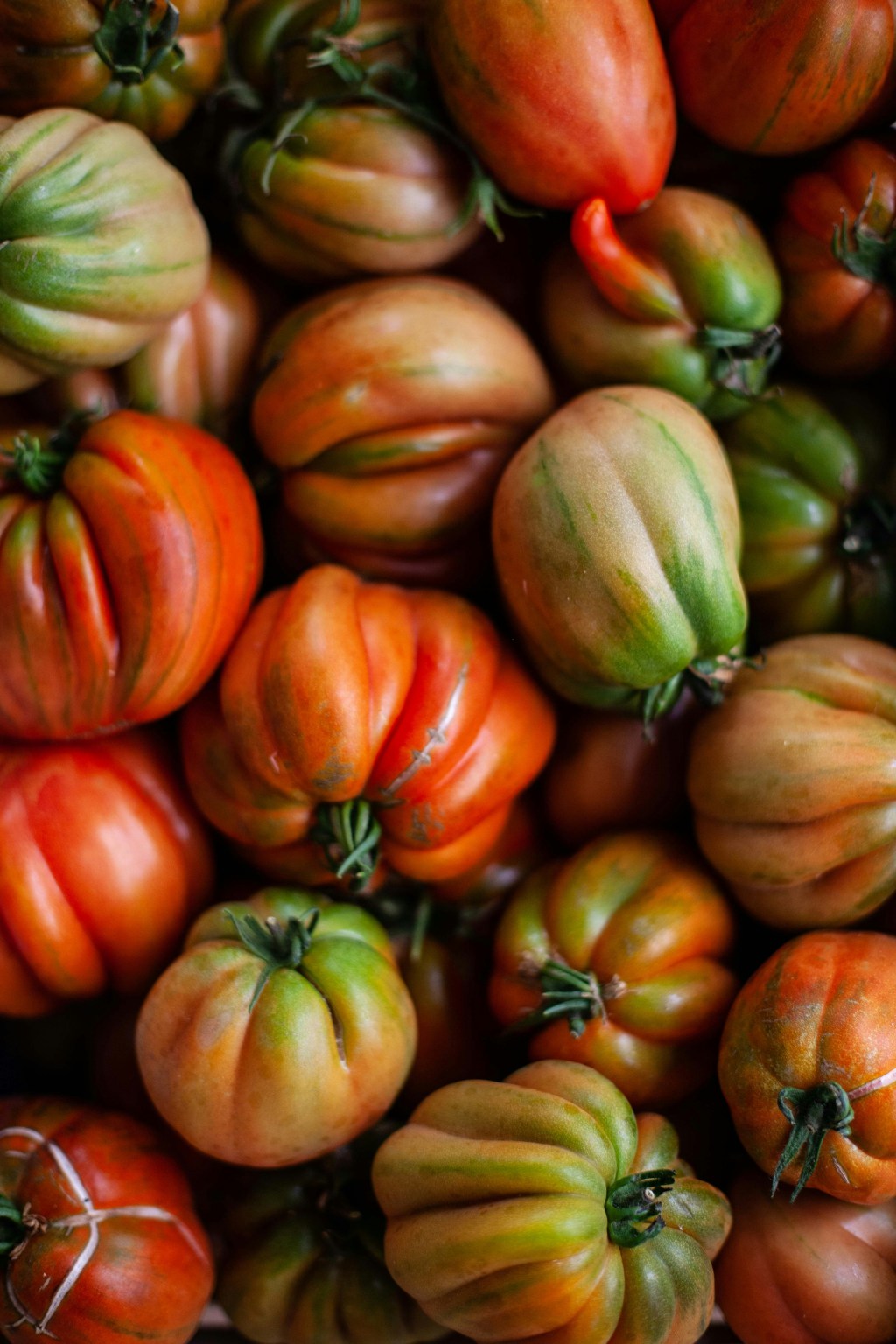
    The chef must have infused the oil for the sauce with rose petals. Rose petals and maybe even some currants? That was it, she was almost certain of it. How exquisite. Penne with rose petal-infused oil tomato and basil sauce.


    PHILIP DEAN WALKER is the author of At Danceteria and Other Stories, Read by Strangers, and Better Davis and Other Stories, all of which were named Kirkus Reviews Best Books of 2017, 2018, and 2021, respectively, with all receiving starred reviews.


    Featured image by Empreinte, courtesy of Unsplash.

  • “Fifteen Shades of Pink” by Christine H. Chen

    “Fifteen Shades of Pink” by Christine H. Chen

    In this sweet satire of a flash fiction, Christine H. Chen asks her readers to rethink the color pink. Put yourself in the “Pink Panther heels” of the “Chinatown girls,” and then ask yourself why society asks young women, especially young women of color, to be so cutely monochromatic? Chen poses this serious question in a way that playfully demands an answer.  —Court Harler


    Chinatown girls dream of poster Barbie Pink in a mermaid emerald skirt who whirls on her Hot Pink seahorse with bobbing Baby Pink jellyfish, carpets of jade waves weaving on her Blush Pink seafloor; China Rose pearls caress her Salmon Pink skin, her chest twinkles with Flamingo Rose cockles oh how Chinatown girls pine for Barbie Pink’s blond curls, how Chinatown girls bleach their black hair to yellow goldfish, how they nibble on white rice to carve curves, paint eyelids and cheeks Barbie Pink, line lips Neon Pink, how they squeal oh-my-god to each other when they wear tiaras of Crêpe Pink cloudy beads with plastic Piggy Pink peonies, how they strut imaginary catwalks on Pink Panther heels, Peach Pink conch and Punch Pink jingle shells jiggle on bony hips, their footprints like Ballet Slipper Pink limpets clinging to evanescent TikTok dreams wind blowing on sand, oh how Chinatown girls dream of Barbie Pink who gazes on from her Pastel Pink poster until paper turns to puffs of planet dust.


    CHRISTINE H. CHEN was born in Hong Kong and grew up in Madagascar before settling in Boston where she worked as a research chemist. Her fiction has appeared in CRAFT, SmokeLong Quarterly, Space and Time Magazine, as well as the Best Microfiction and Best Small Fictions anthologies.


    Featured image by Girl with red hat, courtesy of Unsplash.

  • “House Rules” by Jeff Harvey

    “House Rules” by Jeff Harvey

    Some of the best flash fiction is haunted flash fiction. “House Rules” by Jeff Harvey is shadowed by the twin spectres of childhood abandonment and abuse. The piece is driven by a coolly deceptive voice that descends from the darkness; the tone hits as supernaturally chilling, but the horrifying situation itself: all too devastatingly real.  —Court Harler


    Keep your shit locked up. Can’t trust nobody around here. Miss Kendall is okay, but she’ll hit you sometimes after she’s had too many beers. And don’t fucking cry, you’ll get it worse from the others, especially Wayne; stay away from him. Dinner always at six-thirty. Tomorrow’s Saturday so after cleaning the house and laundry, we might get to see a movie on a VHS player. Last week we watched The Breakfast Club. It was cool but nobody famous. After the movie we got lemon cookies and raspberry Kool-Aid. Miss Kendall was happy about something; I’d never seen her smile before. I got some oxy that’ll help ease the pain if you want some. Only ten bucks. And don’t ever ask about going home. That place doesn’t exist for kids like us. Only another house to bide our time.


    JEFF HARVEY lives in Southern California and edits Gooseberry Pie Lit Magazine. His fiction has been published recently by Ghost Parachute, Your Impossible Voice, and Bending Genres. His work has been nominated for Best Microfiction.


    Featured image by Nathan Wright, courtesy of Unsplash.

  • “Tar Pits” by Meg Pokrass

    “Tar Pits” by Meg Pokrass

    In “Tar Pits,” award-winning flash-fictionist Meg Pokrass takes us on a bittersweet ride in a pink convertible —only to discover that fame, like any other earthly accolade, can sink you, and your sister’s “skinny smile,” to the lowest depths. “Tar Pits” is a dexterous, provocative exploration of what it means to be a woman in the world today.  —Court Harler


    First time my big sister took me to the La Brea Tar Pits, we met an out-of-work actor wearing a wilted expression. “You’re my hope,” he said, as if he were sinking. She beamed him her smile, autograph pen in hand. “Don’t give up on your dream, my friend,” she signed, feeling funny for being spotted at the grave of the La Brea Woman’s skeleton.


    Wrapped in faded denim, my big sister’s middle-of-the-night skeleton drove us again to the tar pits. She was pretty, nobody knew she was funny. “You locked in the part,” said her agent, “because of that skinny smile.” I imagined him bowing to kiss her hand but accidentally pinching her bottom. She was soaring over pitch-black places where other actresses were sinking.


    “She was eighteen years old when she died there, asphyxiated while sinking,” she explained, nibbling carrots. Deep in her bathtub, I’d stare at my twelve-year-old skeleton. I wanted to tell her it was a bad idea to revisit those tar pits. “I can feel you wrinkling!” she’d say, rushing in, grabbing my hand, pulling me out. “I’m your La Brea Woman,” I’d sing, wanting to be funny. 


    “When playing a role, an actress is no longer a skeleton,” she said. That day her eyes were bloodshot and we were eating lettuce straight from the bag. When she got bad news after a big audition, I held her hand. The two of us worked up our skinny smiles in the mirror before hopping into her pink convertible. “You used to be funny, kiddo,” she said, as if I were the one who was sinking.


    Not every girl has a sister who haunts old tar pits, I told myself. Now thirty, her agent dropped her and she was sleeping. I was a teenager with undeveloped features, beginning acting lessons. “Disappearing is recommended if it keeps you famous,” she’d say in her pj’s, popping a NoDoz before falling back asleep again.


    No longer a skeleton, she was eating everything she wanted, and it was almost funny. “Let’s binge on donuts,” she’d suggest, pulling me by the hand. One time we ordered twenty maple donuts at Zucker’s, our stomachs rising and sinking. “Relying on anyone,” she warned me, “is dying in a tar pit.” 


    Now I’m driving Hollywood Boulevard in my sister’s car, proud of my skeleton. When I find myself wallowing in memories, I stop for donuts or drive past those tar pits. She left me her pink convertible, and with my hands on the steering wheel, I feel myself rising.


    MEG POKRASS is the author of First Law of Holes: New and Selected Stories (Dzanc Books, 2024) plus eight previous collections of flash fiction and two novellas-in-flash.


    Featured image by Cash Macanaya, courtesy of Unsplash.