send me your irreverence

  • Are You a Writer?

    Are You a Writer?

    Welcome to Flash the Court. This new venture is more about creation and curation than submission and selection. (Am I hoping to fly in the face of conformity? Yes. Am I hoping to break the mfing mold of mundanity? Yes. As in, am I trying to radically reinvent the online lit mag? Well…yes.)

    Send me your flash prose, fiction or nonfiction. Your choice. Or no choice at all. Hybrid is lovely.

    For your (very generous) $5 reading fee, I will also provide two lines of (extremely subjective) feedback: 1) what I love, and 2) what I don’t love. As with all advice, solicited or unsolicited, you can take it or leave it, as you wish—your prerogative. Either way, you’ll get your money’s worth, I guarantee.

  • “Christmas” by Betty Stanton

    “Christmas” by Betty Stanton

    We can name a day, even a holiday, but can’t know what it holds for those other than ourselves. In “Christmas” by Betty Stanton, “the calendar doesn’t mean much anymore,” but a new name, “something secret—something with edges,” may mean everything to the character called Angel. In this gut-wrenching, enigmatic flash fiction, Stanton asks us to reconsider “real names” as well as their personal and societal implications.  —Court Harler


    She says her name is Angel. It isn’t. No one uses real names anymore. Real names are too soft. Too easy to scar. Too easy to burn.

    Her girlfriend goes by something harder now—something secret—something with edges. Something that breaks you open when you touch it and not the other way around. Angel writes that name in notebook margins, folds it into receipts and the empty packs of cigarettes. It keeps the shadows orderly.

    They have new coats. Army surplus green. Warm enough to forget what month it is.

    This is Christmas, apparently. The calendar doesn’t mean much anymore. Days run together, blur like spilled ink. One long gray smear of hunger and cold. Sometimes she sings. Sometimes they eat. Sometimes they make love.

    Sometimes they make money. They don’t talk about how.

    In her bag: two shirts, torn jeans, pens, pencils, ten notebooks full of black. This is survival. This is art. This is what’s left when the world stops remembering you.

    Angel sings when she’s happy. It doesn’t happen often, but when it does it almost sounds like light breaking through.

    It doesn’t last.

    This is Christmas, apparently.

    Tomorrow will be, too.


    BETTY STANTON (she/her) is a Pushcart-nominated writer who lives and works in Tulsa, Oklahoma. She received her MFA from The University of Texas at El Paso and holds a doctorate in educational leadership. She is currently on the editorial board of Ivo Review.


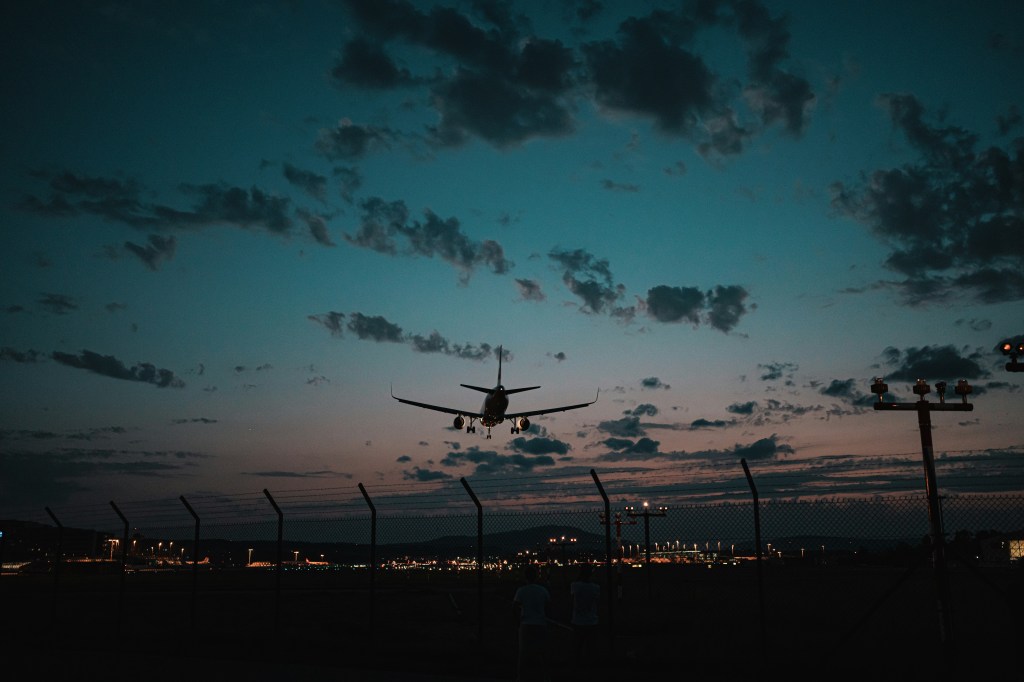
    Featured image by Lawrence Aritao, courtesy of Unsplash.

  • “Re-Womb” by Rebecca Evans

    “Re-Womb” by Rebecca Evans

    “Re-Womb” by Rebecca Evans is a speculative creative nonfiction essay that redefines the form. Evans uses the technique of “perhapsing” to imagine a new integrative reality as the narrator becomes sensuously attuned within the wider world, “in celebration of / another / and another / and another.” Marvelously lyrical and metaphorical, “Re-Womb” is a study of language, a study of self.  —Court Harler


    If I rebirthed, I’d return as an orca and dance with my pod—us three—female, calf, escort. Perhaps I’d be the female, stifle humankind in the Strait of Gibraltar, remind man of his place, his fragile femur and filament and, remind him—every. single. man.—I am royalty.

    Or perhaps I re-womb, tunnel myself within and without. The darkness but a blanket—a blanket fort, a blanket of snow, an electric blanket. Me, cocooned and healing. Here, I snip stitches and strip screws. Here, I tenderly pull thread and metal. Here, my surgical reparation of heart and bone. I allow my body to finish her job. Oh! how she knows. Knows more than me.

    I hope when I die, I leave an imprint, not just an impression. Not the pressure-outline left on my bed or embossed into another. No. A signature of my stories, my songs, impressed beneath the skin of those who damaged me most. My words flaming through that cage, the place they held me

    hostage.

    Snow melts.

    A blanket returns

    to fiber.

    One flicker extinguishes darkness. Think, Small candle that someone,

    somewhere lights in memory of

    or in hope for

    or in celebration of

    another

    and another

    and another.

    Maybe I do not return as a female orca. Even while they sleep, they guard. Vertical “resting” buoyanced by water.

    I wonder, Does a mother ever rest?

    Perhaps I un-womb, return as words—a language still unspoken. One that you feel before you note the shape of it leaving your lips. Before your tongue presses to the back of your teeth.  Like song. Like whale humming. Like vibration massaging your weary bones.

    Think, Cello against your chest.

    Think, Babe turning in your womb-waters.

    Think, Hummingbird in your heart.

    You no longer feel the boundary—where you end and all else begins. Oh! how we have forgotten. We are instruments and whales and wings. Me, as language, will swoop through hearts like storm and ocean.

    Think, Dervish.

    Think. Cliff diving.

    Think…

    anything that sets you free,

    brings you warmth,

    reminds you

    that you, too, are all of these.


    REBECCA EVANS writes the difficult, the heart-full, the guidebooks for survivors. Her work includes a full-length poetry collection, Tangled by Blood; a collection-length poem, Safe Handling; and a forthcoming collection of flash essays, AfterBurn. Her work offers social commentary on surviving sexual assault by combining visual art, literary craft, and empowerment coaching.


    Featured image by Sixteen Miles Out, courtesy of Unsplash.

  • “Beard” by Eric Machan Howd

    “Beard” by Eric Machan Howd

    In the prose poem “Beard,” Eric Machan Howd explores the very concept of the contemporary ubiquitous beard: what it reveals, and what it conceals. As an objective correlative, the beard represents both living and dying. Through historical touchpoints, the revered beard is placed upon a continuum of irreverence.  —Court Harler


    He lets it grow, curling around dimples and smirks and the places where his father slapped regret into his cheeks. Whorls of silver strands gleaming in the few days of sunlight left before the cold and dark. To be healthy it must be fed regularly; almonds, avocado, carrots, pumpkin seed, spinach, broccoli, and salmon keep it strong, while various oils and balms save the skin beneath and coax new growth. Sleep makes for strong roots. Hair is dead. He hides behind it, covers scars and pox left by shingles and a father who roofed too much. The mouth is grown over. He parts his lips, strokes aside gray flyaways and blond wisps with thumb and index and makes way for fork, cup, and spoon. How difficult eating becomes. A bowl, for instance, must be held outstretched from chin to avoid dipping; it demands attention with soup and cereal, and faith in the steady hand. Pope Honorius III, to disguise his disfigured lip, let his grow, and Saint Peter’s was dedicated to the name of Lutheran churches. Leo the III was the first shaved Pope. He avoids plastics and statics, the electric charge that kills what is already dead. Thomas Edison used beard hair when searching for the strongest filament for his bulb. Someone’s hair brightened the room then burnt out. Combs of wood and horn smooth growth, a natural progression. Soon his lips will disappear. His beard will cover his heart and reach for ground and grave. He is already invisible to some, seen and not heard. Doors are not held for him. He grows it because he doesn’t want to be seen while speaking, because he wants to forget his bugler lips, rusty embouchure, what connects him to his father’s strict rhythm. Small seeds of protein gather in little pockets below the surface, form roots that steep in blood vessels. Hair breaks the skin, passes glands that soften and shine, and by the time it emerges the hair is dead. By the time it reaches his knees he will be alone and sing to the many shipwrecks sunk in it and speak to the dead that rise from its darkness at soul’s midnight. The story of hair growing after death is a myth, it is the skin that retracts from the follicle that gives the illusion of growth. He finds Saint Peter’s beard is now a fabric pattern, Warhol repetitions of His Holiness, dead but in stock across the world. Friends ask if he grows it for religious purposes. He answers: Somewhat, masks don’t work.


    ERIC MACHAN HOWD (Ithaca, New York) is a poet, musician, and educator. Their work has been seen in such publications as SLANT, SLAB, Cæsura, The Scop, and Nimrod. Their fifth collection of poetry, Universal Monsters, was published in 2021 by The Orchard Street Press.


    Featured image by Joshua Harris, courtesy of Unsplash.

  • “The Lilacs Even the Purple Ones” by David Guiotto

    “The Lilacs Even the Purple Ones” by David Guiotto

    Note the inherent lyrical tension of David Guiotto’s flash fiction, “The Lilacs Even the Purple Ones”: the stream-of-consciousness effect created not only by lush poetic language but also by the omission of the comma. In the third paragraph, readers will sense a tightening of the line as the unnamed woman leans into her internal resolve, only for the sentence structure to start to unfurl again into a fresh if uncertain world of impending possibilities.  —Court Harler


    The lilacs even the purple ones were fading and she thought that was a bad sign. But then as they followed the street down the hill and came to the old road that curved under the locust trees their white clinging flowers smelled just like he’d said once they smelled vanilla like the cookies his mom would bake dragging the raw fragrant clusters through batter and baking them in the oven a ragged oily sumptuous cookie even though they weren’t acacia trees of the Veneto but close and oddly wonderful like an old family memory and that was a good sign. She took his hand as they walked.

    He squeezed her hand back and watched the trees and had no idea what she was about to tell him or ask him and her decision frightened her like when how long someone could go on being ignorantly happy while the death of a loved one went unknown. That was an exaggeration of course and she released his hand and grazed his forearm as he lead them across to the sidewalk just as a couple teenage girls loped by on bicycles. It was a good town she had to admit, his hometown that he loved with its river and pine ridges and old pals at every corner it seemed slapping him on the back inviting them to dinner sparking up stories about their college days or high school days hell even grade school days she heard no end to the heroics; a pleasant city even if the art scene wasn’t exactly the Mission but she’d grown weary of the big city and ready to like Boise leafy and parks and a safe place to raise their daughter and they’d gotten lucky to buy a house right after the crash my goodness what houses cost now.

    They’d almost left then, she remembered. After three years a little spitefully after not finding a house he’d parted for Sonoma to work a winery, then come back a couple weeks to see them and on the second day she’d spotted the listing, a mid-century in the lower foothills needing work but just the place they could afford and by that very afternoon the owner, the son of the old gal who’d raised her family there but was lying in hospice, Dolores was her name, he accepted their offer like it was a miracle even to him to sell the home to a working family like his and not the two lowly investors who’d tried to lowball him a week earlier. She knew right then they weren’t returning to California. Moving into that handsome house in need of new floors and plumbing but windows to feast your eyes on the seasons in the big trees of the neighborhood. Knew right then her life and their life was to take a new course and returning to SF or Sonoma wouldn’t be in the cards for years or more until a morning like today, when she opened the letter announcing her grad school acceptance two states over in Colorado, and later she suggested they walk down to Hyde Park for an early dinner just the two of them while their girl slept at her besty’s, and the locust blossoms like white grapes in the rusty branches and her hand touching just inside his shirt his warm skin and unsuspecting gate as he quoted Williams on the anarchy of the poor delighting him, and she bolstered her courage for what she’d have to tell him, or ask him. But tell him it would be. 


    DAVID GUIOTTO is the author of the geographic poetry collections Sawtooth Country (Limberlost Press) and Holocene Trail Guide to the Boise Front (Wolf Peach Press). His prose has appeared in The Limberlost Review, the San Francisco Chronicle, CyclingTips, 3 Syllables, The Cabin, and Street Mag.


    Featured image by Liana S, courtesy of Unsplash.

  • “Self/Other” by Gargi Mehra

    “Self/Other” by Gargi Mehra

    In “Self/Other,” Gargi Mehra’s self-conscious and self-reflexive mother-narrator spies herself in a fellow soccer mom. She compares and contrasts, converses and reminisces, though eventually decides, “But our miens are the only factors in common.” What may be deemed an everyday exchange soon develops, through carefully chosen and depicted detail, into a glimpse of contemporary feminism, into a peek at the conflicted woman within.  —Court Harler


    At the football ground I run into my younger self – the one that bounces while she walks, and perhaps gyms while she sleeps. She’s leaner than I’d ever been, her calves smooth, biceps flexed, arms buffed, skin de-spotted, eyes fiery, chin firm, lips curled. She’s definitely not the early-twenties version of me that’s bitter and broken and teary-eyed and forever scouring the horizon for the male pillar that will bear the weight of her sculpted shoulder.

    We trade names, birthdates (but not years), family trees (but not mental disorders that may have passed down), and even veer into dating histories. But our miens are the only factors in common. I struggle to scrape out the little details – it’s like poking at the grooves between my premolars, hunting down that elusive morsel just to find something, anything, that we share.

    Then it turns out that even our mothers aren’t the same. She says her mom flatlined even before their wedding – only then do I look past those cheekbones that pierce the air, and glimpse the resolve etched into pimple scars just like mine.

    Our little girls trot up to meet us (look at us – aren’t we progressive by getting our daughters to football and not the usual dance-craft-cooking-painting kind of classes?), hers bereft of shin guards, hair tucked into a tight bun, while my little czarina has fixed a tiny pink bow to the scrunchie of her ponytail.

    The smartphone rings and other-me toddles off to bark into its electronic butt, the sunlight bouncing off her hair, feet springing off the turf, while I scour the landscape for a woman that misses perfection but mirrors me.


    GARGI MEHRA is a writer, a computer engineer, and a mother. She plays the piano, smashes her lessons on Duolingo, and thrives on word games including crosswords, Scrabble, and of course, Wordle. She lives with her husband and two children in Pune, India.


    Featured image by Alberto Frías, courtesy of Unsplash.

  • “Ladies Prefer Blonds: Fragments of an Undoing” by Ali McKenzie-Murdoch

    “Ladies Prefer Blonds: Fragments of an Undoing” by Ali McKenzie-Murdoch

    “Ladies Prefer Blonds: Fragments of an Undoing” by Ali McKenzie-Murdoch is a prose poem that fixates on one deceptive word: rubio, which means blond but with bloodred roots. But it’s also a flash fiction that tells the story of a woman enmeshed in an obsessive love: “Red says danger.” Readers must parse blond from blood, light from dark.  —Court Harler


    Rubio, they call him. It makes her skin burn. Clio mouths it like a secret, as if saying it will bleach her tongue. Golden, honey, caramel, strawberry. Blond as seduction, as light, as warmth.

    Rubio comes from rubeus, red—not golden. Bloody. Not the chill flaxen tresses of northern fairy tales, but the burn of the south, the sun, his gaze.

    In German fairy tales, gold is the reward. The endless braid. Escape, spun from strands.

    Real or from a bottle?

    In Renaissance Venice, women bleached their hair with horse urine and lemon juice, lying on sun-soaked roofs. Blonde, they believed, was closer to the divine. The sting, the smell, the heat.

    The first boy Clio ever kissed had hair tousled with salt and sand. She remembers his cool blue sun-cream scent but forgets his name.

    Blond is not a colour. It’s an obsession.

    Toria once told her, “You like blonds because you think they’ll be softer.”

    Later, Clio will learn that blondness cuts.

    When did she start seeing only fair-haired men in every room? Not the albinos—all sunburnt necks and white lashes—but sand-coloured men, sculpted from the beach. The ones who fall between the dark and the light.

    She thinks she’s chasing illumination. Or is she chasing erasure?

    Ru-bi-o. Almost Rubicon. The river Caesar crossed—a point of no return.

    He calls her morena. Dark. Sometimes it feels like a compliment. Sometimes it presses against her skin.

    In Rome, ruber meant red like rust, wine, wounds. The raw underside of things.

    His comrades call out Rubio across the parade yard, across the beach, their voices laced with soft mockery. His hair clipped close, but not sharp. More like a dull-edged sword.

    Blondness is recessive. Like power, it must be fed.

    Clio kept her childhood hair in a box, wrapped in tissue paper. Her mother burned it when she turned twelve, leaving the room smelling like melted sugar and loss.

    She once wrote his name in lipstick on her inner thigh. Not a blond mark, but rubeus. A red closer to violence than romance.

    The light in Ceuta bores into Clio, hard and brilliant as peroxide.

    Sometimes she catches herself staring at the backs of fair-haired men in cafés, in airports. Not desire, but recognition of blanched hope.

    In Marrakesh, she saw girls selling blonde hair extensions. Gold packaged in plastic. Dreams plastered over darker scalps.

    With age, his hair has darkened—like bruised fruit, like lead white in an old painting. Blackening.

    Later, she will see his name as a warning. Rubio. Rubious.

    Red says stop.

    Red says danger.

    Red spills when skin breaks.

    In the end, it won’t be his blondness that undoes her, but his distance.

    Ash. Platinum. Dishwater.

    These are the shades Clio will paint herself in shame.

    Naming the lightness won’t keep him from slipping into shadow.

    To know him will leave her marked with a darker hue.

    She thought she was chasing light.

    Now she knows it was only heat.

    And heat leaves ash.


    ALI McKENZIE-MURDOCH’s work appears in X-R-A-Y, Fractured, Your Impossible VoiceLitro, Bending Genres, and more. Her work was shortlisted for the Bath Flash Fiction Award 2025. She’s working on a novella-in-flash about liminal spaces—theatre stages, no-man’s-land, the foreshore—places where boundaries blur.


    Featured image by Paolo Gregotti, courtesy of Unsplash.

  • “The Day It Rained Stone” by Kathryn Kulpa

    “The Day It Rained Stone” by Kathryn Kulpa

    In her newest flash fiction, “The Day It Rained Stone,” Kathryn Kulpa entirely reinvents the contemporary genre of the coffee-shop story. In such a story, usually set in a diner or eatery, readers are gently treated to a light narrative, a humorous or illustrative slice-of-life moment. Instead, Kulpa stuns the reader with the horror of the mines and the generational echoes of grief. The result is a vivid but weighty story that honors the dead and counts the blessings of the living.  —Court Harler


    Every day when I go in to work to pull espresso shots I see the picture on the wall at Tunnel House Coffee, men with pickaxes and miner’s caps. Men who built the tunnel. Great-Grandpa Chuck was one of those men. Charles Henry Walker was the name on his tombstone, d. 1934, but the old pictures in Grandma’s album have “Pop” or “Chuck” on them, in liquid brown ink, in old-time cursive writing. The men were up by dawn. Out on the mountain before the sky did more than pink the edge of the horizon. Great-Grandma packed his lunch, never fewer than two sandwiches in that heavy steel lunchbox, two hard-boiled eggs, salt and pepper wrapped in a twist of waxed paper, thick scones split with a thread, then sealed back together with a smear of honey butter, the way Grandma still fixes them. Wives, sometimes kids too, waving goodbye as their men disappeared into the mountain, into caverns of stone that grew bigger each week.

    Every day, the blasting. Whistle blowing, once for caution, twice for all clear. Vibrations that went on so long you heard them even in stillness, your teeth rattling, fingers tapping out syncopated rhythm as you trailed off to sleep. Everybody knew fine china wasn’t safe on shelves. Everybody knew, when the men were in the tunnels, glasses would dance, lights would flicker, clean clothes would wear a topcoat of powder, like a girl going out for the evening.

    The Dark Day was the one everyone remembered, even Grandma, and she wasn’t more than three. She says her bones remember. Still won’t drive through a tunnel, still won’t ride an elevator. Like my mother, with her fear of tight spaces. Like my nightmares of being buried alive. That day the blast rumbled on, too loud, too long. The day they blew the whistle three sharp shrieks, again and again. SOS. SOS. Dogs howled along, tails tucked low. The day of long night, they called it, as if the sun never rose, blocked by the haze of stone dust in the air. Ambulance horns, arOOga, arOOga, and bucket brigades for when fire hoses no longer reached, but it wasn’t smoke that blacked the sky, only stone. Only mountains of stone, blasted, crushed, turning a tunnel into a tomb, sealed forever, so that all they buried of Great-Grandpa Chuck was the wedding band he wouldn’t wear into the mountain, lest the initials on it get too dust-choked to read. That ring lay, gold under earth, and not far off Great-Grandpa lay, with two hundred other men, bone under stone, and when the old folks ride that tunnel they still take off their hats, still bend their heads and whisper a quiet blessing to the dead we all live with.


    KATHRYN KULPA is the author of A Map of Lost Places (Gold Line Press) and For Every Tower, A Princess (Porkbelly Press). She was a 2025 Writer in Residence at Linden Place in Bristol, Rhode Island, and has stories in BULL, Flash Frog, Ghost Parachute, matchbook, and Your Impossible Voice.


    Featured image by Nick Osipov, courtesy of Unsplash.

  • “Roll Call” by Barbara Krasner

    “Roll Call” by Barbara Krasner

    “Roll Call” by Barbara Krasner is a an ekphrastic flash fiction that reimagines agency and justice in a World War II-era Japanese American internment camp. With haunting imagery and fragmented language, Krasner captures the moment depicted in Hibi’s 1945 painting: the fear, the intimacy, the freezing frostbite, and finally, hopefully, the freedom restored.  —Court Harler


    After Coyotes Came Out of the Desert by Matsusaburo George Hibi (US, b. Japan), 1945


    William had just been following orders. Let the coyotes out of the pen, his commandant had demanded. Let them roam around the barracks. Let them howl. Frighten the inmates. So when roll call came, no one would leave, giving the commandant the excuse to punish them. As if standing in several feet of snow, feeling the pricking sensation of pins and needles at the onset of frostbite, wasn’t punishment enough for the prisoners.

    The signal came to sound roll call. No shuffling feet. No slamming doors. No talking. Except for one man, who took his place in the roll call. Alone. Bare feet.

    The coyotes gathered around him. He put out his arm, folded down his middle and ring fingers. Pointed the index and pinky at the animals. They ceased howling and approached him as if they were Labradors. He bent down and petted them, mumbling something in his native language, nothing that William could understand. One coyote licked the man’s face.

    The commandant strode into the square, barking orders at William and the man. The man stood erect, pointed at the commandant, resplendent in his uniform adorned with many medals. The man shouted a single word. The coyotes ran at the commandant. William turned away at first. Then he took off his own coat, draped it over the man’s shoulders, and escorted him back to his barracks. The sentinels could clean up the mess.


    BARBARA KRASNER is the author of three poetry chapbooks, including an ekphrastic collection, Poems of the Winter Palace (Bottlecap Press, 2025); as well as the full-length ekphrastic poetry collection, The Night Watch (Kelsay Books, 2025). Her work has also been featured in more than seventy literary journals. She lives and teaches in New Jersey.


    Featured image by Ricardo Gomez Angel, courtesy of Unsplash.

  • “Average French Bread with Two Eggs on the Plate without the Plate, on Horseback, Attempting to Sodomize a Crumb of Portuguese Bread” by Mikki Aronoff

    “Average French Bread with Two Eggs on the Plate without the Plate, on Horseback, Attempting to Sodomize a Crumb of Portuguese Bread” by Mikki Aronoff

    Mikki Aronoff’s new ekphrastic flash fiction, “Average French Bread with Two Eggs on the Plate without the Plate, on Horseback, Attempting to Sodomize a Crumb of Portuguese Bread,” is inspired by a painting of the same name. Herein, the salty house servant takes the sulky painter to task—for wasting her good food, for wasting her precious time—pitting the real against the surreal, resulting in the whimsical and the comical.  —Court Harler


    After a painting of that name by Salvador Dalí, 1932


    “That’s no crumb,” grumbles the artist’s servant. “The crust alone on that end piece would feed my family of seven for a week, and we’d throw the heel to the dog.” Juana’s pointing to where her patrón is stippling his brush, touching up the business end of a loaf of French bread that’s poking at the cut end of a loaf of Portuguese bread—the French bread erect, poised for pleasure, the Portuguese bracing for pain. Juana wipes her hands on her apron and shakes her head. The artist bows his, sets down his brush. He forgets that not everyone is rich, that loaves may need stretching.

    He has also forgotten how pleasurable dining once was. These days, he’s too distracted thinking about his wife’s lovers to remember to eat. When Juana forces the issue, shoving food under his nose, he plays like a child with what she puts on the table. Manchego dances with Cabrales. Bread has its way with bread. Napkins shield the loaves’ private parts, then are whipped off in a frenzied culinary tease. The artist stabs his sunny-side up eggs, smirking as he does so, waves his hands over double yolks like a priest, christening them with names like Wifey and Mother.

    “Hapless,” sighs Juana, as she doffs her Cordobés felt hat, passed down from her father, a dusty bent feather tucked in the band. She slings bucket and rags over her arm to waltz down the hall and clean the latrine. “Next time, try fruit!” she shouts over her shoulder, soapy water sloshing all over the tiles.


    MIKKI ARONOFF lives in New Mexico, where she writes tiny stories and advocates for animals. She has stories in Best Microfiction 2024/2025 and Best Small Fictions 2024 and upcoming in Best Small Fictions 2025.


    Featured image by Guillermo Mota, courtesy of Unsplash.

  • “Widow Training [Field Notes]” by Eileen Toomey

    “Widow Training [Field Notes]” by Eileen Toomey

    “Widow Training [Field Notes]” by Eileen Toomey is a micromemoir that moves and moves— we’re shopping, we’re driving, we’re walking, we’re ferrying—until suddenly, we’re stopped: cold in our tracks, begging ice for a “warm beer.” The joy of movement is lost, now suspended in grief.  —Court Harler


    Saturday morning. We went to Sickles, an urban market in the old Anderson building that reminds me of DeLuca’s in Boston with expensive cherry tomatoes clinging to the vine. But we were in Jersey, with branzino lip to lip, dead eyes appraising us from the fish counter.

    Dropped the car off at the shop. The old Lexus might need a jump here and there, but she’s like driving a couch. Maybe that will be me, my middle softening like nice leather, the same texture of Mother’s body as she aged.

    Who knows how many more miles we will travel? Road trip warriors, we laugh like kids in the car with the music and memories. “Do you remember the Oregon Inn?” one of us will say each time we pass the Cedar Point exits on 80 in Ohio. “Dusted perch and prime rib,” the other one replies.

    Now when I’m writing at our kitchen table, I listen for your breath, the creak of the floorboards as you cross to your dresser. Damn this old house, each room stacked with books and dusty lamps. When I hear the rattle of your pills, I know you are awake.


    We went to Memorial Sloan Kettering outpatient, just for a day. In preliminary tests, they found cancer everywhere—and kept you. Because of COVID, they wouldn’t let me stay. I walked thirty blocks, past piss-stained eating sheds, and took the ferry home instead of getting a ride from Denny.

    Then I did this funny thing that I never do alone, and never during the day: I ordered a beer on the boat. I hoped they had something local like a Cape May, but I settled for a Heineken in a giant can. I hate warm beer, so I asked for ice. The bartender looked at me funny, and I thought, Fuck you, I’m widow training.


    EILEEN TOOMEY’s works have appeared in The Rumpus, Cleaver Magazine, Oyster River Pages, and more. Her poem “Immunotherapy” was nominated for a Pushcart Prize and Best of the Net. Eileen is currently shopping around her memoir, You Were All Average: Tales of a Canaryville Girl.


    Featured image by Peyman Shojaei, courtesy of Unsplash.