Category: Flash Fiction

  • “Director’s Cut” by Kathryn Kulpa

    “Director’s Cut” by Kathryn Kulpa

    “Director’s Cut” by Kathryn Kulpa is an experimental flash fiction that explores interpersonal dynamics from multiple angles. These dynamics are illuminated in the sentence structure itself: the (mostly) unpunctuated tension between direct and indirect dialogue; the free-flowing inner monologue of the young narrator. And there’s a subtextual story haunting the narrative present, which manifests organically, tenderly, through stream-of-consciousness style.  —Court Harler


    A fake knife can cut you just like a real one. I didn’t know that until now, my blood seeping into the pool of ketchup mixed with acrylic paint on the floor. My arm throbs as if the severed hand lying on the ground is my real hand and Jonathan just keeps shooting.

    Great shot, he says.

    The color’s off, I say, because even with a big painful slash in my arm I see my blood is darker, less orangey, but Jonathan says they swirl together and the effect is mesmerizing.

    Gore is easy, he says. Beauty is difficult.

    Also freaking painful, I say, and walk off while he’s still filming, which I know he hates because he loves long takes, but I’m not getting septicemia for his slasher-slash-art film. Jonathan’s mom asks how the movie’s going and do I need a cup of tea and I say no, just the bathroom. I pull my sleeve down because I don’t want her to see my cut and freak out. She’s kind of a hypochondriac, talks about germs and how you should always close the toilet seat before you flush or else you’re spraying “atomized waste particles” into the air. Which I can’t stop thinking about every time I use the bathroom at school where the toilet seats don’t close, and now I have to pee but I hate using the bathroom at Jonathan’s house because it’s so close to the kitchen and I keep thinking his mom can hear me pee so I run the water full blast and then I see I’m dripping blood on her floor and on the toilet seat and my pants, even my sneakers are red, how could there be this much blood, did Jonathan nick an artery with the fake knife, could he have subbed a real one, but that would be a messed-up prank even for somebody whose favorite movie is Blood Feast, and then I realize it’s not from the cut and I’m bleeding like Carrie, hemorrhaging, how do I clean this up? Will Jonathan’s mom think I’m pregnant? Having a miscarriage? I’m scrabbling under the sink for pads, stuffing Kleenex in my pants, Jonathan’s mom knocking on the door and me hanging onto the sink hoping this dizzy feeling will pass because I’ve only ever acted faints, never done one, and she puts an arm around me, asks if it’s like this every time and I say mostly and she asks have I told anyone, which of course I haven’t, in middle school my dad asked if they told me about “that stuff” in health class and I said yes and that’s the last time he mentioned it, and she asks are the cramps bad and I nod and she says it’s endometriosis, she has it too, and then I’m in bed, sweatpants, heating pad, and when Jonathan asks can we get back to filming we give him the look and send him to the store for ice cream.


    KATHRYN KULPA is the author of A Map of Lost Places (Gold Line Press) and For Every Tower, A Princess (Porkbelly Press). Her stories are published in Best Microfiction, Boudin, Flash Frog, Ghost Parachute, matchbook, New Flash Fiction Review, and Trash Cat Lit.


    Featured image by Eric TERRADE, courtesy of Unsplash.
  • “Vista Overlooking a Dying Childhood” by Emily Hoover

    “Vista Overlooking a Dying Childhood” by Emily Hoover

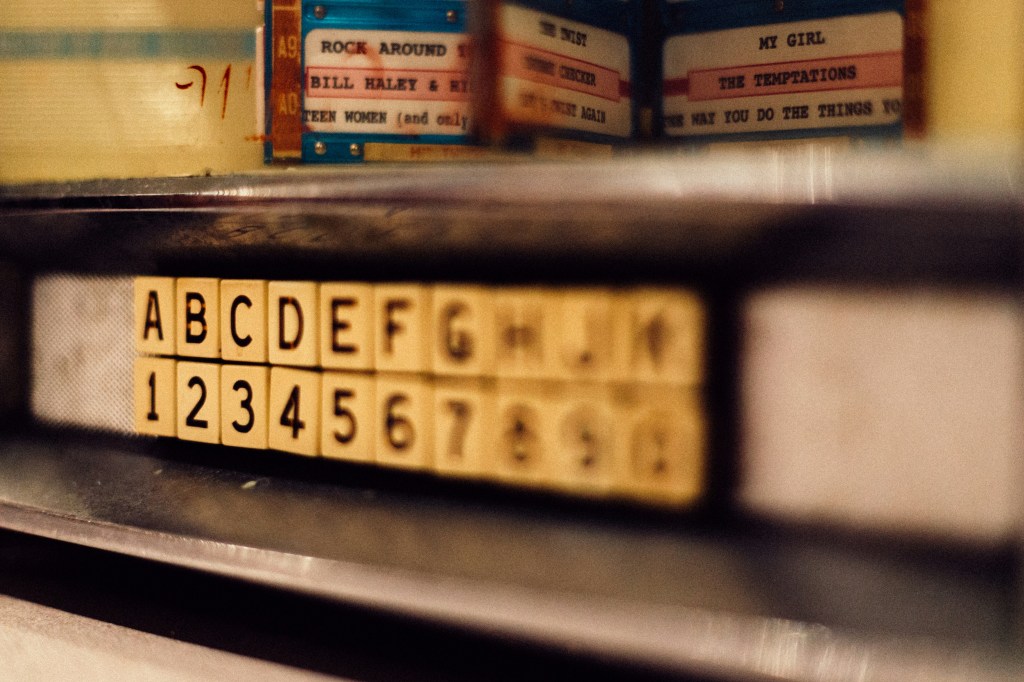
    “Vista Overlooking a Dying Childhood” by Emily Hoover is a one-hundred-word microfiction that springboards from a song and lands upon a jukebox, a marvel of ekphrastic momentum. Note the stark sentence fragmentation, which expresses the final breakdown of the family unit. From dawn to dusk, passed from father to mother, the children wait, and suffer.  —Court Harler 


    “Livingston Saturday Night.” Instead, early dawn in Tulsa, OK. Peering over a cliff face. But the cliff? The tavern parking lot. The face? Our father’s. Eyes glistening. Polished stones in the rearview.

    Our mother multiplies shift drinks. Monsoon clouds. The jerking emergency break. Then, our disappearing father. A dry riverbed. Our feet drag across asphalt. Captives.

    Caught in the swinging door’s breeze. Stinging cigarette smoke. Scramble. Barstools not monkey bars. Knees raw from praying. Purpled men pay her to pour. Our hands. A gowpen of jukebox coins. Peer over the bar-top toward our mother horizon. No, Mother, the slinking sun.


    EMILY HOOVER is the author of the poetry chapbook My Mother as a Serrano Pepper (Zeitgeist Press) and the flash fiction micro-chapbook Sinners to the Back of the House (Bull City Press). Her creative works have been nominated for the Best of the Net, Best Small Fictions, and Best Microfiction anthologies.


    Featured image by Patrick Fore, courtesy of Unsplash.

  • “Five-Star” by Vallie Lynn Watson

    “Five-Star” by Vallie Lynn Watson

    Sometimes it’s difficult to define why a flash piece works so well. It just hits you hard, in the gut. “Five-Star” by Vallie Lynn Watson is one such flash fiction. Maybe it’s the cheek of the narrator, or the cheese as a multilayered metaphor. Either way, this piece will make you smile, and squirm.  —Court Harler


    The hotel is fab, he had said. Not fabulous. Fab. Did I want to go into a room with a guy who kept saying fab? The more he said the word, the unlikelier it all sounded, but then he surrounded the word with other words like champagne, fromage, and salmon.

    So I followed him, tottered down the sloped cobblestone to the shoreline, and then, I saw that he was right. The hotel was fab! An ocean liner carved into the cliffs.

    “I want one of those rooms,” I said, and pointed to the top, balconied floor.

    “Fab!” he said.

    When we crossed the threshold and were in the room, I looked for you in the closet, our old tradition, but of course you weren’t there.

    Then I looked out of the porthole, swept my eyes along the sparkling water of the channel, across the sparkling water to the other side, swept my eyes up to the sparkles of the stars, but I didn’t look for you in any of those sparkling places, either.

    When I turned my gaze back to the room, he was on the phone, saying something like Camembert. When he hung up, he beamed and said, “Fab!”

    I squealed lightly, because I knew he’d like that, and while we waited for room service, I skirted around him, grazing and nipping, flitting and dipping, and then the room service guy knocked on the door, surprised but delighted to see me in my current state. 

    When it was just two of us again, he said, “Fab,” and fed me cheese, let some warm Brie drop onto me, then gently teethed it off. Then he was less gentle while I sipped champagne and watched him be less gentle, then I turned the giant diamond on my left hand inward, into my palm, and scraped it across the top of his head, drawing a red line through his balding spot, drawing a little blood, and then I leaned down to lick the blood from his head.

    “Fab!” he said.


    VALLIE LYNN WATSON is the author of the novel-in-flash, A River So Long (Luminis Books); her work has recently appeared in Midway Journal, Moon City Review, and Bending Genres. Watson teaches in the MFA program at McNeese State, and edits the magazine Boudin. She is an avid sea glass collector. Find her on Facebook @VallieWatson.


    Featured image by Jez Timms, courtesy of Unsplash.

  • “Chimera” by MJ Huntsgood

    “Chimera” by MJ Huntsgood

    The repeated phrase “If I were a wolf…” establishes the speculative, subjunctive mood of MJ Huntsgood’s flash fiction called “Chimera.” Note also the “and” of the polysyndeton, the way Huntgood’s sentences feed one another until they culminate into a series of crushing questions. What does it require, in this mortal animal world, to find love?  —Court Harler


    If I were a wolf, I would be a gray wolf. I would be sleek and shimmer in the sunlight. I would roll in dust to stay cool in the summer, and would curl up under the moss of the forest to stay warm in the winter. I would be part of the forest, and it would know me.

    If I were a wolf, I would be part of a pack. Our part of the forest would be known through piss and smells and scratches and we would feel it in our bones. We would never stray. Family, we would say to each other with tongues and bumps and growls. We are never alone, not so long as we have each other.

    If I were a wolf, I would mate for life. My heart would be one percent of my total body mass and it would beat for one being and one being alone. I would never falter and I would never stray from my love and I would never think twice about betrayal. I am monogamous and I am loyal.

    But I cannot find you.

    Where are you, my love, I would think as I roam the back of the pack, thinking of how the other wolves have someone else that is just theirs and I am alone, here. My nights are cold under the moss, and my days are lonely.

    Are we two creatures in different packs, unable to meet? Do you run free, your paws padding on territory I can never touch?

    Or have you, in this life, come into existence as a creature that I can never love? Are you also something that mates for life and cannot find love?

    Are you the hawk that flies above me? Will you rain your feathers onto my fur, a token of an emotion we feel in our instinct but cannot express with our different, savage mouths?


    MJ HUNTSGOOD is a speculative thriller and horror author who explores the use of perspective and deep point of view in her work to find the nightmare not just in a situation, but within ourselves. She lives in Washington, DC, with her dwindling number of underwatered plants, two cats, and trophy husband.


    Featured image by Linda Christiansen, courtesy of Unsplash.

  • “Carrion” by Oliver Cubillos

    “Carrion” by Oliver Cubillos

    Nature can soothe, but it can also disturb. In the new flash fiction, “Carrion” by Oliver Cubillos, nature presents itself as a harbinger of—death? destruction? or perhaps even, desire? The “you” of the piece seems to not know what’s wanted, asking the reader for the answer.  —Court Harler


    It’s the second time this week. On the curb by the driveway. Laid out against the concrete. You notice the skull from far away. A trail of ants stretches from yard to street. All marching. There’s a cluster of feathers. Black feathers. There’s something warm in your throat. You swallow it down. One gulp. There’s nothing to be afraid of. Two gulps. The ants have journeyed far and wide for this. Food for the colony. You wonder if this crow knew the other. An opossum or seagull or skunk. A roadside corpse. You can’t possibly remember. That was long ago. This one’s different. You take another glance. Three gulps. There’s a Dixie cup and candy wrappers in the gutter. All those birthday parties. Years of piñatas. It occurs to you that all birds end up flightless. On the ground. It’s late spring. Fog rolls over the hills. There’s a dark stain there on the pavement. All around the body. The messes these sidewalks have seen. Popsicle stains or dog shit or chalk. You suppose it’s time to clean it all up. What a pain it was last time. The boys did it for you. The sky blossoms with dark gray. There’s storm clouds rising. You feel it start to rain. There’s water in your shoes. You watch as the skull and blood and all those littered feathers are swept away in the gutter. The dead crow’s beak tilts upwards like the mast of a schooner. It crests over a wave. Then another. You watch until you can’t see it any longer. Eventually it carries on.


    OLIVER CUBILLOS is currently pursuing an MFA in creative writing at Colorado State University. His work is published in Heavy Feather Review, BULL Magazine, Expat Press, Bright Flash Literary Review, and elsewhere.


    Featured image by Antoine Pouligny, courtesy of Unsplash.

  • “Mehmed’s Fever” by Râna Campbell

    “Mehmed’s Fever” by Râna Campbell

    “Mehmed’s Fever” by Râna Campbell is a hybrid work of speculative historical flash fiction and just a hint of prose poetry. Elevated language intensifies the regal setting of the Third Courtyard, while the symbolic and mythic allure of the peacock entrances both the eye and the imagination. “What one sees is what one has chosen,” so says the sage.  —Court Harler


    Sunrise alighted on the city’s minarets and began seeping through its bazaars like pomegranate molasses. Constantinople had been seized over twenty years ago, and Fâtih Sultan Mehmed strolled the New Palace’s Third Courtyard secure in Islambol’s inviolability.

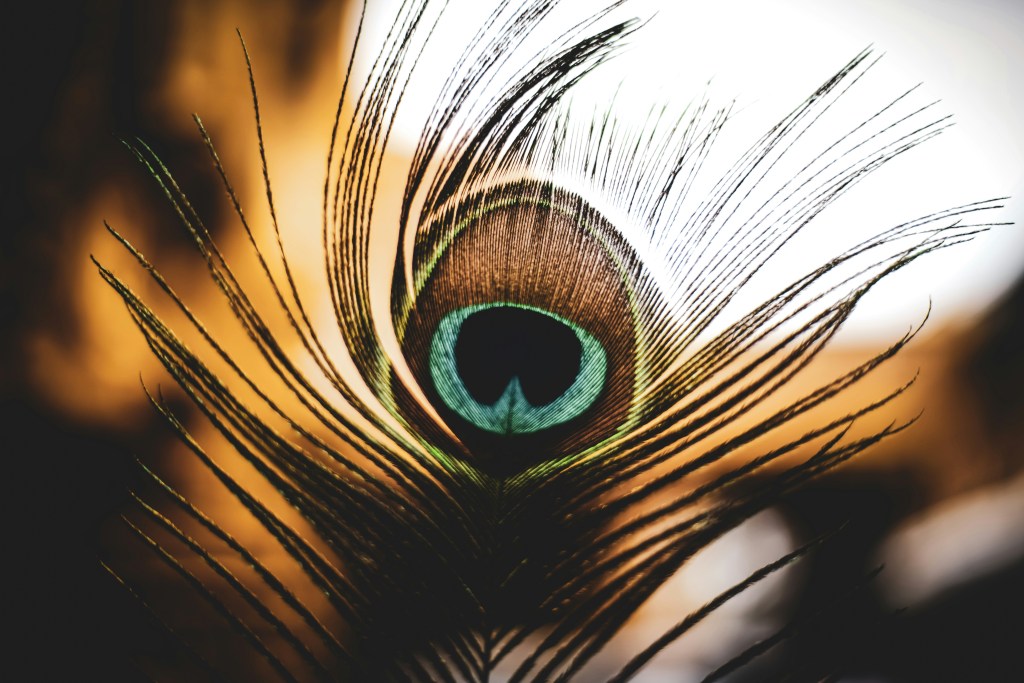
    A rosebush stirred in the sultan’s peripheral vision. As he turned, a peacock emerged, its tail fanning out into a hundred iridescent eyes. Together they shimmered like the depthless night sky, beckoning Mehmed forward. He raised the brocaded edges of his emerald kaftan, the bejeweled silk garment refracting rays of amber, and crouched.

    What is it you show me?

    “There was a time when man and beast and the light of Mohammed were as one,” chimed a voice as familiar as the muezzin’s call to prayer. The peacock cracked open, birthing Akshemseddin’s white-bearded figure, his turban a resplendent halo.

    “Hodja Efendi, am I dreaming?” Mehmed asked his long-deceased Sufi mentor.

    “Is not life but a dream, Conqueror, in the watchful eye of Allah’s mind?”

    Day broke. The fragrant steam of spiced sahlep drifted over from the kitchens by the Second Courtyard. A bead of sweat escaped Mehmed’s turban. Then another. Where the droplets met the arid soil, pools of indigo and turquoise formed and sprouted peacock feathers. He steadied himself, rose, then moved to splash moon-chilled water on his face from the garden’s central pond.

    Akshemseddin followed, a trail of feathers blooming in his wake.

    “The peacock, too, watches…some see in its gaze the promise of paradise, others eternal disgrace. What one sees is what one has chosen. But vanity can blind a man.”

    “Have I been vain, Hodjam?”

    But Akshemseddin was gone, and the feathers in the grass encircled and overtook Mehmed’s limbs like vines, until he stood,

    himself a peacock,

    looking out at his sprawling empire

    from behind a dewy rosebush.


    RÂNA CAMPBELL is a damn good editor and a prize-winning writer of flash and microfiction, along with the occasional poem. Her work has appeared, among others, in Intrepidus Ink, God’s Cruel Joke, and Humphrey Magazine. For general inquiries and editing services rendered with love, Râna can be reached at yourfinaldraftediting@gmail.com.


    Featured image by Mohnish Landge, courtesy of Unsplash.

  • “Croc Mother” by Rebecca Klassen

    “Croc Mother” by Rebecca Klassen

    “Croc Mother” by Rebecca Klassen is an edge-of-your-seat read, a speculative microfiction infused with danger from the opening sentence. But the writer doesn’t rely on mere suspense—instead, she delves immediately into the heart of the matter, yet without overexplaining the issue. Through subtext, the microstory’s narrative tension is expertly, terrifyingly, suspended in time.  —Court Harler


    When I was six, I jumped into the crocodile enclosure, compass-point snouts rotating on the water towards me. Mum ran to fetch Dad who I’d last seen hogging a swing in the playground. Not swinging, just scrolling as aggrieved children floated out of swatting distance, like they sensed the things he’d done, things that I never told my nosey teachers and neighbours about, or that social worker who kept steering everything back to Dad whenever I tried to talk about Mum. But the mother croc at the water’s edge was a fantastic listener, smaller than the others who were gliding closer as the zoo goers screamed and filmed me on phones. I told the mother croc about Mum’s delicious meatballs, funny stories about ghosts, feeding the ducks together, and the great raspberries she blew, and how all of it was the best, and she was the best but also the worst.

    Mum came back with Dad as zookeepers sprinted with crackly walkie-talkies, and Dad watched me with folded trunk-arms and that look, and Mum stood behind him with that helplessness that cancelled out the meatballs, stories, ducks, and raspberries. I prised open the mother croc’s jaws and climbed inside her gaping mouth and sat on her spongy tongue. The other crocodiles crawled out of the water towards us as I yanked down on her top teeth, ordering her to close her mouth to protect me, to help me, to just do something.


    REBECCA KLASSEN is co-editor of The Phare and a Best of the Net nominee from Gloucestershire, England. She won the London Independent Story Prize and was shortlisted for the Bridport Prize and Alpine Fellowship. Her stories have featured in Fictive Dream, Mslexia, Flash Frontier, Scribeworth, and New Flash Fiction Review.


    Featured image by Dan Meyers, courtesy of Unsplash.

  • “The Bus” by Callin Naddy

    “The Bus” by Callin Naddy

    “The Bus” by Callin Naddy is a horror story, a love story, a ghost story. What the second-person narrator “can’t remember” will haunt the reader as well. Note the crafted use of poetic devices: the rhythm of repetition, the bold and impulsive imagery, the blend of interiority and exteriority. This flash fiction provokes a physical journey into the psychological unknown.  —Court Harler


    The coins jangle into the farebox, and you wipe a sweating palm down your pantleg. Your hands draw back into the cavern of your pockets, gaze dropped low, fidgeting the plastic cap of a bottle, as you slink to the next closest seat.

    It takes two stops for the cap to loosen, for your fingers to stutter inside the red-stained plastic casing, for your weeping skin to exhale against the pills.

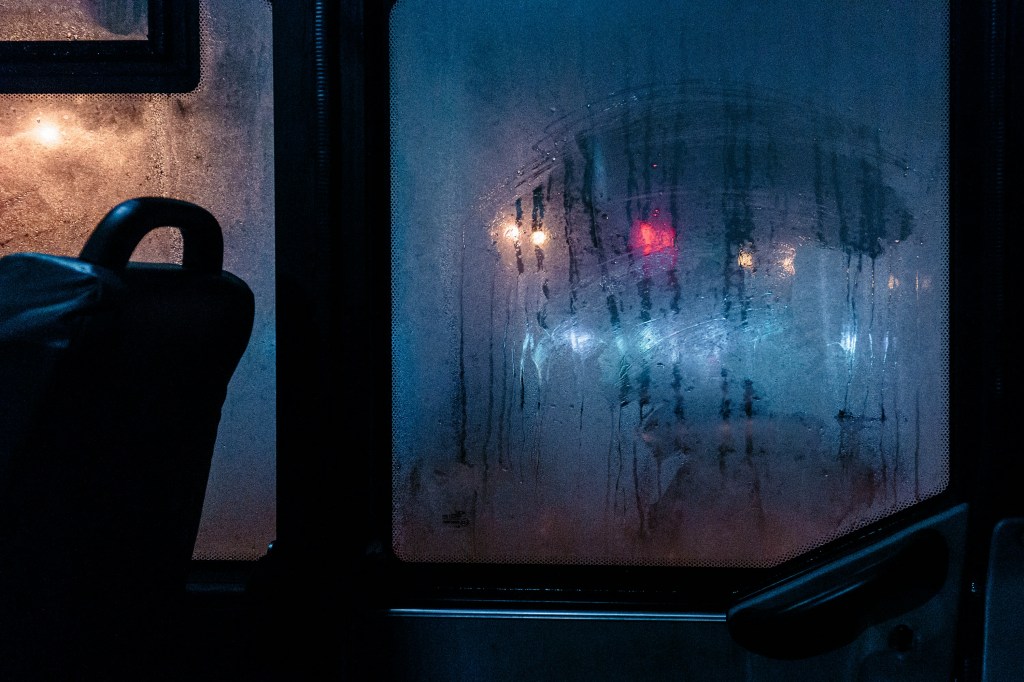
    The bus windows dye the city the same red as your palms. Or the pills. One by one, they slip onto your tongue, and the hair of your spine erupts. They taste of his pebbled flesh, and that’s fine. He’s still yours, isn’t he?

    Only, you can’t remember. You know he told you he couldn’t do it anymore, over the sweat of your stained bedsheet, and you said he’d threatened that before. He said, “This time, I mean it,” and watched you paint three more pills across your tongue.

    You blink, and the memory bifurcates. He peers like Jesus from the bus’s crimson-stained glass, a concerned tilt to his mouth as he gazes down on you, then the bottle. It is not mercy; this is the gaunt skeleton of his need to help, full-bodied and breathing, his fingers kneading the soft skin of your collarbone then digging deeper until—

    You swallow the pills before his memory taints them. They scavenge your throat, your esophagus, the turmoil of your stomach until you can’t remember what you, communal, did. You can’t remember what you, singular, did. You conjured the severed vein of his carotid across your eyelids each time he vanished the pills, like you might not notice their gaping wound, and now your gaze ekes past the other version of him in the window, neck seeping as he stares past you, laid bare and quivering beneath your body.

    The bus screeches to a halt, and you slam against the seatback. The knife struggles through his neck.

    Another commuter offers their hand. You do not immediately recognize the danger, but then the knife yanks again—into you—and the dual image in the window splatters. His cruor glistens between you both.

    You freeze, wait for them to notice: Jesus gazes down at you, only he is not Jesus any longer. You always knew he was not, and now his crucified blood lies hot on your palms. His empty promise breaks from your lips.

    Another pill slips through the cracks. The bottle is almost empty again, and finally, the blood slivers away—

    you feel it still.

    You cannot remember which is true.


    CALLIN NADDY writes fantasy novels and short stories. Her short stories have been published in Belladonna’s Garden and pinky. Her nonfiction has appeared in the Sioux Falls Argus Leader, EDDA, and Co.Milesplit. Find her online @callinnaddy.


    Featured image by Aleksandr Popov, courtesy of Unsplash.

  • “White” by Barbara Krasner

    “White” by Barbara Krasner

    In “White,” an enigmatic microfiction by Barbara Krasner, the mystery of the artwork mirrors the mystery of the narrative. Who is the mystery man, and why does he do what he does? The resolution of the story opens like a green blossom, like a paint splatter come alive.  —Court Harler


    There’s white and then there’s white. I’m standing before Malevich’s White on White, the faint square inside a fainter one, whiteness studying itself. People call it a polar bear eating marshmallows in a blizzard. I think of the Benjamin Moore fan deck, hundreds of whites: Opulence, Alabaster, Atrium, Cotton, Whisper, Moonlight. Then a man bursts into the gallery shouting Down with white supremacy! Guards run after him. He throws a bucket of green paint. The square blooms into drips, a sudden Pollock. Paint streaks the wall, catching the light. The guards pin him down. A docent says, almost kindly, He meant Suprematism. The room goes still except for the slow descent of green. The white, of course, always meant something.


    BARBARA KRASNER holds an MFA from Vermont College of Fine Arts. Her work has appeared in more than seventy literary journals, earning her multiple Best American Short Stories, Best of the Net, Best Microfiction, and Pushcart Prize nominations. She lives and teaches in New Jersey.


    Featured image by Pawel Czerwinski, courtesy of Unsplash.

  • “Waiting for Halley’s Comet Again” by Kara Kahnke

    “Waiting for Halley’s Comet Again” by Kara Kahnke

    Some say the primary key to parenthood is presence, but in “Waiting for Halley’s Comet Again” by Kara Kahnke, readers are given a glimpse of love so strong it defies the distance of absence. The narrator in this concise, circular microfiction tells her son a beautiful “lie” that resounds into the “dark sky” like cosmic truth.  —Court Harler


    When I was five, I believed someone painted the comet with glowing brushstrokes above us just for Dad and me to watch. The comet’s light burned hope into the dark sky. Dad promised me he’d live another seventy-five years. He squeezed my hand. “I’ll make it.”

    I squeezed back tighter.

    Now, I teach my son to gaze skyward. “Mom, if I swallow falling stars, will I glow?”

    I lie too, just to see my five-year-old’s best smile. “They’ll dissolve in your tummy, shooting light beams from your fingertips.” His right cheek dimples, reflecting Dad’s grin.

    When my gray streaks whiten, and age spots join my freckles, my son and I will search the sky. I’ll lie to myself, convincing my heart that I see Dad riding on the light.


    KARA KAHNKE lives in Tempe, Arizona. Her work appears in BULL, Micromance Magazine, Raw Lit, Under the Gum Tree, The Citron Review, and other places. Find her on Bluesky @karakahnke.bsky.social.


    Featured image by Reign Abarintos, courtesy of Unsplash.