Tag: Women’s Literature

  • “Self/Other” by Gargi Mehra

    “Self/Other” by Gargi Mehra

    In “Self/Other,” Gargi Mehra’s self-conscious and self-reflexive mother-narrator spies herself in a fellow soccer mom. She compares and contrasts, converses and reminisces, though eventually decides, “But our miens are the only factors in common.” What may be deemed an everyday exchange soon develops, through carefully chosen and depicted detail, into a glimpse of contemporary feminism, into a peek at the conflicted woman within.  —Court Harler


    At the football ground I run into my younger self – the one that bounces while she walks, and perhaps gyms while she sleeps. She’s leaner than I’d ever been, her calves smooth, biceps flexed, arms buffed, skin de-spotted, eyes fiery, chin firm, lips curled. She’s definitely not the early-twenties version of me that’s bitter and broken and teary-eyed and forever scouring the horizon for the male pillar that will bear the weight of her sculpted shoulder.

    We trade names, birthdates (but not years), family trees (but not mental disorders that may have passed down), and even veer into dating histories. But our miens are the only factors in common. I struggle to scrape out the little details – it’s like poking at the grooves between my premolars, hunting down that elusive morsel just to find something, anything, that we share.

    Then it turns out that even our mothers aren’t the same. She says her mom flatlined even before their wedding – only then do I look past those cheekbones that pierce the air, and glimpse the resolve etched into pimple scars just like mine.

    Our little girls trot up to meet us (look at us – aren’t we progressive by getting our daughters to football and not the usual dance-craft-cooking-painting kind of classes?), hers bereft of shin guards, hair tucked into a tight bun, while my little czarina has fixed a tiny pink bow to the scrunchie of her ponytail.

    The smartphone rings and other-me toddles off to bark into its electronic butt, the sunlight bouncing off her hair, feet springing off the turf, while I scour the landscape for a woman that misses perfection but mirrors me.


    GARGI MEHRA is a writer, a computer engineer, and a mother. She plays the piano, smashes her lessons on Duolingo, and thrives on word games including crosswords, Scrabble, and of course, Wordle. She lives with her husband and two children in Pune, India.


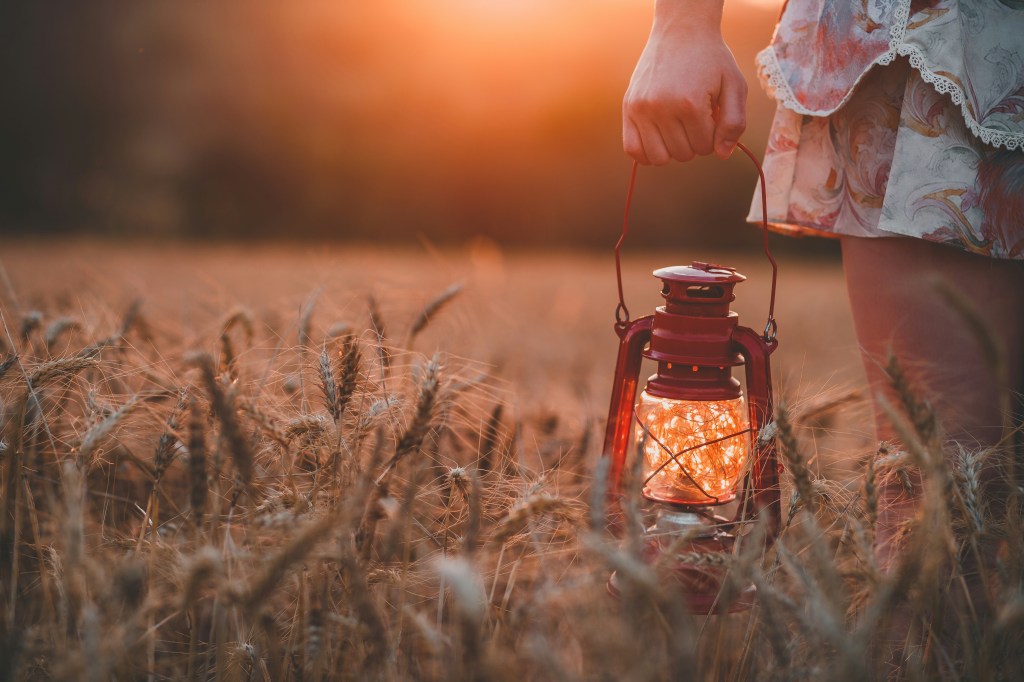
    Featured image by Alberto Frías, courtesy of Unsplash.
  • “Brief Lives of Garden Insects” by Frances Gapper

    “Brief Lives of Garden Insects” by Frances Gapper

    In “Brief Lives of Garden Insects” by Frances Gapper, bugs are sexy. And fascinating. From “The Dreadfuls” to the “Best in Show,” these miniature, pesky creatures flash in to and out of their own lives. In each numbered segment, they posit quirky but poignant questions about friendship, courtship, and partnership.  —Court Harler


    1

    Jane’s partner Maria’s fifty viviparous adult daughters, aka The Dreadfuls, are visiting in midsummer; staying aeons. Maria says, ‘Spit for luck!’ and Jane gobs up nectar. It’s her own fault for having opted to remain wingless, sans alpha female equipment.

    The Dreadfuls pierce leaves and suck sap, demolish pies, colonise hooks and pegs, flutter-float while eyeing Jane. And give birth. Happening once upon a Dreadful squatting to extrude, Jane detoured around her, pink but smiling.

    After the visit, Maria lies on her back and waves her legs in the air. Grateful for Jane’s billion cups of green tea: ‘I owe you,’ she says.

    Jane’s ex-loves forged independent lives but later grew desperate. She more cautiously chose to attach herself to a thriving family. Or horde, scourge, intrusion. Whatever.

    2

    Jane loves one of her co-grandkids, Jimmie. Anxious re his weakling status – butt of sidebites, target of gunk – she cherished him. Tickled his tum and endured his earwig jokes, beetle jokes, jokes about ants, thrip jokes.

    But getting smart and ignorant, he joined the superhighway. She chased after him: ‘Jimmie-Jim, give me a kiss?’

    ‘Fuck off, Nanny.’ He really said that. And she laughed.

    3

    The way Ant Guy (‘Call me Gorge.’) used to milk Jane, it felt like being given a lovely massage. ‘You’re my favourite cow,’ he’d say. ‘Best in Show. Awarded a rosette.’

    They had a friends-with-benefits relationship. When Jane was being bugged by a predatory midge, Ant Guy zapped it.

    But one day: ‘Where’s Gorge?’

    ‘Deleted. Got too sociable with the livestock.’

    Farm life continues. They ant-handle her, she excretes the honeydew, they cart it off.


    FRANCES GAPPER’s work has been published in four Best Microfiction anthologies and lit mags including trampset, Splonk, Wigleaf, The Forge, Atlas and Alice, 100 word story, Literary Namjooning, and Trash Cat. She lives in the UK’s Black Country region.


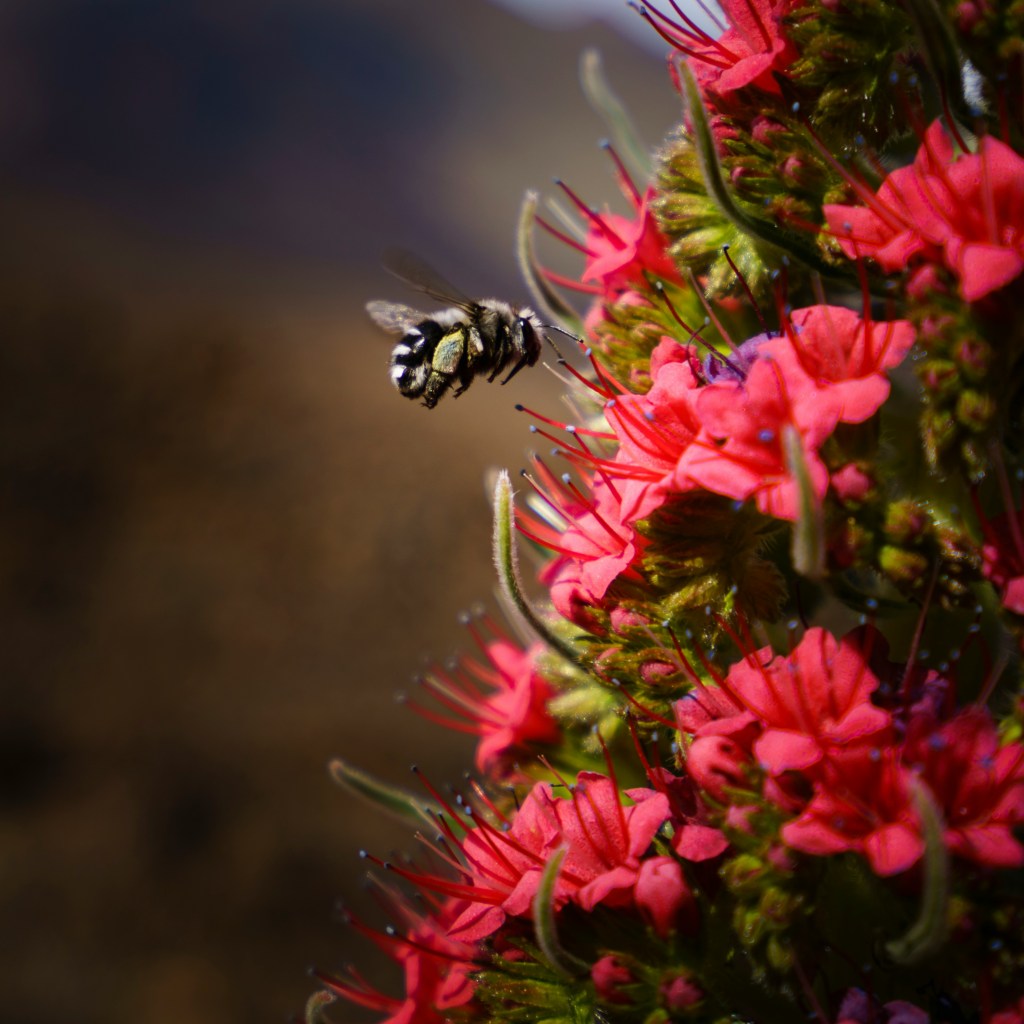
    Featured image by Phil Mono, courtesy of Unsplash.

  • “Adrift” by Tracie Adams

    “Adrift” by Tracie Adams

    September is the season of gentle remembrance. Summer’s over and school’s back in session. Elementary or university, our children resume their inexorable paths toward more independence and, consequently, more distance, from us, their parents. In “Adrift,” Tracie Adams captures moments anew: what would we give to relive each (im)perfect family memory, just one last time?  —Court Harler


    Maybe it was the worst of times on that houseboat. The air conditioning was broken, forcing us to retreat to the sundeck to escape the sweltering heat of the living room, an Easy-Bake Oven that smelled like a urinal cake. Maybe it was the best of times, the perfect ending to a vacation that began at a waterpark resort in Phoenix, where my husband and I watched our teens swoosh through slides, shouting this is awesome!

    Maybe it was awesome. Or maybe it was another unblemished day soon to disappear as they left for college, marriage, their own lives. Like the day we explored a graveyard in a ghost town called Tombstone, its markers straight out of an old Western. Or when we drove ATVs through desert sunsets melting over Sedona’s red rocks, etching our names in stone, eating pizza under stars. Or when we held our breath in awe at the Grand Canyon’s south rim stretching as wide as a mother’s arms.

    Maybe the man who gave us directions to the marina at Lake Mead wasn’t a liar. Or maybe he was the best kind—don’t bring anything, we’ve got it all—which turned out to be hot dogs, Pop-Tarts, and energy drinks. The camp store shelves were bare. For days, we floated under a Nevada sun, drinking Red Bulls in a rooftop hot tub, where our words were movie lines and our jokes secrets shared with the galaxies.

    Maybe the day we spent slithering through red mud at Slide Rock Park was delightful. But maybe it’s the suffering—the absences, the gaps—that forged us in a crucible and gifted us our golden memories. Maybe years later when I say Arizona trip, we’ll all burst into stories and laughter. Magic will hang like a velvet curtain between us and the world.

    Maybe the days we had so little were the times we had the most. Perhaps our true strength emerged in our weakest moments, struggling, burning like chaff, devouring Pop-Tarts in a floating gas station bathroom.

    Maybe it was never about the perfectly choreographed moments like birthday parties, Christmas lights, or Thanksgiving tables. Maybe it’s the laughter echoing over the water, stars shining in bright eyes, and the stories that still float between us like driftwood.


    TRACIE ADAMS is the author of Our Lives in Pieces. Her work has been nominated for the Pushcart Prize, longlisted for Wigleaf Top 50, and published widely in literary magazines, including SoFloPoJo, Fictive Dream, Cleaver Magazine, TRASH CAT LIT, and others. Follow her on Twitter @1funnyfarmAdams.


    Featured image by Dulcey Lima, courtesy of Unsplash.

  • “Naked Babies” by Julia Strayer

    “Naked Babies” by Julia Strayer

    In “Naked Babies,” Julia Strayer reexamines the institutions of motherhood and womanhood. The narrator’s voice drips with delusion and sarcasm, but she’s justified in her bold assessment of “mostly women” and “mostly men” who inhabit the world without thinking, without seeing. Flash work embodies the surreal with true verve, and this piece is no exception.  —Court Harler


    Strangers, mostly women, ask if I give the babies names. I stare unblinking and tell the people out loud in my head that they’re stupid for asking. I don’t have time for small talk, though I’m quite skilled at it.

    I ferry a pile of naked baby dolls in the trunk of my ’68 Valiant because I don’t have a station wagon. I unload them upside down by the legs, and I’ve mastered the ability to carry four in one hand at one time, plus my handbag. It’s quite something with all their hair hanging down. I used to cut my dolls’ hair when I was a kid, but I don’t do that anymore.

    I sometimes cut my own hair, and when the scissors don’t behave themselves in the back, I button my hair in a barrette and I don’t look. What I can’t see isn’t important enough for me to worry about.

    When I was little, I wore a scooter helmet inside the house even though I didn’t own a scooter. I found the helmet in the trash out back of Pancake Willy’s on my way home from school. I never found a scooter someone was willing to throw away. If I had, I might have left home forever. I pretended the helmet was an invisibility shield and, when my mother said I was stupid, or ugly, or weird, or that no one would marry me when I grew up, I couldn’t hear her.

    That’s why I practice with the babies, and, except for the naked, upside-down thing, I’m a good mother to them. I know they’re not real. They won’t need helmets if I mess up and become my mother.

    Some strangers don’t talk to me at all. Mostly men. I think it’s my hair. That’s okay. It’s better that way. No chance of having real babies. I can’t risk it.


    JULIA STRAYER has stories in Glimmer Train, Kenyon Review Online, The Cincinnati Review, Jellyfish Review, Flash Frog, HAD, Fractured Lit, Okay Donkey, and others, including The Wigleaf Top 50 and The Best Small Fictions. She’s a submissions editor at SmokeLong Quarterly and teaches creative writing at New York University.


    Featured image by Edz Norton, courtesy of Unsplash.

  • “Bullet List for My Aged Kidnapper” by Patricia Q. Bidar

    “Bullet List for My Aged Kidnapper” by Patricia Q. Bidar

    “Bullet List for My Aged Kidnapper” begins with a gun and ends with a song. With a list form, Patricia Q. Bidar leads us down the long dark alleyway of time, where traumatic recollections ricochet off “bathroom sink[s]” and “stucco neighborhoods.” Both a prose poem and flash essay, Bidar’s hybrid piece seeks a semblance of peace, but does not grant absolution.  —Court Harler


    I did not provide my parents’ phone number for you to demand money they didn’t have. I provided made-up digits, only coming clean with your gun to my skull.

    I did not tell the police the whole story. Safe at the hotel where I worked, I answered their dark blue queries. Behind their eyes I discerned that I wasn’t the kind of victim they had to care about.

    • Did not disclose I’d been raped
    • Did not throw away my underpants, which remained unwashed at the bottom of the hamper until your sentencing day, when I torched them in the bathroom sink
    • Did not retain my name, fearful of being found
    • I did not have a safe relationship for decades. I scraped together abject connections—men who were beneath me, cocaine, weed, alcohol—sinkholes of regret

    I didn’t argue when men accused—the rare times I talked of it—Crutch! Fabrication! What they really meant was, What the hell you expect me to do?

    • I don’t leave my shutters open at night
    • Or during the day
    • I have not forgotten what I learned: sexual violence, like politically motivated torture, is human and intimate
    • Did not look for you until decades passed

    Once, you brutalized me. Now you are an old man on a dismal patio in the same stucco neighborhood as before. I am an old woman, in faraway but similar environs. We both arise early for the senior discount day at the market. We falter on stiff hips. We wait overlong before we INSERT CARD! and QUICKLY WITHDRAW YOUR CARD!

    At home, we rest our eyes. We doze. Outside our front windows, people flirt, fight, fling food wrappers on our patchy lawns or in our gutters. We mutter profanity to the weeds. Sing aloud, sometimes.


    PATRICIA Q. BIDAR is a native of San Pedro, California, with family roots across the American Southwest. Her work has appeared in Wigleaf, Atticus Review, SmokeLong Quarterly, Little Patuxent Review, Waxwing, and Pithead Chapel. She lives with her husband and dog in the San Francisco Bay Area.


    Featured image by Mathias Reding, courtesy of Unsplash.

  • “After the Movies” by Susan P. Morehouse

    “After the Movies” by Susan P. Morehouse

    “After the Movies” by Susan P. Morehouse is a Southern-style slice-of-life story—a quiet but eerie homage to mothers and daughters and strangers and kindness and “the road unspooling before us.” The slow-and-steady-wins-the-race progression of the narration propels readers toward the inevitable end of the story, which surprises and blesses and satisfies and perplexes.  —Court Harler


    We’re driving home from the movies the long way, past the Beckley work farm, and Mom and me are talking about Butch and Sundance, how you can’t outrun fate no matter what or how gorgeous you are. I’m riding shotgun looking for deer to jump out the corn because we can’t afford to wreck. Mia’s in the back humming “Raindrops Keep Fallin’ on My Head,” and Freddie’s kicking my seat. They were too young for the movie, but we couldn’t leave them home alone.


    Our headlights barely pierce the dark. I turn around about to smack Freddie when Mom starts in on how it’s a men-who-roll-out-the-road night, for sure. “Look there,” she says pointing at a red light moving through the dark before us. “It’s three men with maybe twelve teeth between them and dirty faces throwing the road off the back of their truck that only has one taillight. Who knows where this road’ll take us.” Mom likes making things up, but this story gets to me and I’m looking more at that taillight than for deer.

    Up ahead, the light grows larger. I think we should go back the other way, but now Mom’s stopping for a skinny man in the road holding a lantern. Just a man. The light casts a shadow over his face. “Need a ride, stranger?” Mom says. He slides in the front next to me.

    Now Mom drives squinting into the dark, as if there’s a glare, which there isn’t. No one peeps from the back seat.

    The man’s clothes are too big for him; jeans dried hard on a line, tied with rope at the waist, and a shirt with the cuffs past his wrists. He hugs the door like he’s ready to jump out. He doesn’t smell like anything.

    We drive and drive, the road unspooling before us as if we’ve never been on it before, as if we’re lost, as if people we’ve never met really are making this up as we go along.

    At the bus station, the man thanks Mom in a voice that sounds unused to talking. She hands him something from her purse, and says “God Bless,” which we don’t say at home.

    Before he slides out, he leans into me, his breath hot on my skin. He says, “Girl, you try and grow up kind like your mama,” which I never thought of before.


    SUSAN P. MOREHOUSE’s flash and micros have appeared in Hippocampus Magazine, New Ohio Review, The Dribble Drabble Review, and elsewhere. Her stories and essays have been nominated for Best American Essays, The Pushcart Prize, and Best Microfiction, and she recently was the third-place winner of CRAFT Literary Magazine’s First Chapters Contest.


    Featured image by Guilherme Stecanella, courtesy of Unsplash.

  • “Tar Pits” by Meg Pokrass

    “Tar Pits” by Meg Pokrass

    In “Tar Pits,” award-winning flash-fictionist Meg Pokrass takes us on a bittersweet ride in a pink convertible —only to discover that fame, like any other earthly accolade, can sink you, and your sister’s “skinny smile,” to the lowest depths. “Tar Pits” is a dexterous, provocative exploration of what it means to be a woman in the world today.  —Court Harler


    First time my big sister took me to the La Brea Tar Pits, we met an out-of-work actor wearing a wilted expression. “You’re my hope,” he said, as if he were sinking. She beamed him her smile, autograph pen in hand. “Don’t give up on your dream, my friend,” she signed, feeling funny for being spotted at the grave of the La Brea Woman’s skeleton.


    Wrapped in faded denim, my big sister’s middle-of-the-night skeleton drove us again to the tar pits. She was pretty, nobody knew she was funny. “You locked in the part,” said her agent, “because of that skinny smile.” I imagined him bowing to kiss her hand but accidentally pinching her bottom. She was soaring over pitch-black places where other actresses were sinking.


    “She was eighteen years old when she died there, asphyxiated while sinking,” she explained, nibbling carrots. Deep in her bathtub, I’d stare at my twelve-year-old skeleton. I wanted to tell her it was a bad idea to revisit those tar pits. “I can feel you wrinkling!” she’d say, rushing in, grabbing my hand, pulling me out. “I’m your La Brea Woman,” I’d sing, wanting to be funny. 


    “When playing a role, an actress is no longer a skeleton,” she said. That day her eyes were bloodshot and we were eating lettuce straight from the bag. When she got bad news after a big audition, I held her hand. The two of us worked up our skinny smiles in the mirror before hopping into her pink convertible. “You used to be funny, kiddo,” she said, as if I were the one who was sinking.


    Not every girl has a sister who haunts old tar pits, I told myself. Now thirty, her agent dropped her and she was sleeping. I was a teenager with undeveloped features, beginning acting lessons. “Disappearing is recommended if it keeps you famous,” she’d say in her pj’s, popping a NoDoz before falling back asleep again.


    No longer a skeleton, she was eating everything she wanted, and it was almost funny. “Let’s binge on donuts,” she’d suggest, pulling me by the hand. One time we ordered twenty maple donuts at Zucker’s, our stomachs rising and sinking. “Relying on anyone,” she warned me, “is dying in a tar pit.” 


    Now I’m driving Hollywood Boulevard in my sister’s car, proud of my skeleton. When I find myself wallowing in memories, I stop for donuts or drive past those tar pits. She left me her pink convertible, and with my hands on the steering wheel, I feel myself rising.


    MEG POKRASS is the author of First Law of Holes: New and Selected Stories (Dzanc Books, 2024) plus eight previous collections of flash fiction and two novellas-in-flash.


    Featured image by Cash Macanaya, courtesy of Unsplash.