Writers must debate and navigate endless choices. In “Transitions,” a flash creative nonfiction essay by Jennifer Braunfels, the writer has chosen a particular point of view (second person) and a specific structure (a series of transition words) to guide the telling of a painful, powerful story. Ultimately, those craft choices enable the writer to express the inexpressible. —Court Harler
Now, I have something to tell you. You may want to sit down.
Soon, you’ll be diagnosed with cancer.
In turn, everything will change.
For example, instead of taking that school trip to Germany with your son that’s been planned for two years, you’ll begin chemotherapy.
Yes, the ticket says you’re flying out tomorrow morning.
But instead, at 3:30 a.m., you’ll drive your son to the transportation center, where he’ll board that plane without you.
Of course, you’ll put on a brave face on the drive to Portland, telling him how much fun he’ll have. You’ll try to sound upbeat, even though you’re drowning in a storm of grief.
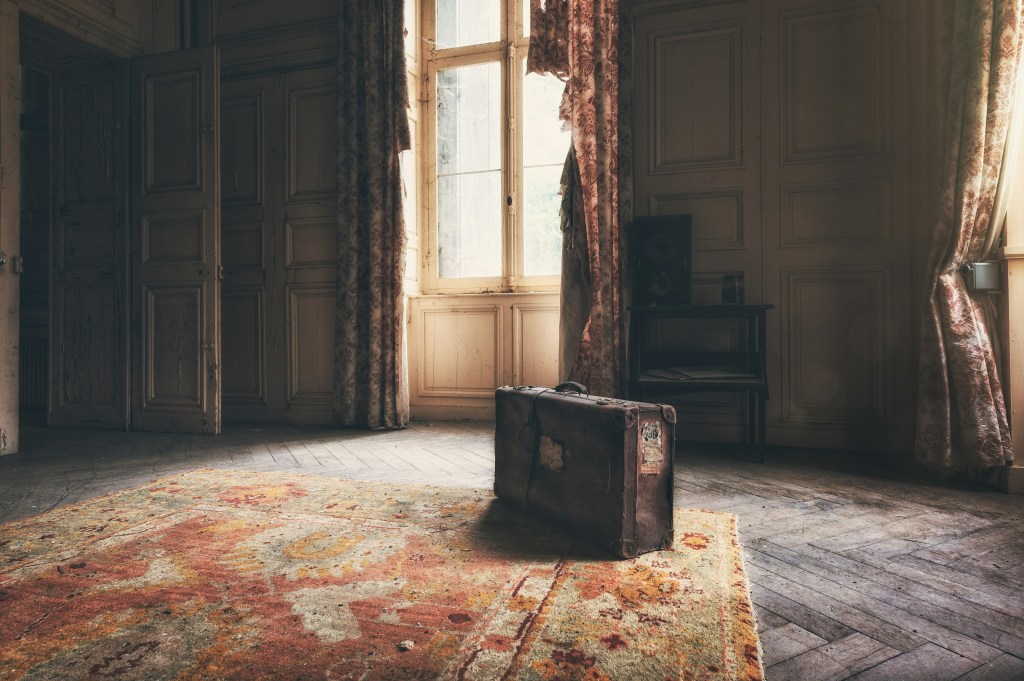
Finally, you’ll arrive. Park. Help your son unload his suitcase. Ask him if he wants you to go in and help get him settled. He’ll say no, but he means yes. You know this. But because you’re about to break, you hug him. Then leave him.
Unbeknownst to you, while you’re sobbing on the drive home, he’ll experience his first panic attack. Alone. A stranger will catch his limp body as it slumps to the floor. A detail he won’t share with you for weeks because “you already had enough going on.”
At home, you’ll unpack your suitcase. Throw fistfuls of clothes around the bedroom in a frenzy, screaming.
Then comes the first round of chemo.
Later, with that poison snaking its way through you, you’ll become weak. Your mouth will taste of metal. There’ll be nausea that’s so intense, it’ll be hard to put into words for your husband, who is on the phone with the cancer center explaining your symptoms, because he’s convinced you’re actually dying.
Sadly, for months, you’ll be bedridden. Not having enough strength to climb the stairs to your bedroom, you’ll take up residence in the office on the first floor. A prison without bars.
As a result of treatment, you’ll become dependent on others for everything. Rides. Bathing. Cooking. Walking. A dependence you’ll detest.
Eventually, they’ll cut your boobs off. You’ll awake from anesthesia, feeling like you have a truck parked on your chest. Four times daily, you’ll empty the surgical drain tubes jutting out of you.
Next comes radiation five days a week for five weeks. Your skin will blister and boil.
Understandably, you’ll have lows.
However, there will also be highs.
For instance, ringing the bell on the last day of chemo. Feeling stubble on your bald scalp. You’ll take a school trip with your son his senior year—this time to Iceland.
Accordingly, your life will forever be in two segments, like lightning splitting a tall tree down the middle. Everything in two categories: Before cancer. And after.
But you’re going to be okay. I promise.
After, you’ll find joy in simple things. Uneventful days. Moonlit nights. Sunlight streaking across a wooden floor in the afternoon.
Until then, know that I’ll be with you the entire time. I’ve got you.
JENNIFER BRAUNFELS lives in Maine. Her first novel comes out in the spring of 2026 through Apprentice House Press. Her work has appeared in The Masters Review, McSweeney’s Internet Tendency, The Stonecoast Review, and various other places. She lives with her husband, children, and unruly dog, Sissy.
Featured image by Claudio Schwarz, courtesy of Unsplash.



 Flash the Court