Tag: Microfiction

  • “Waiting for Halley’s Comet Again” by Kara Kahnke

    “Waiting for Halley’s Comet Again” by Kara Kahnke

    Some say the primary key to parenthood is presence, but in “Waiting for Halley’s Comet Again” by Kara Kahnke, readers are given a glimpse of love so strong it defies the distance of absence. The narrator in this concise, circular microfiction tells her son a beautiful “lie” that resounds into the “dark sky” like cosmic truth.  —Court Harler


    When I was five, I believed someone painted the comet with glowing brushstrokes above us just for Dad and me to watch. The comet’s light burned hope into the dark sky. Dad promised me he’d live another seventy-five years. He squeezed my hand. “I’ll make it.”

    I squeezed back tighter.

    Now, I teach my son to gaze skyward. “Mom, if I swallow falling stars, will I glow?”

    I lie too, just to see my five-year-old’s best smile. “They’ll dissolve in your tummy, shooting light beams from your fingertips.” His right cheek dimples, reflecting Dad’s grin.

    When my gray streaks whiten, and age spots join my freckles, my son and I will search the sky. I’ll lie to myself, convincing my heart that I see Dad riding on the light.


    KARA KAHNKE lives in Tempe, Arizona. Her work appears in BULL, Micromance Magazine, Raw Lit, Under the Gum Tree, The Citron Review, and other places. Find her on Bluesky @karakahnke.bsky.social.


    Featured image by Reign Abarintos, courtesy of Unsplash.

  • “Capsule” by Adele Gallogly

    “Capsule” by Adele Gallogly

    “Capsule” by Adele Gallogly is a vividly depicted microfiction about mothers and daughters: their coded conversations, their unspoken understandings. Set at a local carnival, Gallogly activates the senses with “pink popcorn,” “sunset clouds,” and “seawater upset by boats.” Above it all hovers the “refused” Ferris wheel, and one significant secret.  —Court Harler


    You refused the Ferris wheel twice that day with teenage politeness, almost poise. I first asked while sucking on pink popcorn, a snack you’d devour for weeks afterwards. I’m good, Mom, thanks. After we conquered another ladies’ room wait, I offered to pay for the express ride line. Still good, thank you though.

    I didn’t get it. While young, I loved those rising seat pods in the sky, that gift of flight without free fall, those views huge and safe. Your dad and I didn’t always kiss up there; sometimes I was content to watch sunset clouds the colours of our tongues. He didn’t tease me with unwanted rocking, like most boys did (yours, too?).

    We split a sauceless corn dog. I worried about my own possible nausea, a souring gut complaining only to me. You didn’t admit you’d grown blisters in one carnival hour of wrong shoes. Near the boardwalk, I laughed at painted spaniels in red lace bonnets. You strode ahead, towards seawater upset by boats. The familiar rims of your shoulders seemed steady and strong as you moved across the stained wood. Already you were lifting your secret news into the future, my freighted daughter.

    I caught up enough to see your expression, indescribable then. Now I know. You looked dutiful and worn, like the host of a suddenly sparse party, like some mother up late with a sinkful of plates, brushing off crumbled food with no good memory of making or desiring it.


    “Capsule” was highly commended in the 2025 Bridport Prize Flash Fiction Award and first appeared in their winners’ print anthology.


    ADELE GALLOGLY is a nonprofit writer/editor and an emerging flash fiction writer living in Hamilton, Ontario, Canada. Her stories have appeared in the Bridport Prize 2025 Anthology, FlashFlood, Six Sentences, 50-Word Stories, Paragraph Planet, and elsewhere. Find her on Bluesky and Instagram @AdeleGallogly.


    Featured image by Devon Rogers, courtesy of Unsplash.

  • “Rush Hour Ghost” by Fred Muratori

    “Rush Hour Ghost” by Fred Muratori

    In the microfiction “Rush Hour Ghost” by Fred Muratori, the occasion for the telling is a too-long traffic light, or possibly a minor case of road rage. The narrator is full of salt and snark, not to mention doom and gloom, but read on to see how the story pivots upon a central object. Here, dark daydreams reveal the emotional core, the story beneath the story.  —Court Harler


    Daydreaming at the traffic light. It’s five p.m., the sun is out, and people in their cars appear to be wearing masks: Ms. Clown, Mr. Werewolf, the Piglet Twins. The light is red and reminds me I could die at any time, while I’m jogging next Sunday or even when this light changes, as a mother of three on her way to fetch a son from karate class speeds through the intersection in an SUV and dislocates my skull from my spinal column. The light is still red and there’s no SUV in sight but already I’m planning how I might haunt my careless murderer, making her garage door rise and fall at midnight, appearing as the Guilt Channel on her cable TV, leaving clues to her husband’s infidelity. My hands, as recommended in Driver’s Ed, assume the ten and two o’clock positions on the wheel. I notice the absence of my wedding ring, which I haven’t worn in years. It’s at home in a wooden box among tie clips and inherited cuff links. I’ll wear that ring when I’m dead and haunting my assassin. Semitransparent, luminous, I’ll hover above the terrified woman and her husband in their master bedroom. I’ll moan and wail, hum a grim pop tune from the early ’80s. “Tainted Love” by Soft Cell. They’ll see the wedding ring and assume I’m dearly missed, my absence an abscess in another person’s heart, and their grief will feed my own. Well finally: the light’s turned. It’s a beautiful day of blue and green and golden glare off the neat white houses, the first day of no one’s idea of forever.


    FRED MURATORI has published three full-length poetry collections. His poems and nanofiction have appeared in The Iowa Review, Poetry Magazine, Denver Quarterly, Vinyl, Unbroken, Barrow Street, The Best American Poetry, and others. His poetry reviews appear in The Manhattan Review, American Book Review, and elsewhere. He lives in Ithaca, New York.


    Featured image by Frenjamin Benklin, courtesy of Unsplash.

  • “My Favorite Day of High School” by Alaina Hammond

    “My Favorite Day of High School” by Alaina Hammond

    How much can a writer convey in one hundred words? In five tiny paragraphs, Alaina Hammond delivers all that readers can crave from an irreverent microfiction, and more. Often, less is more: what’s not said, says volumes. High school, indeed, may be the test we can never quite complete.  —Court Harler


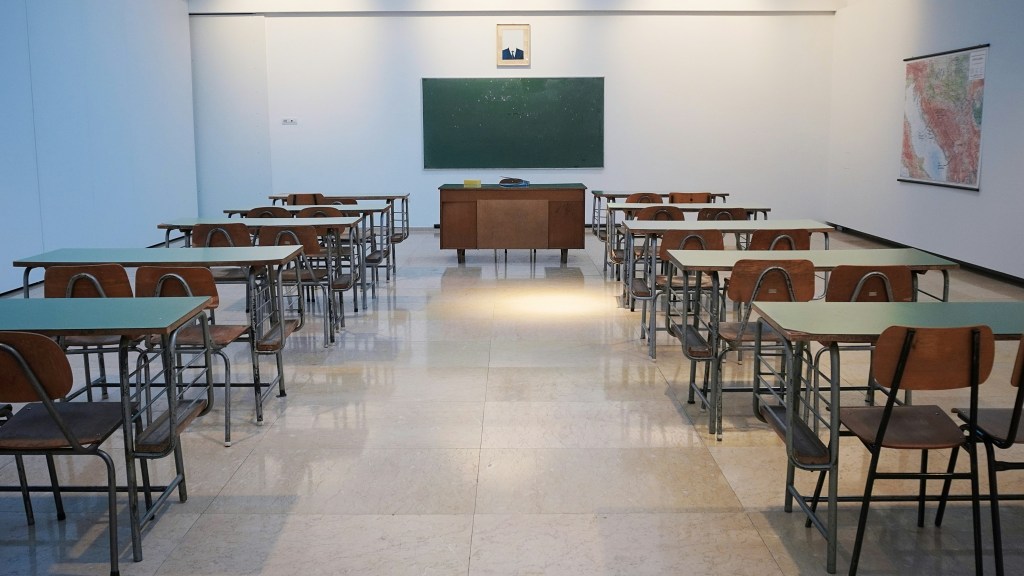
    It’s Saturday morning. I’m at a high school. Not mine, but it smells roughly the same.

    There’s a poster, announcing auditions for a play. For a split second I consider auditioning, then remember I can’t. Whatever, I’m in a play next week.

    In the classroom where we wait for our tests, I notice a cute guy next to me. Whatever, my boyfriend’s hotter.

    Mr. Cute Guy gets a calculator, which means he’s planning to be a STEM teacher of some sort. Me, I’m taking the English teacher’s test.

    ​My confidence is solid. High school’s easier to handle, when you’re twenty-eight.


    ALAINA HAMMOND is a poet, playwright, fiction writer, and visual artist. Her poems, plays, short stories, nonfiction, paintings, drawings, and photographs have been published both online and in print. A four-time nominee for the Pushcart Prize in fiction, her novelette, Jillian, Formerly Known as Frog Girl, was published by Bottlecap Press. Find her on Instagram @alainaheidelberger.


    Featured image by Ivan Aleksic, courtesy of Unsplash.

  • “Ben Stiller’s Friend Flipped Me Off at a Restaurant in New York City” by Rachel M. Hollis

    “Ben Stiller’s Friend Flipped Me Off at a Restaurant in New York City” by Rachel M. Hollis

    “Ben Stiller’s Friend Flipped Me Off at a Restaurant in New York City” is quite a long title for a rather short story. A microfiction, in fact. In 140 words, Rachel M. Hollis tells the immersive tale of an urban love affair, partially set in an “apartment, both cramped and impossibly empty.” And while the title may seem flippant, the narrator is anything but insincere.  —Court Harler


    Because I tried to take a sneaky picture of them on my BlackBerry. Blurry, lopsided, famous.

    Before Ben Stiller’s friend flipped me off at a restaurant in New York City, my boyfriend and I were arguing on West Forty-Sixth Street. He loved that the city never slept and I couldn’t remember the last time I had.

    Before we were bickering on a busy street, we were staring at our phones in our Williamsburg apartment, both cramped and impossibly empty.

    I didn’t realize what had happened until we got home and I opened the photo. Ben, ignoring us. His friend’s middle finger—perfectly in focus.

    “I still can’t believe we saw Ben Stiller,” he said, like it meant something. Like we’d had a moment.

    I packed a bag and left while he was still staring at the photo. He never looked up.


    RACHEL M. HOLLIS lives in the San Francisco Bay Area with her husband, child, and a deeply unmotivated dog. Her work appears or is forthcoming in River Teeth’s Beautiful Things, Midway Journal, Lost Balloon, Gone Lawn, Necessary Fiction, and elsewhere.


    Featured image by Wes Hicks, courtesy of Unsplash.

  • “Beth” by Shell St. James

    “Beth” by Shell St. James

    “Beth” by Shell St. James could be a contemporary, albeit chaste, roommate romance, but the narrator’s slightly elevated tone suggests otherwise for this flash fiction. In four dramatic scenes artfully condensed to their very essence, St. James utilizes poignant detail and evocative imagery to depict an indelible setting and deliver an unexpected storyline.  —Court Harler


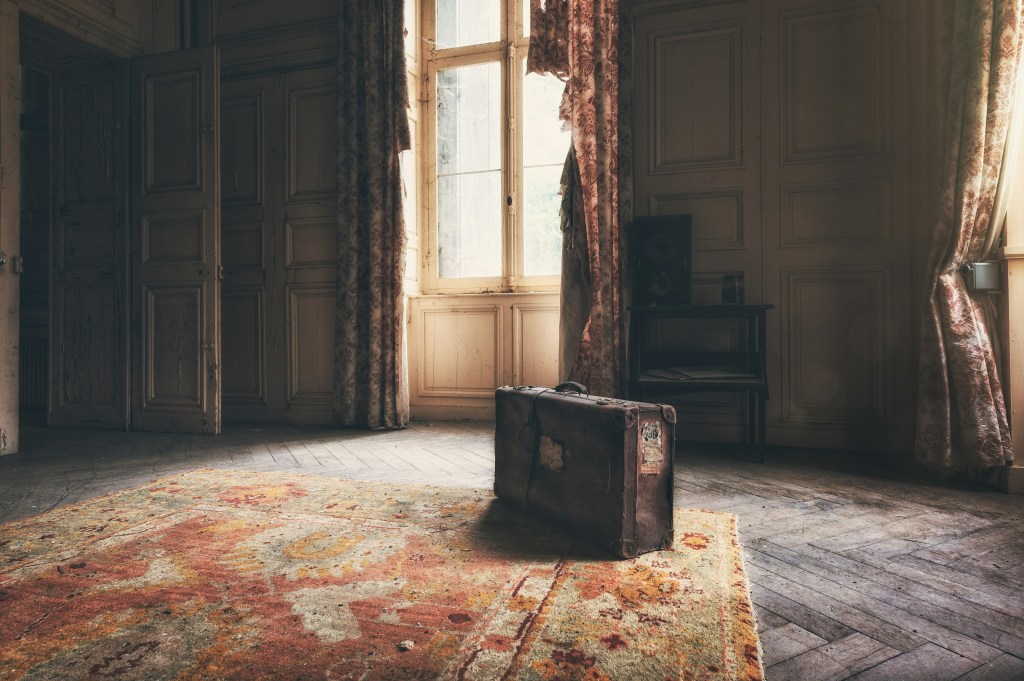
    The first time I saw Beth, she was dragging her luggage through my front door, cursing like a sailor as the suitcase got caught on the threshold.

    “May I help you with that?” My lips twitched as I tried to hide my amusement.

    She pointedly ignored me, a spirit of fierce independence evident in her scowl. Palms up, I backed off and watched her struggle, squashing down my impulse to take the dratted case out of her hands.

    The second time I saw Beth, she was sipping a glass of Merlot, listening to my favorite piece by Chopin, with her eyes closed. I stood in the shadowed corner of the study, quietly observing, as the music inspired her to rise from her chair and dance barefoot across the room. I fell in love with her as the candlelight lit her face, her auburn hair swirling in a fiery cloud, her graceful limbs fluid and expressive, painting the air.

    That night I crept into her bedroom as she slept, unable to resist the temptation to touch her. I gently stroked her cheek, wishing I could confess my feelings.

    Her eyes flew open in alarm, and she bolted upright in a panic.

    Ashamed, I fled the room, retreating to the attic.

    The last time I saw Beth, she was packing her things, intent upon leaving. I broke down and wept, begging her to stay, but she looked right through me. At the door she turned back warily, her fearful eyes scanning the empty front room.

    “Please don’t follow me,” she whispered. “Rest in peace.”


    SHELL ST. JAMES is an author and artist living in an 1895 farmhouse in the foothills of North Carolina. Her short stories have appeared in numerous magazines, anthologies, and podcasts, including Shenandoah Literary Magazine, Sci-Fi Shorts, Night Terrors: Scare Street (Vol. 12), and Creepy Podcast. Read selected stories for free at shellstjames.com.


    Featured image by Peter Herrmann, courtesy of Unsplash.