Tag: Metaphor

  • “Balance Exercises” by Brian McNely

    “Balance Exercises” by Brian McNely

    “Balance Exercises” by Brian McNely is a lyrical, meditative flash essay about aging, but not in the expected, human-centered sense. One chilly morning, we meet two elderly dogs who require and receive different approaches to their care. The reader’s empathy deepens “in the gloaming,” in the knowledge of the “shadows” that await.  —Court Harler


    Mo used to wake me up by nudging my arm, her tail smacking the bed frame. Now my bladder is my alarm clock, and Mo stays in bed, nose to Frito feet.

    There’s a wind advisory, and the “feels like” temp is in the teens. I pee and pull on layers. Mo does three big stretchy down dogs before she’s ready. She ducks her snout into her Carhartt chore coat. I kiss her forehead and grab an orange tennis ball we probably won’t chase. We’re out before sunup, usually before anyone else in the neighborhood, save the folks who’ve been out all night.

    This morning, someone crouches in the Gatton Park field, hands near the fallow grass. They’re shuffling, bundled up in the predawn darkness. There’s a pram nearby, on the park path.

    Mo pulls at her leash, her cuneate basenji ears erect as we lean into the wind.

    The pram’s black canopy catches a gust and rolls down the path, and the man in the field bolts up and sprints after it, leaving something small and white lying in the grass. Mo stops pulling. I knead my fists in my jacket pockets and roll them against my stomach.

    A Jack Russell mix holds up his shoulders and head on trembling forelegs. The rest of his body melts into the earth, hind legs splayed and twisted. We stop. Should we help? Can we help? But the man jogs back with the pram in a few easy strides and kicks the wheel brake.

    I duck my head against the wind, tucking my chin into my puffy. The man crouches again and scoops the dog’s pliant, pale belly with both hands, lifting his rear legs so pink paws touch grass. They shuffle together into the wind, stooped and humbled, looking for the perfect spot to pee.

    I watch Mo watch them. No pulling, whining, or growling. She gives the dog a pass. We’re accidental voyeurs, seeing what we’re not meant to see. We watch from different heights and pass by in a wide arc.

    But I pull down my hood, brave the cold, and look back. The man is standing now, holding his dog to his heart. He lays him in the pram and pushes it the way we’ve come.

    I raise my hood. Mo moves on to new smells and sounds, and I watch her pick her way along the path. Her leash is wrapped around my left wrist and pinned to my body. I measure her weight against this reflective tether, balance her steps against my own. She leads us out of the park and underneath Oliver Lewis Way.

    In the streetlights our shadows reach across the path and over Manchester Music Hall’s gravel lot. She tugs at her leash again—ears up—and I brace. In the gloaming, she sees, before I do, a rabbit bounding away, outpacing our shadows.

    In a week, she’ll be ten.


    BRIAN McNELY teaches at the University of Kentucky and races bikes. His work has appeared in Off Assignment, Invisible City Literary Journal, Magpie Zine, Porridge, and in academic journals such as Philosophy & Rhetoric. Find him on Instagram @bmcnely.


    Featured image by Andréas BRUN, courtesy of Unsplash.

  • “The Missing Notes” by Jeff Friedman

    “The Missing Notes” by Jeff Friedman

    “In the silence of memory,” loss lingers but refuses to reinstate itself. The trombone joins the saxophone as each “listens for the music in the quiet rooms.” In this sonic prose poem called “The Missing Notes,” Jeff Friedman attempts to reunite lost friends with a remembered melody, but the tune remains uncatchable.  —Court Harler


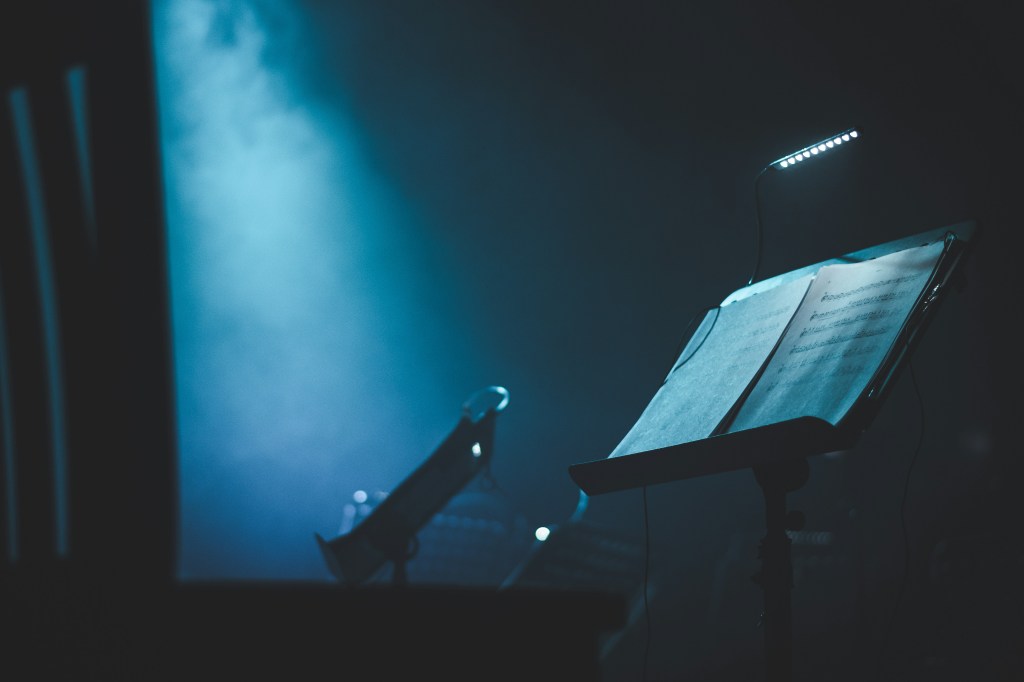
    There’s always a run of notes missing, a trill gone, a vibrato he can’t quite remember. The song stalls in his chest, in his throat, on his lips. Now he listens for the music in his saxophone, in the shaky windows overlooking the giant plane trees and the scuffle of people headed toward the subway or the grocery, listens for the music in the quiet rooms under the rumble, but it’s not there. In the silence of memory, he hears a sound awakening, his old friend’s laughter like a door creaking slowly, then swinging open wide. His friend lifts his trombone, with its golden light, and the run of notes plays loudly and the song comes back to him like a bird flying through a window. He plays it over and over until he thinks he’s got it, memorized deep inside his bones, but his friend shakes his head and smiles, deep in his own silence.


    JEFF FRIEDMAN has published eleven collections of poetry and prose, including his most recent, Broken Signals (Bamboo Dart Press, August 2024). His work has appeared in Best Microfiction, The New Republic, New England Review, Poetry Magazine, and The American Poetry Review. He has received a National Endowment for the Arts Literature Translation Fellowship and numerous other awards.


    Featured image by Andrew Konstantinov, courtesy of Unsplash.

  • “Lucky” by Nate Methot

    “Lucky” by Nate Methot

    In this new flash essay entitled “Lucky” by Nate Methot, the author takes a hard look at luck. Luck is relative; luck is curated. Luck, good or bad, is a facet of life, but never uncomplicated. With lyrical prose and surprising sentence structure, the examination unfolds.  —Court Harler


    They said two to five years. It’s been fourteen. I’m lucky.

    Nothing and everything changed in an instant. All questions answered in the worst possible way. A death sentence in three words.

    It looks differently from here—I know what unfolds. If he could see the years, see the decline, experience the chasm between us, what would he think? It’s been so long—he was barely twenty-seven—is this lucky; am I lucky?

    I’ve lost so much, such freedom, hardly have a life of my own—no house, no car, no career, no family—depending on others, once-prized autonomy nearly extinguished. But I’m still nearer beginning than end: I eat, and talk, and stand, and breathe on my own. I’m not supposed to be here at all.

    They’re on Instagram, on TikTok, on Zoom, my peers, if that’s what they are. pALS is succinct—people with ALS. They advocate, gain followings, raise money, put their reality on view. They connect and share pain, spreading it out, relieving some pressure, and laugh with the darkness of the terminally ill—laugh at their mutual fucked-ness.

    I watch them progress, deteriorate, shrink. They shrink—collapse in on themselves. The cruel metamorphosis unfolds daily, by video. A young father types with his eyes, food port in his belly; an influencer is propped up with pillows, tube in her nose, body transformed into mush. It’s almost too hard to look at the future they tell me is coming. I scroll back to see the before—it’s been just a few years: he’s walking, stumbling forward in an unnerving gait, and she’s gorgeous, sharing the lighthearted ways she tells dates that she uses a cane. Those people are gone, the dichotomy excruciating.

    I tried to be one of them for a while, tried to find a place to fit in when I could no longer bear feeling lost and alone. They were pALS, a tragic, darkly unshakable identity and bond—all stages mixed together on my screen: energetic and imperceptible to bedridden and tube fed. Surely, I fit somewhere between, but even here, I couldn’t find the comfort I needed.

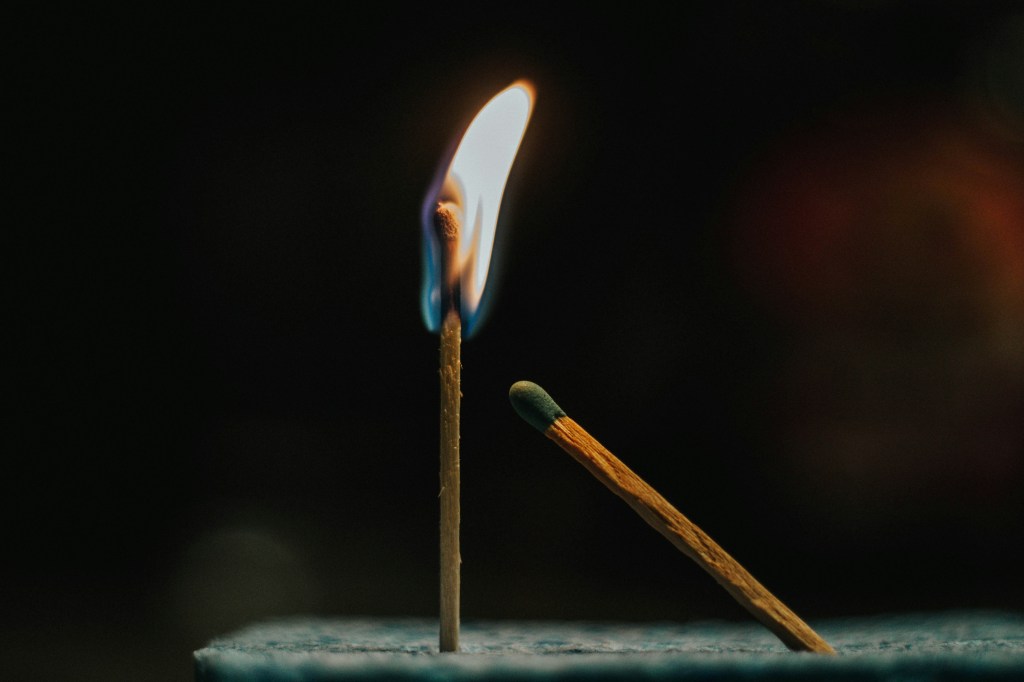
    I’m a slow burn, one match at a time, another handful of kindling on the way; they’ve been drenched through with diesel and engulfed. Our distance lies in the difference; labeled the same, we’re nothing alike. They have each other, but I have more days. I’m winning.

    I’m praised for this. Somehow. I fight harder, care more, have more to live for. I’m mentally tougher. Tenacious.

    No. I’m not. I’m lucky.

    But I don’t live amongst the pALS. When I roll out my door, I don’t see slumped, unmoving bodies, don’t strain to hear indecipherable speech. No. I see life. I see function and ease and marvel at the wondrous human body. I see the others—whole crowds of others wholly unaware of the pain, blind to my jealous, disconcerted, gaping eyes.

    No, I’m not lucky.


    NATE METHOT is the author of A Life Derailed: My Journey with ALS, a memoir. He was diagnosed with ALS at twenty-seven in 2011. He lives with his parents in Vermont and writes with a mouse and on-screen keyboard. His memoir, blog, and social media can be found at natemethot.com.


    Featured image by Devin Avery, courtesy of Unsplash.

  • “White” by Barbara Krasner

    “White” by Barbara Krasner

    In “White,” an enigmatic microfiction by Barbara Krasner, the mystery of the artwork mirrors the mystery of the narrative. Who is the mystery man, and why does he do what he does? The resolution of the story opens like a green blossom, like a paint splatter come alive.  —Court Harler


    There’s white and then there’s white. I’m standing before Malevich’s White on White, the faint square inside a fainter one, whiteness studying itself. People call it a polar bear eating marshmallows in a blizzard. I think of the Benjamin Moore fan deck, hundreds of whites: Opulence, Alabaster, Atrium, Cotton, Whisper, Moonlight. Then a man bursts into the gallery shouting Down with white supremacy! Guards run after him. He throws a bucket of green paint. The square blooms into drips, a sudden Pollock. Paint streaks the wall, catching the light. The guards pin him down. A docent says, almost kindly, He meant Suprematism. The room goes still except for the slow descent of green. The white, of course, always meant something.


    BARBARA KRASNER holds an MFA from Vermont College of Fine Arts. Her work has appeared in more than seventy literary journals, earning her multiple Best American Short Stories, Best of the Net, Best Microfiction, and Pushcart Prize nominations. She lives and teaches in New Jersey.


    Featured image by Pawel Czerwinski, courtesy of Unsplash.

  • “Bobcat Trail” by Swetha Amit

    “Bobcat Trail” by Swetha Amit

    In “Bobcat Trail” by Swetha Amit, readers meet two characters in the process of radical change. The young narrator is about to leave for college, while the narrator’s unhappy mother begins a very different type of personal transformation. Amit imbues this speculative fiction with precise, unforgettable imagery and impeccable subtext.  —Court Harler


    After Dad abandoned us for another woman, Ma felt more comfortable in the garden than in the house. Beneath the starless sky, on the damp earth, nestled between the rustling bushes and the oleander tree. I would sometimes see her crouching. Her knees close to her chest, her brown eyes tracking the movements of a finch or a squirrel with uncanny stillness. One afternoon, the summer before I left for college, I found her almost motionless near the oleander tree. Her silhouette seemed to shimmer in the heat. Her floral-patterned sundress appeared to melt in the dazzling sunlight. Her soft velvet hands were now elongated and curved into claws that clutched the murky brown mud. A short bobbed tail twitched and brushed against her ankles.

    “Ma?” I gasped.

    She slowly turned her head to look at me. Her warm brown eyes were now wild, with golden irises and vertically slit pupils. The bridge of her nose protruded, and long whiskers grew from it. Her face was sharpened and framed by tufted ears. A low guttural chuff escaped her throat instead of the human words that included my name and insults hurled at Dad over the phone. Words that pierced my gut and made me retreat into the solitude of books and art. For a moment, we held eye contact. There was no fear or regret in those eyes—just a cold, steely look.

    A squirrel emerged from the bushes looking for fruit. With a quick leap, she gave chase. I watched her move along the fence with a grace that Ma’s sluggish body had forgotten when she’d feast on Oreo cookies relentlessly or wipe out tubs of ice cream, weeks after Dad left. I watched her now partly in awe, partly anxious, wondering if fatigue would catch up with her aging body and she’d be found breathless, clutching her chest. Like the time she attempted a power yoga session while watching a video, only to find herself panting on the floor. I watched her and the squirrel disappear into the muddy trails behind our house. I waited until sweat trickled down my forehead. Until my throat became parched, and I forced myself to get a glass of ice water from the kitchen table. I came out. Ma was still not back. I waited until the sky turned pink to bruised purple, then a hollow black. The ice in my glass melted. I stood outside for a long time, listening to the sounds of the crickets chirping, the distant honking of passing cars, and an owl hooting. 

    A rustling in the bushes startled me.

    “Ma,” I called.

    I squinted to see two golden blazing spots. They were just fireflies.

    I waited all night under the starless sky, inhaling the scent of the mud, for Ma to emerge from the trails, panting. I held my glass of half-full water tightly.


    SWETHA AMIT is an MFA graduate from the University of San Francisco. She is the author of a memoir, A Turbulent Mind, and three chapbooks. Her words appear in HAD, Bending Genres, Ghost Parachute, Gone Lawn, cream city review, and others.


    Featured image by Giorgio Trovato, courtesy of Unsplash.

  • “Family Dinner on the Overnight Train” by Lisa K. Buchanan

    “Family Dinner on the Overnight Train” by Lisa K. Buchanan

    “Family Dinner on the Overnight Train” by Lisa K. Buchanan is a flash creative nonfiction essay that playfully subverts expectations of the form. Told in third person instead of first, the piece is based on the author’s fond memories of family dinner-table games and train vacations. Each family member is effectively and entertainingly characterized by an alias, and the essay’s events unfold with dreamlike, childlike wonder.  —Court Harler


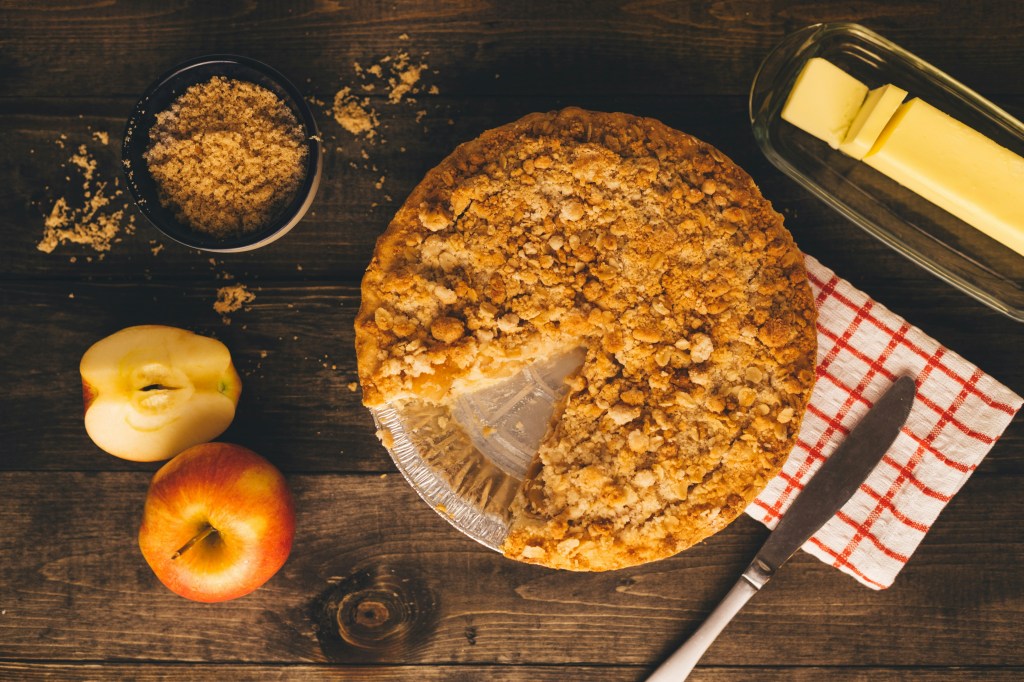
    First Place Prize of indigestion went to Big Engine, whose role at the table was to maximize speed and consumption. Last Place Prize, achieved by dawdling interminably over onion rings and sirloin, went to Young Caboose for whom rushing—through a meal or maintenance check or sublime landscape of jagged lava—would violate true train travel. Air Whistle announced each station-stop with adrenalized squeals. Dining Car’s pleas for mealtime civility did not prevent Engine and Whistle from shoveling succulent pink prime rib into their maws the way sweaty shirtless men had shoveled lumps of coal into bygone-era fireboxes. By the time Caboose brought up the rear, Dining Car’s favorite forbidden-fruit cordial had sold out, and Engine and Whistle were immersed in glops of French Apple Pie with Nutmeg Sauce.

    Through the night, Engine snored louder than the clickety-clack of steel wheels on steel tracks. Dining Car dreamt of forbidden fruit and sweaty shirtless men. Caboose stayed open late, wide-windowed and happily alone, while even Whistle was rocked into a soothing stupor and the most memorable of sleeps.

    Decades later, with Engine retired, Dining Car reduced to a snack counter, and Caboose gone largely remote, Air Whistle fondly recalled those family-of-four vacations aboard the overnight train from Los Angeles to Albuquerque. Rail travel in the region may have honeymooned decades earlier with mink stoles and felt fedoras, but another era might yet arrive—couplings strengthened, energies electrified, and those great gleaming windows ever saving.


    Writings by LISA K. BUCHANAN appear in CRAFT, The Citron Review, and elsewhere. Foes: fellow bus passengers with shoulder bags near her nose. Friends: people not preceding her in line for chocolate sorbet. Heroes: public librarians. Current favorite banned book: They Called Us Enemy by George Takei.


    Featured image by Patrick Fore, courtesy of Unsplash.

  • “Liturgist of the Land: A Single Work Completed” by Gregory Ormson

    “Liturgist of the Land: A Single Work Completed” by Gregory Ormson

    In his lyric essay, “Liturgist of the Land: A Single Work Completed,” Gregory Ormson pairs the philosophical with the practical, the conceptual with the concrete. While he ponders the lofty lessons of Greek myth, he also contemplates the gritty necessity of burial. In these parallels, Ormson finely illustrates what he calls “finishment,” even if it remains elusive.  —Court Harler


    Look around. People are constantly checking their cell phones. Something must be left undone. A complete fucking incompleteness, a permanent, angst-driven scratch. Sisyphus whined, “In this rhythm, I am caught.” Push the stone up the mountain. Check the phone.

    Does anyone experience a single work completed? A work so perfectly done that it could be called an existential tetelestai, a complete eschatological-level finishment. I saw it once, a work completed that could not be improved. Here is the work indexed:

    Dig.

    Dump.

    Bury.

    Cover.

    Nothing decorative. Nothing symbolic. Everything necessary.

    Burial is not in my will, but I can pretend it is. Play with me here. See one gravedigger standing above my body, boots planted in sacred ground, cigar at his mouth. Before the last shovel of earth is tipped over me, he flicks the cigar down into the hole and covers it. Then he dusts off his hands, spits once, and walks away. One work completed that day. If I were still alive to know it, I would be satisfied with his work. He would not call it a ritual. He would not name himself a priest. But the land would know.

    Some people serve as liturgists without learning the title of their work. I saw another version of that same work with my friend Baker in Big Bay, Michigan, when we dug down eight feet into the earth with a spade.

    In the middle of our work, he stopped to catch his breath. “It’s got to be deep, so the skunks don’t dig it up and spread it around the campground,” he said.

    Tipping a blue barrel of fish remains into the hole, gathered from the campers at his resort, I looked at the slimy cathedral of eyes, bone, and skin. Walleye and crappie, bass and perch. Death and life piled up together in stink and shine.

    Baker stirred the goop in the hole with a stick, handed the stick to me and said, “Here. Mix it up.” I stirred the smelly goo while he added sand and water. “Yuck, that stinks,” the children said. They hated our cigars too.

    The smelly alchemy of fish, sand, water, and flies animated his conviction that the whole creation was right there in that hole. “Is this a metaphor for our life on earth, foam stirred by another master?” Baker said.

    Brushing up against the mystery of life in that hole by Lake Independence, I wondered if Baker was an alchemist in a past life, a man to whom the search for the philosopher’s stone was never completed. The seminarian interrupted, apprenticed to decay…yet still busy sniffing out divinity’s lessons in the alchemy of decomposing flesh in bubbles of methane and carbon dioxide.

    Over the years, I have learned how sacred ground is formed. The cabin floor, worn thin by feet and years. The red-handled pump that once squealed loud enough for people across the lake to hear us collecting water for morning coffee, now stilled. The graves of Sitting Bull and Sacagawea where engines fall silent into the space of awe and attention. The Red Desert, holding my medicine bowl of the vision quest where only breath moves. And the prickly desert where a girl vanished, and neither the ground nor the courts have finished the work.

    Different soils. Same covenant.

    I am counting on fire to take my body and my phone. No more scrolling. No more unfinished messages. No more stone to push back uphill. But one last time, I let myself imagine the liturgy in land, the older grammar, older than signal and screen:

    Dig.

    Dump.

    Bury.

    Cover.

    A shovel.

    A cigar.

    Another burial under the thin skin of the Earth, where the sacred ground seals our relinquishment. And the last act, releasing what is always borrowed and rented. But, at last, no more Sisyphean grind, just one single work,
    completed.


    GREGORY ORMSON is the author of Yoga Song, Rochak Publishing (2022) and Lantern Audio (2023). “Midwest Intimations” was his winning longform lyric essay in Eastern Iowa Review’s Maggie Nonfiction Award (2016). He was also awarded Indiana Review’s thirteen-word story contest prize (2015).


    Featured image by Sašo Tušar, courtesy of Unsplash.

  • “Tufts” by Miriam Mandel Levi

    “Tufts” by Miriam Mandel Levi

    “Tufts” by Miriam Mandel Levi is a ghost story of a flash fiction. You’ll sense a weird chill, and not quite know why. Maybe it’s the way the author captures the ineffable, or the sublime. Or maybe it’s the way the narrator suffers, so alone. Either way, you’ll feel the season’s fear: solitary rambles, falling leaves, peripheral apparitions.  —Court Harler


    A piece protrudes behind my ear, at my waist, so I adjust my hat, tuck in my shirt. You wouldn’t believe how many times I go to the bathroom to check, and it’s a rare bathroom these days that has a full-length mirror.

    Once, in a conversation with a guy at a work, I noticed a piece jutting from my shoulder. I brushed it off with a toss of my hair as if it were a flake of dandruff. Another time, at a bar with friends, I found a few pieces at my feet, and kicked them out of sight. What was that? someone asked. Straw, I think, I said. Maybe by day the bar is a barn and at night they delete the n. They laughed. It takes so little to throw people off your scent.

    In the past, I worried about my dusty, musty scent. Avoided confined spaces, overdid the perfume. I made my movements small and circumscribed so I wouldn’t crackle. Mercifully and sadly, not a single person has ever noticed or let on that they know. True I hid, but only in order to be found.

    My mother used to admonish, Stay out of the wind, remember a cow could take a chunk out of you, don’t get too close to a fire. Of course I know how sorrily and abruptly it could end for me. But after all these years of concealment, I can’t say I’d miss it: life, or loneliness, I mean.

    Over the years, I have searched for someone like me. Looked for a lightness of step, listened for a rustle. I’ve come across people stuffed with cotton batting, wool, feathers, foam, even ball bearings—all trying to pass themselves off as flesh and blood, as if it were some standard of normalcy.

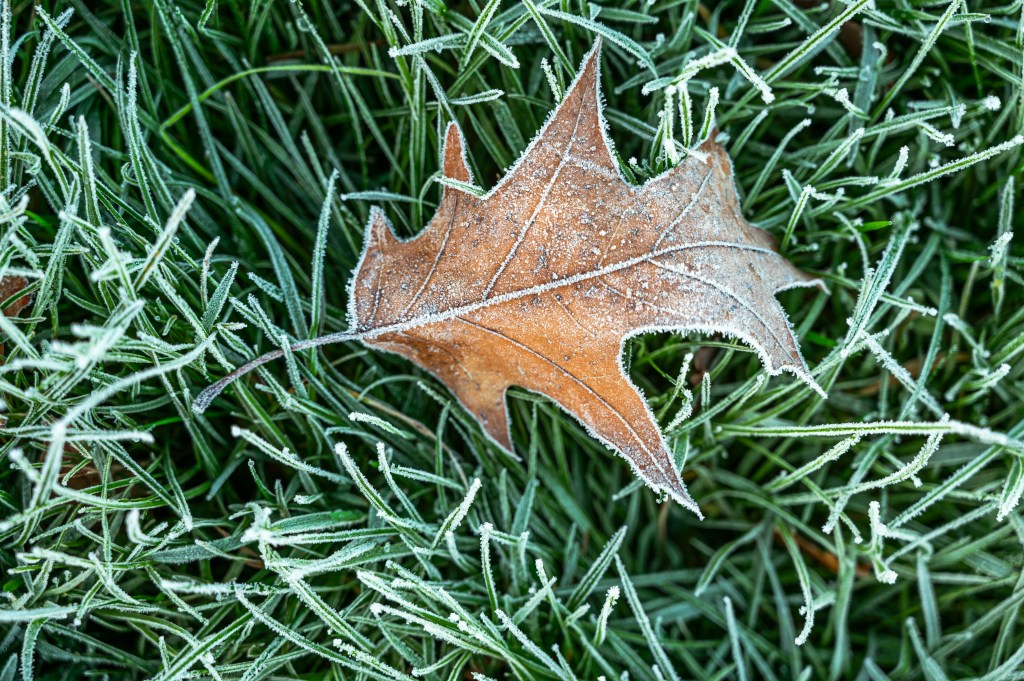
    Sometimes I imagine tearing off my clothes, grabbing tufts from my head and belly, and tossing them into the air like dry fall leaves. You see! I’d shout at no one, until my voice grew hoarse and my clothes sagged and the wind whipped up the long crisp strands and scattered them.


    MIRIAM MANDEL LEVI is a retired speech-language pathologist turned writer and editor. Her work has appeared most recently in JMWW, Flash Frog, The Forge, Under the Gum Tree, River Teeth, and Bending Genres. She is an editor at Under the Sun: A Journal of Creative Nonfiction.


    Featured image by Nellie Adamyan, courtesy of Unsplash.

  • “Brief Lives of Garden Insects” by Frances Gapper

    “Brief Lives of Garden Insects” by Frances Gapper

    In “Brief Lives of Garden Insects” by Frances Gapper, bugs are sexy. And fascinating. From “The Dreadfuls” to the “Best in Show,” these miniature, pesky creatures flash in to and out of their own lives. In each numbered segment, they posit quirky but poignant questions about friendship, courtship, and partnership.  —Court Harler


    1

    Jane’s partner Maria’s fifty viviparous adult daughters, aka The Dreadfuls, are visiting in midsummer; staying aeons. Maria says, ‘Spit for luck!’ and Jane gobs up nectar. It’s her own fault for having opted to remain wingless, sans alpha female equipment.

    The Dreadfuls pierce leaves and suck sap, demolish pies, colonise hooks and pegs, flutter-float while eyeing Jane. And give birth. Happening once upon a Dreadful squatting to extrude, Jane detoured around her, pink but smiling.

    After the visit, Maria lies on her back and waves her legs in the air. Grateful for Jane’s billion cups of green tea: ‘I owe you,’ she says.

    Jane’s ex-loves forged independent lives but later grew desperate. She more cautiously chose to attach herself to a thriving family. Or horde, scourge, intrusion. Whatever.

    2

    Jane loves one of her co-grandkids, Jimmie. Anxious re his weakling status – butt of sidebites, target of gunk – she cherished him. Tickled his tum and endured his earwig jokes, beetle jokes, jokes about ants, thrip jokes.

    But getting smart and ignorant, he joined the superhighway. She chased after him: ‘Jimmie-Jim, give me a kiss?’

    ‘Fuck off, Nanny.’ He really said that. And she laughed.

    3

    The way Ant Guy (‘Call me Gorge.’) used to milk Jane, it felt like being given a lovely massage. ‘You’re my favourite cow,’ he’d say. ‘Best in Show. Awarded a rosette.’

    They had a friends-with-benefits relationship. When Jane was being bugged by a predatory midge, Ant Guy zapped it.

    But one day: ‘Where’s Gorge?’

    ‘Deleted. Got too sociable with the livestock.’

    Farm life continues. They ant-handle her, she excretes the honeydew, they cart it off.


    FRANCES GAPPER’s work has been published in four Best Microfiction anthologies and lit mags including trampset, Splonk, Wigleaf, The Forge, Atlas and Alice, 100 word story, Literary Namjooning, and Trash Cat. She lives in the UK’s Black Country region.


    Featured image by Phil Mono, courtesy of Unsplash.

  • “Adrift” by Tracie Adams

    “Adrift” by Tracie Adams

    September is the season of gentle remembrance. Summer’s over and school’s back in session. Elementary or university, our children resume their inexorable paths toward more independence and, consequently, more distance, from us, their parents. In “Adrift,” Tracie Adams captures moments anew: what would we give to relive each (im)perfect family memory, just one last time?  —Court Harler


    Maybe it was the worst of times on that houseboat. The air conditioning was broken, forcing us to retreat to the sundeck to escape the sweltering heat of the living room, an Easy-Bake Oven that smelled like a urinal cake. Maybe it was the best of times, the perfect ending to a vacation that began at a waterpark resort in Phoenix, where my husband and I watched our teens swoosh through slides, shouting this is awesome!

    Maybe it was awesome. Or maybe it was another unblemished day soon to disappear as they left for college, marriage, their own lives. Like the day we explored a graveyard in a ghost town called Tombstone, its markers straight out of an old Western. Or when we drove ATVs through desert sunsets melting over Sedona’s red rocks, etching our names in stone, eating pizza under stars. Or when we held our breath in awe at the Grand Canyon’s south rim stretching as wide as a mother’s arms.

    Maybe the man who gave us directions to the marina at Lake Mead wasn’t a liar. Or maybe he was the best kind—don’t bring anything, we’ve got it all—which turned out to be hot dogs, Pop-Tarts, and energy drinks. The camp store shelves were bare. For days, we floated under a Nevada sun, drinking Red Bulls in a rooftop hot tub, where our words were movie lines and our jokes secrets shared with the galaxies.

    Maybe the day we spent slithering through red mud at Slide Rock Park was delightful. But maybe it’s the suffering—the absences, the gaps—that forged us in a crucible and gifted us our golden memories. Maybe years later when I say Arizona trip, we’ll all burst into stories and laughter. Magic will hang like a velvet curtain between us and the world.

    Maybe the days we had so little were the times we had the most. Perhaps our true strength emerged in our weakest moments, struggling, burning like chaff, devouring Pop-Tarts in a floating gas station bathroom.

    Maybe it was never about the perfectly choreographed moments like birthday parties, Christmas lights, or Thanksgiving tables. Maybe it’s the laughter echoing over the water, stars shining in bright eyes, and the stories that still float between us like driftwood.


    TRACIE ADAMS is the author of Our Lives in Pieces. Her work has been nominated for the Pushcart Prize, longlisted for Wigleaf Top 50, and published widely in literary magazines, including SoFloPoJo, Fictive Dream, Cleaver Magazine, TRASH CAT LIT, and others. Follow her on Twitter @1funnyfarmAdams.


    Featured image by Dulcey Lima, courtesy of Unsplash.