Tag: Lyricism

  • “Red Saturday” by Shira Musicant

    “Red Saturday” by Shira Musicant

    In “Red Saturday,” Shira Musicant focuses on a singular pivotal event, a common technique for micromemoirists. Less commonly, however, Musicant utilizes third-person instead of first-person point of view, which helps to convey the sheer unbelievability of the moment. The child narrator of “Red Saturday” “sits on the curb” and, all alone, “wonders if it was real.”  —Court Harler


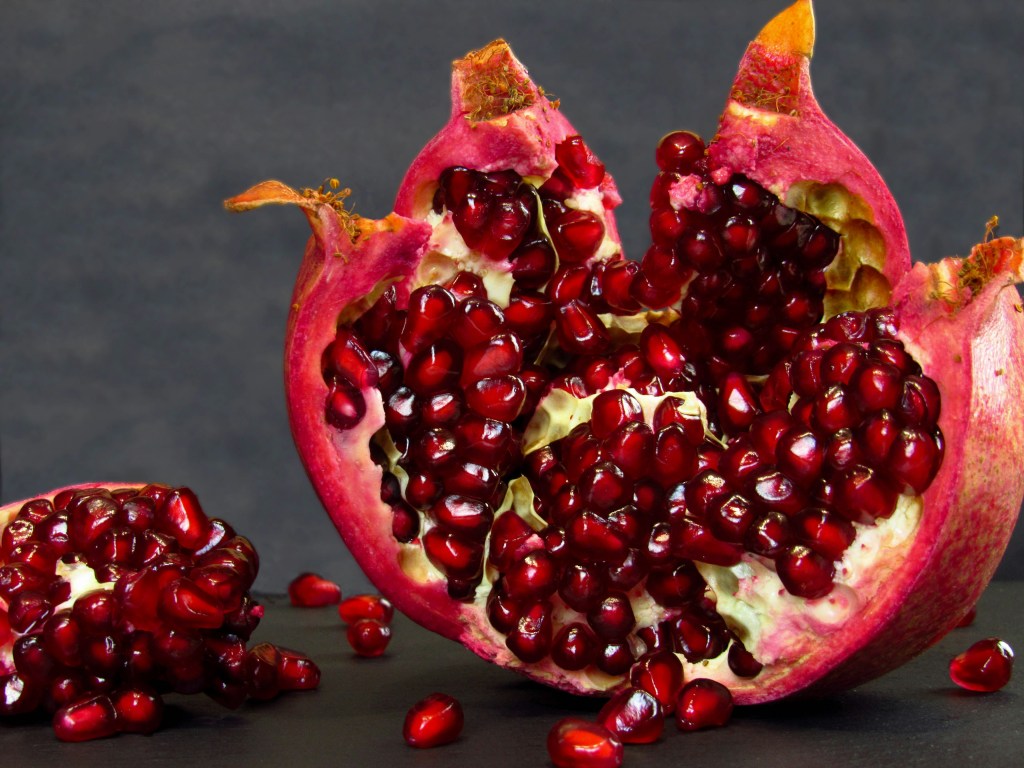
    She sits on the curb at the corner, banished from the house. Dad has given her his old tee shirt, and Mom has cut the pomegranate into pieces, revealing the crevasses where the red seeds hide. She digs her fingers into the fruit. She is red and pink and fuchsia, the tee shirt, her hands, her mouth. The juice is tangy and sweet, the seeds crunchy in her teeth, the voices from the house sharp and bitter.

    She sits on the curb, her feet in the gutter, and a car speeds around the corner, around her resting feet and her red-stained face. She feels the hot whoosh and the way it lifts her hair from her face. When it is gone, she wonders if it was real.

    It happened so quickly, there was no time for fear to take hold.

    After the car, she sits on the curb at the corner wondering if the driver saw her, if she almost died, if Mom and Dad knew what had happened. She has no words to explain the car, no words to explain how big the world and how small her feet in the gutter. The only words she has in that moment are the words she doesn’t know, but hears flung through the house, angry red biting words.  

    She peels back white skin in the pomegranate, uncovering another hidden red cluster of seeds, waiting for her parents to call her back inside.

    Later, Mom throws the tee shirt in the washing machine and scrubs the juice off her face and hands. Later, Dad leaves in his car, backing down the driveway into the street past her corner. She watches him go from the window, waving goodbye, and pressing her hand into the glass, a hand still pink from the scrub and the pomegranate.


    SHIRA MUSICANT, recently retired from her practice as a somatic psychotherapist, writes short fiction and creative nonfiction. Her work has received four Pushcart nominations and can be found in various literary journals including Star 82 Review, Vestal Review, Fourth Genre, SmokeLong Quarterly, Bending Genres, and Milk Candy Review.


    Featured image by Karyna Panchenko, courtesy of Unsplash.

  • “Liturgist of the Land: A Single Work Completed” by Gregory Ormson

    “Liturgist of the Land: A Single Work Completed” by Gregory Ormson

    In his lyric essay, “Liturgist of the Land: A Single Work Completed,” Gregory Ormson pairs the philosophical with the practical, the conceptual with the concrete. While he ponders the lofty lessons of Greek myth, he also contemplates the gritty necessity of burial. In these parallels, Ormson finely illustrates what he calls “finishment,” even if it remains elusive.  —Court Harler


    Look around. People are constantly checking their cell phones. Something must be left undone. A complete fucking incompleteness, a permanent, angst-driven scratch. Sisyphus whined, “In this rhythm, I am caught.” Push the stone up the mountain. Check the phone.

    Does anyone experience a single work completed? A work so perfectly done that it could be called an existential tetelestai, a complete eschatological-level finishment. I saw it once, a work completed that could not be improved. Here is the work indexed:

    Dig.

    Dump.

    Bury.

    Cover.

    Nothing decorative. Nothing symbolic. Everything necessary.

    Burial is not in my will, but I can pretend it is. Play with me here. See one gravedigger standing above my body, boots planted in sacred ground, cigar at his mouth. Before the last shovel of earth is tipped over me, he flicks the cigar down into the hole and covers it. Then he dusts off his hands, spits once, and walks away. One work completed that day. If I were still alive to know it, I would be satisfied with his work. He would not call it a ritual. He would not name himself a priest. But the land would know.

    Some people serve as liturgists without learning the title of their work. I saw another version of that same work with my friend Baker in Big Bay, Michigan, when we dug down eight feet into the earth with a spade.

    In the middle of our work, he stopped to catch his breath. “It’s got to be deep, so the skunks don’t dig it up and spread it around the campground,” he said.

    Tipping a blue barrel of fish remains into the hole, gathered from the campers at his resort, I looked at the slimy cathedral of eyes, bone, and skin. Walleye and crappie, bass and perch. Death and life piled up together in stink and shine.

    Baker stirred the goop in the hole with a stick, handed the stick to me and said, “Here. Mix it up.” I stirred the smelly goo while he added sand and water. “Yuck, that stinks,” the children said. They hated our cigars too.

    The smelly alchemy of fish, sand, water, and flies animated his conviction that the whole creation was right there in that hole. “Is this a metaphor for our life on earth, foam stirred by another master?” Baker said.

    Brushing up against the mystery of life in that hole by Lake Independence, I wondered if Baker was an alchemist in a past life, a man to whom the search for the philosopher’s stone was never completed. The seminarian interrupted, apprenticed to decay…yet still busy sniffing out divinity’s lessons in the alchemy of decomposing flesh in bubbles of methane and carbon dioxide.

    Over the years, I have learned how sacred ground is formed. The cabin floor, worn thin by feet and years. The red-handled pump that once squealed loud enough for people across the lake to hear us collecting water for morning coffee, now stilled. The graves of Sitting Bull and Sacagawea where engines fall silent into the space of awe and attention. The Red Desert, holding my medicine bowl of the vision quest where only breath moves. And the prickly desert where a girl vanished, and neither the ground nor the courts have finished the work.

    Different soils. Same covenant.

    I am counting on fire to take my body and my phone. No more scrolling. No more unfinished messages. No more stone to push back uphill. But one last time, I let myself imagine the liturgy in land, the older grammar, older than signal and screen:

    Dig.

    Dump.

    Bury.

    Cover.

    A shovel.

    A cigar.

    Another burial under the thin skin of the Earth, where the sacred ground seals our relinquishment. And the last act, releasing what is always borrowed and rented. But, at last, no more Sisyphean grind, just one single work,
    completed.


    GREGORY ORMSON is the author of Yoga Song, Rochak Publishing (2022) and Lantern Audio (2023). “Midwest Intimations” was his winning longform lyric essay in Eastern Iowa Review’s Maggie Nonfiction Award (2016). He was also awarded Indiana Review’s thirteen-word story contest prize (2015).


    Featured image by Sašo Tušar, courtesy of Unsplash.