Tag: Lyrical Language

  • “Mehmed’s Fever” by Râna Campbell

    “Mehmed’s Fever” by Râna Campbell

    “Mehmed’s Fever” by Râna Campbell is a hybrid work of speculative historical flash fiction and just a hint of prose poetry. Elevated language intensifies the regal setting of the Third Courtyard, while the symbolic and mythic allure of the peacock entrances both the eye and the imagination. “What one sees is what one has chosen,” so says the sage.  —Court Harler


    Sunrise alighted on the city’s minarets and began seeping through its bazaars like pomegranate molasses. Constantinople had been seized over twenty years ago, and Fâtih Sultan Mehmed strolled the New Palace’s Third Courtyard secure in Islambol’s inviolability.

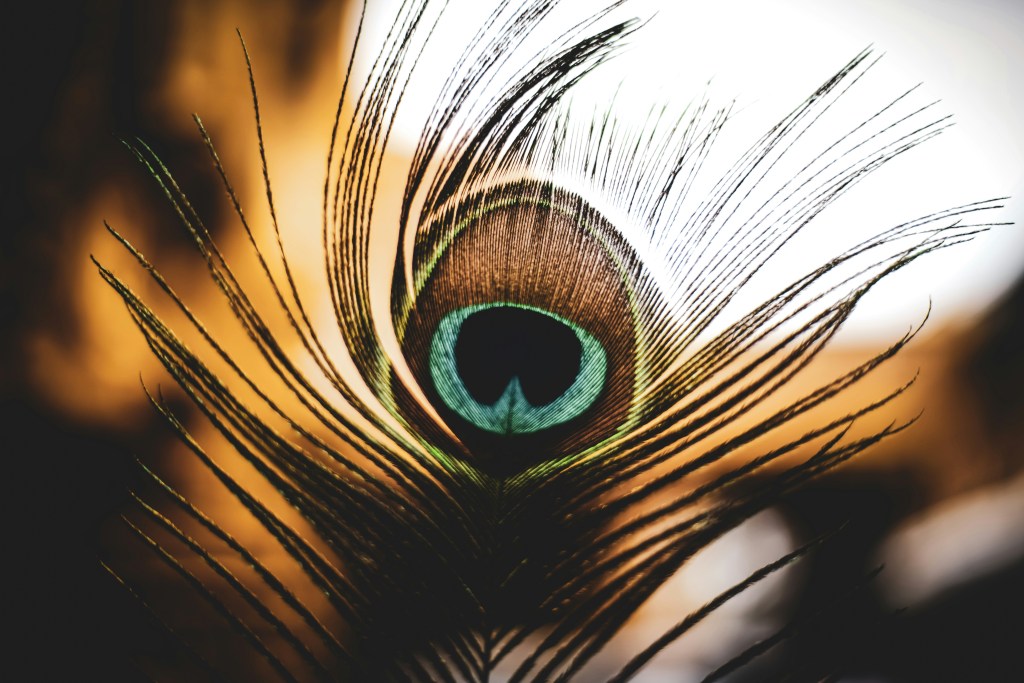
    A rosebush stirred in the sultan’s peripheral vision. As he turned, a peacock emerged, its tail fanning out into a hundred iridescent eyes. Together they shimmered like the depthless night sky, beckoning Mehmed forward. He raised the brocaded edges of his emerald kaftan, the bejeweled silk garment refracting rays of amber, and crouched.

    What is it you show me?

    “There was a time when man and beast and the light of Mohammed were as one,” chimed a voice as familiar as the muezzin’s call to prayer. The peacock cracked open, birthing Akshemseddin’s white-bearded figure, his turban a resplendent halo.

    “Hodja Efendi, am I dreaming?” Mehmed asked his long-deceased Sufi mentor.

    “Is not life but a dream, Conqueror, in the watchful eye of Allah’s mind?”

    Day broke. The fragrant steam of spiced sahlep drifted over from the kitchens by the Second Courtyard. A bead of sweat escaped Mehmed’s turban. Then another. Where the droplets met the arid soil, pools of indigo and turquoise formed and sprouted peacock feathers. He steadied himself, rose, then moved to splash moon-chilled water on his face from the garden’s central pond.

    Akshemseddin followed, a trail of feathers blooming in his wake.

    “The peacock, too, watches…some see in its gaze the promise of paradise, others eternal disgrace. What one sees is what one has chosen. But vanity can blind a man.”

    “Have I been vain, Hodjam?”

    But Akshemseddin was gone, and the feathers in the grass encircled and overtook Mehmed’s limbs like vines, until he stood,

    himself a peacock,

    looking out at his sprawling empire

    from behind a dewy rosebush.


    RÂNA CAMPBELL is a damn good editor and a prize-winning writer of flash and microfiction, along with the occasional poem. Her work has appeared, among others, in Intrepidus Ink, God’s Cruel Joke, and Humphrey Magazine. For general inquiries and editing services rendered with love, Râna can be reached at yourfinaldraftediting@gmail.com.


    Featured image by Mohnish Landge, courtesy of Unsplash.

  • “To a Flame” by Christie Chapman

    “To a Flame” by Christie Chapman

    In the microessay “To a Flame” by Christie Chapman, ekphrasis and metanarrative commingle in delightful ways, despite the theater’s dark and disrupted setting. “Winged obscurants” spark existential questions for the narrator: “Have I made my life in the right shape?” The plot evades any easy resolution.  —Court Harler


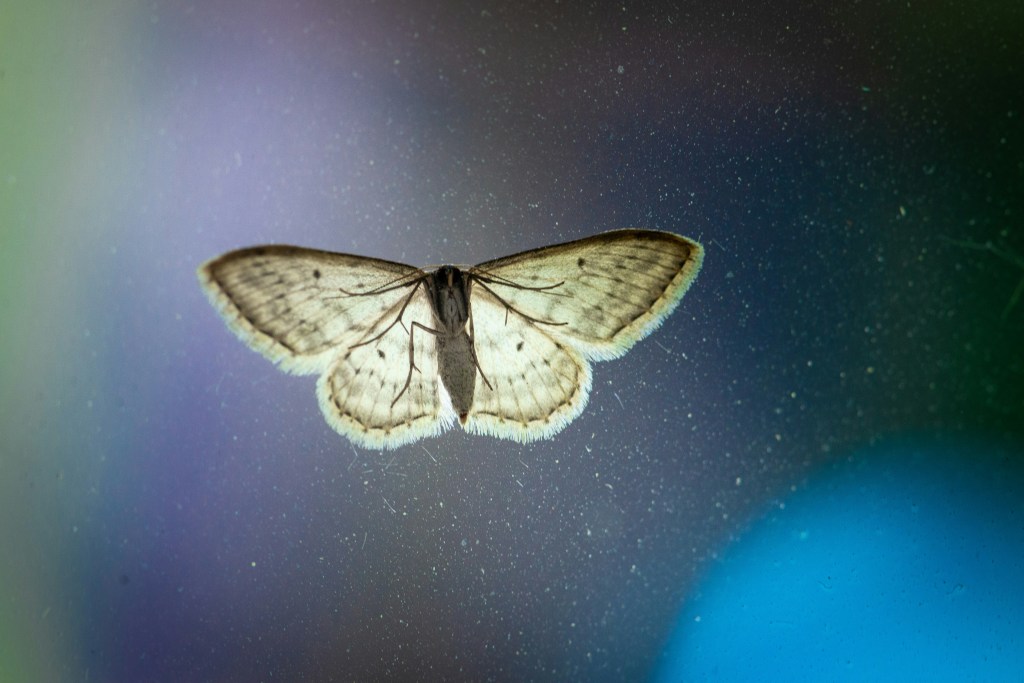
    In the 1983 Canadian comedy film Strange Brew, two bumbling brothers bring a jar of moths into a theater that’s showing a bad movie they’ve made. When the audience hollers “Boo!” one of the brothers opens the jar. As the moviegoers shriek and duck and flinch, and exit the theater—the winged obscurants follow their passion to the light. They block the projector’s flicker, which is inscribing the bad story.

    The brothers do this to escape, to avoid giving refunds. They’re mostly spared the consequences of their story, eclipsed by a hundred tiny yearnings.

    But really, they are the story—the brothers, the moths. I think about this a lot: What is a story? Have I made my life the right shape? What do you do when the plot goes astray—when the other person in your bed puts a pillow behind him and rolls away?

    I always felt more like the moths. The metaphorical moths; real moths use a light source to navigate only. I’m like those moonstruck loonies in eighties pop songs and eighth-grade love notes. I fling myself at any heat source. Story be damned.


    CHRISTIE CHAPMAN is a writer and mom in Springfield, Virginia. Her work has been published and is forthcoming in Electric Literature, LEON Literary Review, L’Esprit Literary Review, Midway Journal, The Bulb Region, Ghost Parachute, and elsewhere. She was a Lascaux Prize finalist for flash fiction and nominated for Best Microfiction.


    Featured image by Max Kleinen, courtesy of Unsplash.

  • “Balance Exercises” by Brian McNely

    “Balance Exercises” by Brian McNely

    “Balance Exercises” by Brian McNely is a lyrical, meditative flash essay about aging, but not in the expected, human-centered sense. One chilly morning, we meet two elderly dogs who require and receive different approaches to their care. The reader’s empathy deepens “in the gloaming,” in the knowledge of the “shadows” that await.  —Court Harler


    Mo used to wake me up by nudging my arm, her tail smacking the bed frame. Now my bladder is my alarm clock, and Mo stays in bed, nose to Frito feet.

    There’s a wind advisory, and the “feels like” temp is in the teens. I pee and pull on layers. Mo does three big stretchy down dogs before she’s ready. She ducks her snout into her Carhartt chore coat. I kiss her forehead and grab an orange tennis ball we probably won’t chase. We’re out before sunup, usually before anyone else in the neighborhood, save the folks who’ve been out all night.

    This morning, someone crouches in the Gatton Park field, hands near the fallow grass. They’re shuffling, bundled up in the predawn darkness. There’s a pram nearby, on the park path.

    Mo pulls at her leash, her cuneate basenji ears erect as we lean into the wind.

    The pram’s black canopy catches a gust and rolls down the path, and the man in the field bolts up and sprints after it, leaving something small and white lying in the grass. Mo stops pulling. I knead my fists in my jacket pockets and roll them against my stomach.

    A Jack Russell mix holds up his shoulders and head on trembling forelegs. The rest of his body melts into the earth, hind legs splayed and twisted. We stop. Should we help? Can we help? But the man jogs back with the pram in a few easy strides and kicks the wheel brake.

    I duck my head against the wind, tucking my chin into my puffy. The man crouches again and scoops the dog’s pliant, pale belly with both hands, lifting his rear legs so pink paws touch grass. They shuffle together into the wind, stooped and humbled, looking for the perfect spot to pee.

    I watch Mo watch them. No pulling, whining, or growling. She gives the dog a pass. We’re accidental voyeurs, seeing what we’re not meant to see. We watch from different heights and pass by in a wide arc.

    But I pull down my hood, brave the cold, and look back. The man is standing now, holding his dog to his heart. He lays him in the pram and pushes it the way we’ve come.

    I raise my hood. Mo moves on to new smells and sounds, and I watch her pick her way along the path. Her leash is wrapped around my left wrist and pinned to my body. I measure her weight against this reflective tether, balance her steps against my own. She leads us out of the park and underneath Oliver Lewis Way.

    In the streetlights our shadows reach across the path and over Manchester Music Hall’s gravel lot. She tugs at her leash again—ears up—and I brace. In the gloaming, she sees, before I do, a rabbit bounding away, outpacing our shadows.

    In a week, she’ll be ten.


    BRIAN McNELY teaches at the University of Kentucky and races bikes. His work has appeared in Off Assignment, Invisible City Literary Journal, Magpie Zine, Porridge, and in academic journals such as Philosophy & Rhetoric. Find him on Instagram @bmcnely.


    Featured image by Andréas BRUN, courtesy of Unsplash.

  • “Drop by Drop” by Melissa Llanes Brownlee

    “Drop by Drop” by Melissa Llanes Brownlee

    In “Drop by Drop,” the new lyrical microfiction by Melissa Llanes Brownlee, tension creates narrative structure. Consider the “compound bows” and the “cloud” of the cousins’ anger. Also consider the way commas demand moments of pause, akin to traditional poetic lineation. Like the narrator, the reader is both pushed and pulled through the piece.  —Court Harler


    Uncle takes me and the cousins hunting, our compound bows carried on our backs, uncle’s gun, holstered, for emergencies. A family of boar were heard rooting around up the mountain, so we had parked on the highway and followed the shape of uncle through the tall grass and trees. The cousins brag about getting a boar, their picture taken, the tusks saved for a necklace. I keep quiet, the borrowed bow, a weight I didn’t want. I hear a nip, a bark, and stop. Uncle is motionless, his head pitched to the side. He looks at me, pulls me with a wave. I drag myself to him, pulling the bow from my back, getting an arrow to notch. Uncle points through the trees and I see them, a mother and two babies, bristles dark, snouts edging around trees. Uncle nods at me. I hear my cousins whispering, their anger, a cloud around me. I notch my arrow, remembering uncle’s instructions, breathe, line up my sight, aim for the ear, pull, seeing his knife pointing to the soft bits of the pig at my oldest cousin’s wedding, the best places to aim. I let fly, my shoulder hurting from the tension, and my arrow pierces the mother’s side, missing the ear, missing the spine, and there is a scream, and I shiver. My uncle sighs, pulling out his gun, the shot echoes the boar’s charge in reply and all I see is the blood lit on trampled ground.


    MELISSA LLANES BROWNLEE (she/her), a native Hawaiian writer living in Japan, has work published and forthcoming in Moon City Review and Prairie Schooner. Read Hard Skin (2022), Kahi and Lua (2022), and Bitter over Sweet (2025) from Santa Fe Writers Project. She tweets @lumchanmfa and talks story at melissallanesbrownlee.com.


    Featured image by Ty Feague, courtesy of Unsplash.