Tag: Imagery

  • “Adrift” by Tracie Adams

    “Adrift” by Tracie Adams

    September is the season of gentle remembrance. Summer’s over and school’s back in session. Elementary or university, our children resume their inexorable paths toward more independence and, consequently, more distance, from us, their parents. In “Adrift,” Tracie Adams captures moments anew: what would we give to relive each (im)perfect family memory, just one last time?  —Court Harler


    Maybe it was the worst of times on that houseboat. The air conditioning was broken, forcing us to retreat to the sundeck to escape the sweltering heat of the living room, an Easy-Bake Oven that smelled like a urinal cake. Maybe it was the best of times, the perfect ending to a vacation that began at a waterpark resort in Phoenix, where my husband and I watched our teens swoosh through slides, shouting this is awesome!

    Maybe it was awesome. Or maybe it was another unblemished day soon to disappear as they left for college, marriage, their own lives. Like the day we explored a graveyard in a ghost town called Tombstone, its markers straight out of an old Western. Or when we drove ATVs through desert sunsets melting over Sedona’s red rocks, etching our names in stone, eating pizza under stars. Or when we held our breath in awe at the Grand Canyon’s south rim stretching as wide as a mother’s arms.

    Maybe the man who gave us directions to the marina at Lake Mead wasn’t a liar. Or maybe he was the best kind—don’t bring anything, we’ve got it all—which turned out to be hot dogs, Pop-Tarts, and energy drinks. The camp store shelves were bare. For days, we floated under a Nevada sun, drinking Red Bulls in a rooftop hot tub, where our words were movie lines and our jokes secrets shared with the galaxies.

    Maybe the day we spent slithering through red mud at Slide Rock Park was delightful. But maybe it’s the suffering—the absences, the gaps—that forged us in a crucible and gifted us our golden memories. Maybe years later when I say Arizona trip, we’ll all burst into stories and laughter. Magic will hang like a velvet curtain between us and the world.

    Maybe the days we had so little were the times we had the most. Perhaps our true strength emerged in our weakest moments, struggling, burning like chaff, devouring Pop-Tarts in a floating gas station bathroom.

    Maybe it was never about the perfectly choreographed moments like birthday parties, Christmas lights, or Thanksgiving tables. Maybe it’s the laughter echoing over the water, stars shining in bright eyes, and the stories that still float between us like driftwood.


    TRACIE ADAMS is the author of Our Lives in Pieces. Her work has been nominated for the Pushcart Prize, longlisted for Wigleaf Top 50, and published widely in literary magazines, including SoFloPoJo, Fictive Dream, Cleaver Magazine, TRASH CAT LIT, and others. Follow her on Twitter @1funnyfarmAdams.


    Featured image by Dulcey Lima, courtesy of Unsplash.

  • “Naked Babies” by Julia Strayer

    “Naked Babies” by Julia Strayer

    In “Naked Babies,” Julia Strayer reexamines the institutions of motherhood and womanhood. The narrator’s voice drips with delusion and sarcasm, but she’s justified in her bold assessment of “mostly women” and “mostly men” who inhabit the world without thinking, without seeing. Flash work embodies the surreal with true verve, and this piece is no exception.  —Court Harler


    Strangers, mostly women, ask if I give the babies names. I stare unblinking and tell the people out loud in my head that they’re stupid for asking. I don’t have time for small talk, though I’m quite skilled at it.

    I ferry a pile of naked baby dolls in the trunk of my ’68 Valiant because I don’t have a station wagon. I unload them upside down by the legs, and I’ve mastered the ability to carry four in one hand at one time, plus my handbag. It’s quite something with all their hair hanging down. I used to cut my dolls’ hair when I was a kid, but I don’t do that anymore.

    I sometimes cut my own hair, and when the scissors don’t behave themselves in the back, I button my hair in a barrette and I don’t look. What I can’t see isn’t important enough for me to worry about.

    When I was little, I wore a scooter helmet inside the house even though I didn’t own a scooter. I found the helmet in the trash out back of Pancake Willy’s on my way home from school. I never found a scooter someone was willing to throw away. If I had, I might have left home forever. I pretended the helmet was an invisibility shield and, when my mother said I was stupid, or ugly, or weird, or that no one would marry me when I grew up, I couldn’t hear her.

    That’s why I practice with the babies, and, except for the naked, upside-down thing, I’m a good mother to them. I know they’re not real. They won’t need helmets if I mess up and become my mother.

    Some strangers don’t talk to me at all. Mostly men. I think it’s my hair. That’s okay. It’s better that way. No chance of having real babies. I can’t risk it.


    JULIA STRAYER has stories in Glimmer Train, Kenyon Review Online, The Cincinnati Review, Jellyfish Review, Flash Frog, HAD, Fractured Lit, Okay Donkey, and others, including The Wigleaf Top 50 and The Best Small Fictions. She’s a submissions editor at SmokeLong Quarterly and teaches creative writing at New York University.


    Featured image by Edz Norton, courtesy of Unsplash.

  • “Bullet List for My Aged Kidnapper” by Patricia Q. Bidar

    “Bullet List for My Aged Kidnapper” by Patricia Q. Bidar

    “Bullet List for My Aged Kidnapper” begins with a gun and ends with a song. With a list form, Patricia Q. Bidar leads us down the long dark alleyway of time, where traumatic recollections ricochet off “bathroom sink[s]” and “stucco neighborhoods.” Both a prose poem and flash essay, Bidar’s hybrid piece seeks a semblance of peace, but does not grant absolution.  —Court Harler


    I did not provide my parents’ phone number for you to demand money they didn’t have. I provided made-up digits, only coming clean with your gun to my skull.

    I did not tell the police the whole story. Safe at the hotel where I worked, I answered their dark blue queries. Behind their eyes I discerned that I wasn’t the kind of victim they had to care about.

    • Did not disclose I’d been raped
    • Did not throw away my underpants, which remained unwashed at the bottom of the hamper until your sentencing day, when I torched them in the bathroom sink
    • Did not retain my name, fearful of being found
    • I did not have a safe relationship for decades. I scraped together abject connections—men who were beneath me, cocaine, weed, alcohol—sinkholes of regret

    I didn’t argue when men accused—the rare times I talked of it—Crutch! Fabrication! What they really meant was, What the hell you expect me to do?

    • I don’t leave my shutters open at night
    • Or during the day
    • I have not forgotten what I learned: sexual violence, like politically motivated torture, is human and intimate
    • Did not look for you until decades passed

    Once, you brutalized me. Now you are an old man on a dismal patio in the same stucco neighborhood as before. I am an old woman, in faraway but similar environs. We both arise early for the senior discount day at the market. We falter on stiff hips. We wait overlong before we INSERT CARD! and QUICKLY WITHDRAW YOUR CARD!

    At home, we rest our eyes. We doze. Outside our front windows, people flirt, fight, fling food wrappers on our patchy lawns or in our gutters. We mutter profanity to the weeds. Sing aloud, sometimes.


    PATRICIA Q. BIDAR is a native of San Pedro, California, with family roots across the American Southwest. Her work has appeared in Wigleaf, Atticus Review, SmokeLong Quarterly, Little Patuxent Review, Waxwing, and Pithead Chapel. She lives with her husband and dog in the San Francisco Bay Area.


    Featured image by Mathias Reding, courtesy of Unsplash.

  • “Sherry’s Migraine Drops By Unannounced” by Kathryn Silver-Hajo

    “Sherry’s Migraine Drops By Unannounced” by Kathryn Silver-Hajo

    In “Sherry’s Migraine Drops By Unannounced,” Kathryn Silver-Hajo captures the essential insidiousness of chronic unseen disability. Through personification, the migraine is somehow made both corporeal and ethereal at the same time. Add the striking companion images of the “crab-footed sparrow” and the “ribbons of purple and yellow,” and we have a powerful flash fiction piece that pierces and provokes.  —Court Harler


    It watches through the picture window. She’s bent over her keyboard frowning, shoulders brick-and-mortar. But it’s an impatient disorder and before long it slithers through a crack, sneaks up behind her and presses on her eyeballs, almost gently at first. Sherry knows it’s right—screen glare and flashing lights are no good for people like her. She should take a break, brew a cup of Darjeeling, sit in the garden, watch the crab-footed sparrow hobble toward the birdbath, tipping one eye toward the water, singing and fluttering its wings in anticipation. But she has a story to complete, a deadline to meet. She ignores her migraine. Maybe this time will be different from all the others. Don’t do this, she pleads. Not now.

    She knows it’s not listening, so she decides to hedge her bets. Close her laptop. If she can’t work, she’ll read. But as she flips the pages of the giant Restoration Hardware catalog that dropped unbidden through the mail slot, the migraine exhales a fiery breath, flips ribbons of purple and yellow across her line of sight, readies its daggers. She drops the catalog, clamps her eyes shut, succumbs to the sofa. I warned you, it hisses.


    KATHRYN SILVER-HAJO’s work appears in Atticus Review, Centaur, CRAFT, Emerge Literary Journal, Ghost Parachute, Gone Lawn, Milk Candy Review, New Flash Fiction Review, Pithead Chapel, Ruby, The Phare, and others. Her award-winning books include flash collection, Wolfsong, and YA novel, Roots of the Banyan Tree. Find her on Facebook @kathryn.silverhajo, Twitter @KSilverHajo, and Bluesky @kathrynsilverhajo.bsky.social.


    Featured image by Laura Barry, courtesy of Unsplash.

  • “Attica Forke” by Philip Dean Walker

    “Attica Forke” by Philip Dean Walker

    In “Attica Forke,” Philip Dean Walker treats the reader to a sensory experience centered on delicate cuisine and meandering memory—and perhaps, just the tiniest tidbit of self-indulgence. The narrative style is sly and cheeky, but also, lush and generous. Let yourself sink your teeth into this delicious flash fiction and enjoy, enjoy, enjoy.  —Court Harler


    Attica let the penne rest on her tongue. There was a fresh, buoyant, somehow elastic quality to it—the texture was firm, yet also tender. It was a quiet, unassuming pasta. Al dente didn’t quite capture its consistency, but she couldn’t think of any other way to describe it. She had not added any Parmesan cheese (emulsified with a garlic butter finish) because the chef at Scarpetta preferred that his dishes be served “naked,” which meant without any garnish added after they left his kitchen. Attica agreed.

    She rolled the penne around in her mouth. Each vertical ridge seemed to slope down farther toward an even more flavorful taste, the sauce dripping off onto the back of her tongue. A light tomato and basil sauce lent a predictable flavor and it clung nicely to the pasta, but there was something else. Some other elusive flavor. Attica tried to coax it out. There was something spring-like and victorious about the sauce that set it apart from your typical Italian pasta dish. It was innovative, yet still familiar. She concentrated harder, took another forkful, and brought it quickly to her mouth, hoping that a rough, ravenous chew might finally yield the secret ingredient. She bit down and, yes, there it was again, unmistakably.

    The taste seemed perched outside of the normal realm of saucery: that tricky task of concocting a perfectly melded, delectable sauce, something upon which any ambitious chef might stake his entire professional life—getting out of bed quietly in the morning so he doesn’t wake up his wife, coming into the restaurant early in order to amass all the necessary ingredients, the overhead kitchen lights casting a shiny tint on all the stainless steel cookery and on the floors, mopped and waxed to a royal gleam the night before because, undoubtedly, the kitchen must be the cleanest part of any restaurant, a holiness sprinkled over the place, like a recently scoured church, still giving off the lemony smell in a charwoman’s wake; and so he begins, mixing in just the right amount of ground carrots, fresh plum tomatoes, chili powder, celery salt, minced garlic cloves, cumin, dried basil, a pinch of sugar, a hint of oregano for tradition’s sake—not too much though, you don’t want to overplay it like, at first, Attica had thought her grandmother Poli had done with her own sauce, overpowering and invasive as if the Italian Army itself had lathered themselves up in it before boarding one of Mussolini’s fabled trains, before she’d come to actually appreciate Poli’s sauce for being just as obvious and wonderful as the old woman behind it—heated up at just the right temperature, bringing it all to a slow boil, red bubbles sputtering just below the placid surface, to get all the ingredients talking to each other in a language they all knew, a conversation to which they were all contributing equally, the sonorous language of the sauce, this sauce, with its goldenrod aftertaste—was that it?—its sweet, playful flavor, a taste that was almost like a garden after a warm late spring rain, the kind of gentle storm that comes abruptly out of nowhere on a sunny day and leaves behind it the flowers dewy and glistening; it was almost…rosy.

    The chef must have infused the oil for the sauce with rose petals. Rose petals and maybe even some currants? That was it, she was almost certain of it. How exquisite. Penne with rose petal-infused oil tomato and basil sauce.


    PHILIP DEAN WALKER is the author of At Danceteria and Other Stories, Read by Strangers, and Better Davis and Other Stories, all of which were named Kirkus Reviews Best Books of 2017, 2018, and 2021, respectively, with all receiving starred reviews.


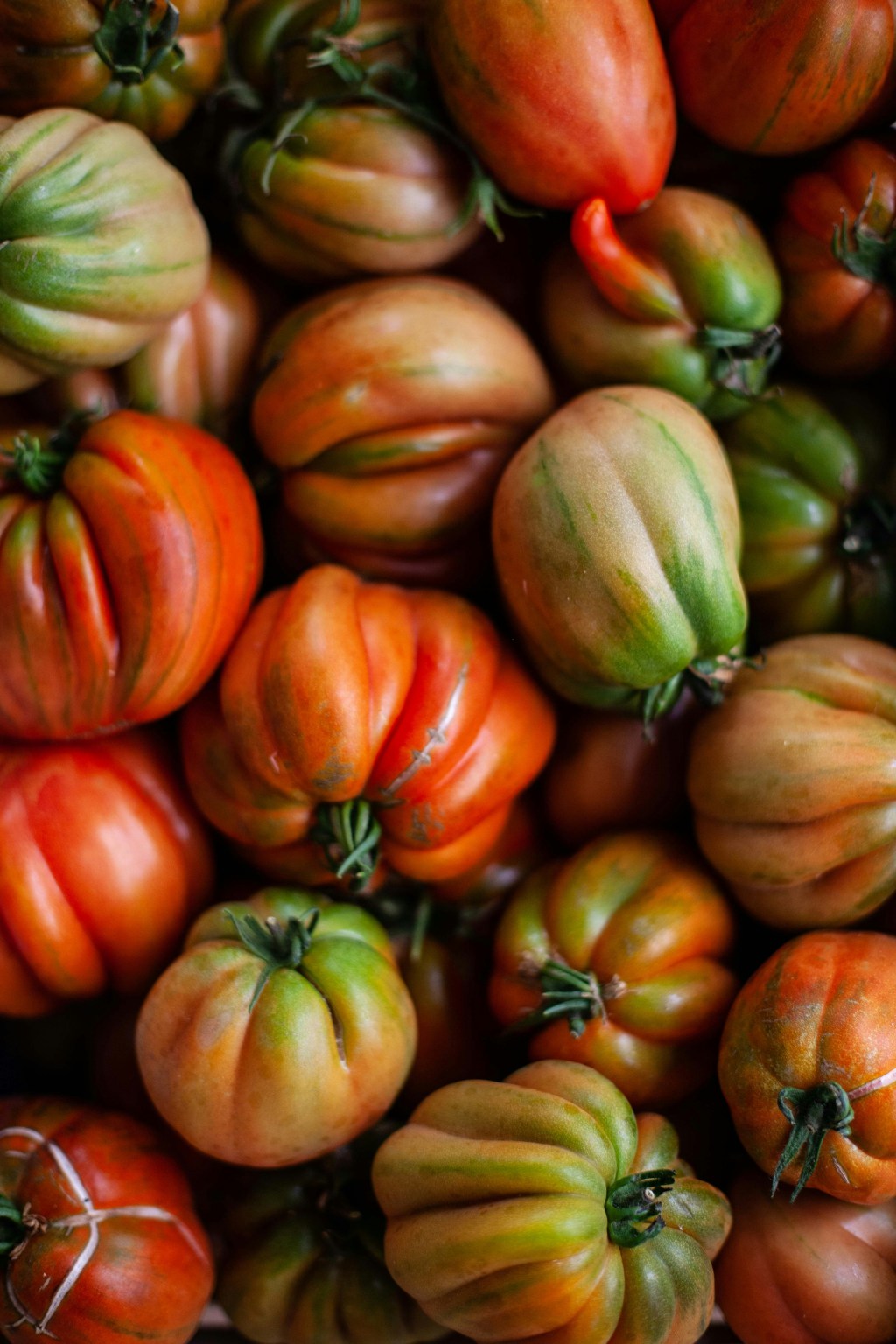
    Featured image by Empreinte, courtesy of Unsplash.

  • “on the brink” by Carolyn R. Russell

    “on the brink” by Carolyn R. Russell

    A cliché is a well-meaning tidbit of wisdom, built upon a solid generational foundation, even it’s meant to be made a mockery of itself. In “on the brink,” Carolyn R. Russell interrogates the very idea of the cliché—why we do and don’t say them, why we do and don’t (or can’t) believe them. In the end, we are only our irreplaceable selves, as diverse as we are divine.  —Court Harler


    most of us can’t afford to go big or go home or do one thing every day that scares us or fail forward. can’t throw a mix of seed and compost into the wind and wait for it to land in the deep pocket of a father’s friend or the ear of a mother’s former lover. if we’re lucky we might conjure a single slender stem, true-leaved and pale, and urge it into a bright and stubborn bloom. the sum of my father’s best intentions and my mother’s cheerful madness: one scrawny green moonshot to carry us all beyond reproach.


    A Best Microfiction winner and a Pushcart Prize, Best of the Net, and Best Small Fictions nominee, CAROLYN R. RUSSELL’s short stories, poetry, and creative nonfiction have been featured in numerous publications. Her collection of cross-genre flash is called Death and Other Survival Strategies (Vine Leaves Press, 2023).


    Featured image by Artiom Vallat, courtesy of Unsplash.