Tag: Flash Fiction

  • “Tufts” by Miriam Mandel Levi

    “Tufts” by Miriam Mandel Levi

    “Tufts” by Miriam Mandel Levi is a ghost story of a flash fiction. You’ll sense a weird chill, and not quite know why. Maybe it’s the way the author captures the ineffable, or the sublime. Or maybe it’s the way the narrator suffers, so alone. Either way, you’ll feel the season’s fear: solitary rambles, falling leaves, peripheral apparitions.  —Court Harler


    A piece protrudes behind my ear, at my waist, so I adjust my hat, tuck in my shirt. You wouldn’t believe how many times I go to the bathroom to check, and it’s a rare bathroom these days that has a full-length mirror.

    Once, in a conversation with a guy at a work, I noticed a piece jutting from my shoulder. I brushed it off with a toss of my hair as if it were a flake of dandruff. Another time, at a bar with friends, I found a few pieces at my feet, and kicked them out of sight. What was that? someone asked. Straw, I think, I said. Maybe by day the bar is a barn and at night they delete the n. They laughed. It takes so little to throw people off your scent.

    In the past, I worried about my dusty, musty scent. Avoided confined spaces, overdid the perfume. I made my movements small and circumscribed so I wouldn’t crackle. Mercifully and sadly, not a single person has ever noticed or let on that they know. True I hid, but only in order to be found.

    My mother used to admonish, Stay out of the wind, remember a cow could take a chunk out of you, don’t get too close to a fire. Of course I know how sorrily and abruptly it could end for me. But after all these years of concealment, I can’t say I’d miss it: life, or loneliness, I mean.

    Over the years, I have searched for someone like me. Looked for a lightness of step, listened for a rustle. I’ve come across people stuffed with cotton batting, wool, feathers, foam, even ball bearings—all trying to pass themselves off as flesh and blood, as if it were some standard of normalcy.

    Sometimes I imagine tearing off my clothes, grabbing tufts from my head and belly, and tossing them into the air like dry fall leaves. You see! I’d shout at no one, until my voice grew hoarse and my clothes sagged and the wind whipped up the long crisp strands and scattered them.


    MIRIAM MANDEL LEVI is a retired speech-language pathologist turned writer and editor. Her work has appeared most recently in JMWW, Flash Frog, The Forge, Under the Gum Tree, River Teeth, and Bending Genres. She is an editor at Under the Sun: A Journal of Creative Nonfiction.


    Featured image by Nellie Adamyan, courtesy of Unsplash.

  • “In bed” by JR Walsh

    “In bed” by JR Walsh

    “In bed” by JR Walsh is a dialogue-driven flash fiction infused with subtext. Picture it: two lovers bedding down for the night, unable to resist talk of the spiritual, the existential, and the psychological, despite their mutual exhaustion. And yet—the sensual, too, simmers just below the surface of their imbricated, complex conversation.  —Court Harler


    One said, Focusing on the enemy is the enemy of true faith.

    The other said, Oh, here we go.

    One said, No, I’m serious.

    The other said, I am sure you are.

    One said, Religion, love.

    The other said, Not tonight, love. I’m not focusing on nothing.

    One said, Years of my life were stolen by religion.

    The other said, Then by using your logic, you shouldn’t focus on it.

    One said, That may be true.

    The other said, Good, let’s talk about anything else.

    One said, But religion is: What. You. Are. Into. It’s your passion.

    The other said, I believe in God.

    One said, And I want you to have your faith.

    The other said, Good, because I’ve got a day off tomorrow and I have faith we won’t do this tomorrow.

    One said nothing.

    The other said, Unless you want to make an enemy.

    One said nothing again.

    The other said, Were you trying to make a point for my benefit?

    One said, I seem to be lacking focus.

    The other said, That is a side effect of your medicine.

    One said, I stopped taking that weeks ago.

    The other said, Why?

    The other also said, Why didn’t you tell me?

    One said, You’d get mad, I figured.

    The other said, You remember what happened last time.

    One said, My memory is fine. Sadly effective.

    The other said, I have wobbly faith that you’ll tell me when you quit your meds.

    One said, I quit my meds.

    The other said, Okay.

    One said, I’m trying to say I think I have strong faith in you….

    The other said, But?

    One said, …but I think I also need to take you for granted.

    After a long pause the other said, Like you’re an agnostic about love.

    One said, Yes?

    Anybody would’ve said, Explain.

    One said, Love, like God, might not exist, but if it does, I have it for you.

    The other said, I can live with that.

    After a long pause one said, Really?

    The other said, No, not at all. I was just hoping you’d fall asleep if I said that.

    The other also said, This conversation is the enemy of sleep.

    One said nothing some more.

    The other said nothing for the first time.

    They said I love you at the same time.

    They said nothing together for a long time.


    JR WALSH teaches creative writing at State University of New York at Oswego. He is the online editor for The Citron Review. His writing is found in beloved publications such as The Greensboro Review, New World Writing, Switch, Litro, The Hong Kong Review, FRiGG, BULL, HAD, Fractured, Taco Bell Quarterly, and Esquire.


    Featured image by zero take, courtesy of Unsplash.

  • “It Was the First Day of Fall When the Sumo Left the Dohyō…” by Mathieu Cailler

    “It Was the First Day of Fall When the Sumo Left the Dohyō…” by Mathieu Cailler

    Fall is a time for favorites: your favorite cozy sweater, your favorite apple, your favorite cat named for your “favorite singer.” As the seasons shift, so too, do you. In this time of transition, read and reflect upon “It Was the First Day of Fall When the Sumo Left the Dohyō…” by Mathieu Cailler, a flash fiction just in time for the autumnal vibe.  —Court Harler


    …and championships and cultural nobility behind. He changed into a Thelonious Monk T-shirt and gray slacks, leaving his mawashi in the changing room at the Gap. He traded in his high-calorie chanko nabe for a crisp Fuji apple at the farmers’ market and downed a glass of buttery chardonnay at the wine bar across town. He abandoned the forceful moves of sumo—yori-kiri, oshi-dashi, uwate-nage—for ballet lessons on pas de bourrée, rond de jambe, and soubresaut. He stopped by a pet store and adopted a cat, which he named Ella, after his favorite singer. He stroked her coat and listened to her purr as he strolled home.

    Maybe the oak tree in his yard had shed some of its leaves. Maybe Ella would like to nest atop them. Maybe he could take pictures of her and post them to Instagram, or maybe instead he’d simply lie down beside her in the soft autumn foliage.


    MATHIEU CAILLER is the author of seven books. His work has appeared in over 150 publications, including Wigleaf, The Saturday Evening Post, and the Los Angeles Times. He is the winner of a Pushcart Prize; a Readers’ Favorite award; and the Paris, Los Angeles, and New England Book Festival prizes.


    Featured image by Aaron Burden, courtesy of Unsplash.

  • “Brief Lives of Garden Insects” by Frances Gapper

    “Brief Lives of Garden Insects” by Frances Gapper

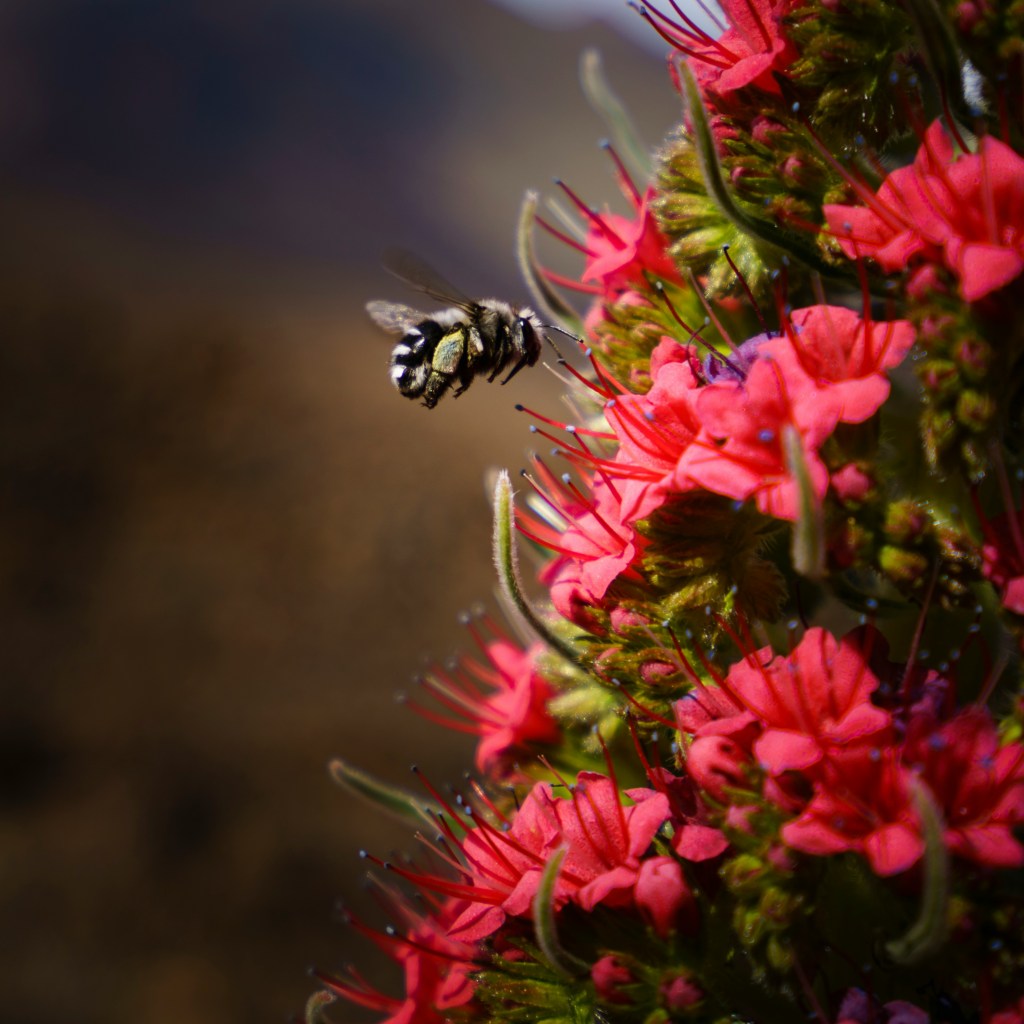
    In “Brief Lives of Garden Insects” by Frances Gapper, bugs are sexy. And fascinating. From “The Dreadfuls” to the “Best in Show,” these miniature, pesky creatures flash in to and out of their own lives. In each numbered segment, they posit quirky but poignant questions about friendship, courtship, and partnership.  —Court Harler


    1

    Jane’s partner Maria’s fifty viviparous adult daughters, aka The Dreadfuls, are visiting in midsummer; staying aeons. Maria says, ‘Spit for luck!’ and Jane gobs up nectar. It’s her own fault for having opted to remain wingless, sans alpha female equipment.

    The Dreadfuls pierce leaves and suck sap, demolish pies, colonise hooks and pegs, flutter-float while eyeing Jane. And give birth. Happening once upon a Dreadful squatting to extrude, Jane detoured around her, pink but smiling.

    After the visit, Maria lies on her back and waves her legs in the air. Grateful for Jane’s billion cups of green tea: ‘I owe you,’ she says.

    Jane’s ex-loves forged independent lives but later grew desperate. She more cautiously chose to attach herself to a thriving family. Or horde, scourge, intrusion. Whatever.

    2

    Jane loves one of her co-grandkids, Jimmie. Anxious re his weakling status – butt of sidebites, target of gunk – she cherished him. Tickled his tum and endured his earwig jokes, beetle jokes, jokes about ants, thrip jokes.

    But getting smart and ignorant, he joined the superhighway. She chased after him: ‘Jimmie-Jim, give me a kiss?’

    ‘Fuck off, Nanny.’ He really said that. And she laughed.

    3

    The way Ant Guy (‘Call me Gorge.’) used to milk Jane, it felt like being given a lovely massage. ‘You’re my favourite cow,’ he’d say. ‘Best in Show. Awarded a rosette.’

    They had a friends-with-benefits relationship. When Jane was being bugged by a predatory midge, Ant Guy zapped it.

    But one day: ‘Where’s Gorge?’

    ‘Deleted. Got too sociable with the livestock.’

    Farm life continues. They ant-handle her, she excretes the honeydew, they cart it off.


    FRANCES GAPPER’s work has been published in four Best Microfiction anthologies and lit mags including trampset, Splonk, Wigleaf, The Forge, Atlas and Alice, 100 word story, Literary Namjooning, and Trash Cat. She lives in the UK’s Black Country region.


    Featured image by Phil Mono, courtesy of Unsplash.

  • “Naked Babies” by Julia Strayer

    “Naked Babies” by Julia Strayer

    In “Naked Babies,” Julia Strayer reexamines the institutions of motherhood and womanhood. The narrator’s voice drips with delusion and sarcasm, but she’s justified in her bold assessment of “mostly women” and “mostly men” who inhabit the world without thinking, without seeing. Flash work embodies the surreal with true verve, and this piece is no exception.  —Court Harler


    Strangers, mostly women, ask if I give the babies names. I stare unblinking and tell the people out loud in my head that they’re stupid for asking. I don’t have time for small talk, though I’m quite skilled at it.

    I ferry a pile of naked baby dolls in the trunk of my ’68 Valiant because I don’t have a station wagon. I unload them upside down by the legs, and I’ve mastered the ability to carry four in one hand at one time, plus my handbag. It’s quite something with all their hair hanging down. I used to cut my dolls’ hair when I was a kid, but I don’t do that anymore.

    I sometimes cut my own hair, and when the scissors don’t behave themselves in the back, I button my hair in a barrette and I don’t look. What I can’t see isn’t important enough for me to worry about.

    When I was little, I wore a scooter helmet inside the house even though I didn’t own a scooter. I found the helmet in the trash out back of Pancake Willy’s on my way home from school. I never found a scooter someone was willing to throw away. If I had, I might have left home forever. I pretended the helmet was an invisibility shield and, when my mother said I was stupid, or ugly, or weird, or that no one would marry me when I grew up, I couldn’t hear her.

    That’s why I practice with the babies, and, except for the naked, upside-down thing, I’m a good mother to them. I know they’re not real. They won’t need helmets if I mess up and become my mother.

    Some strangers don’t talk to me at all. Mostly men. I think it’s my hair. That’s okay. It’s better that way. No chance of having real babies. I can’t risk it.


    JULIA STRAYER has stories in Glimmer Train, Kenyon Review Online, The Cincinnati Review, Jellyfish Review, Flash Frog, HAD, Fractured Lit, Okay Donkey, and others, including The Wigleaf Top 50 and The Best Small Fictions. She’s a submissions editor at SmokeLong Quarterly and teaches creative writing at New York University.


    Featured image by Edz Norton, courtesy of Unsplash.

  • “Inconclusive” by Jack Smiles

    “Inconclusive” by Jack Smiles

    Flash fiction can (and will) run the gamut of human expression. In “Inconclusive,” Jack Smiles utilizes dry humor and sparse but surprising prose to keep the reader riveted until the very end. The overall mood is playfully noir—dark and twisty but also funny and, ultimately, hopeful.  —Court Harler


    My father always said he was a WASP, as in White Anglo-Saxon Protestant, or so I thought. He had no family anyone knew of. He disappeared when I was sixteen, literally, poof, gone. I was curious as hell about him. For my twenty-first birthday my girlfriend gave me a DNA test kit. I learned I was fifty percent Irish, which I expected from my mother’s side, but the other fifty percent? 

    “Inconclusive.”

    Inconclusive? I talked to cousins on my mother’s side who had done the test and none of them had ever heard of inconclusive. I called the 1-800 number, but ran out of patience after the fifth voice prompt. I sent emails, a web form and a letter, that’s right, paper, envelope and stamp. 

    I was seriously thinking about driving to Omaha and camping out in front of the office of the DNA company until someone gave me an answer. But it didn’t come to that. I got a text from a restricted number: 

    “Jane Reilly. Postum, New York. 611 Crandell Street. Inconclusive.”


    611 Crandell was a six-story apartment building. I didn’t have an apartment number. I stepped into the foyer. The door to No. 1 opened. If this was Jane, I hoped to God we weren’t related. She was gorgeous. Tall. Blood red hair. Enormous green eyes. I had red hair and green eyes, too, but nothing like hers.

    “Jane?”

    “Inconclusive. Come in.”

    We sat on stools at the counter bar in her kitchen. She poured wine.

    “Are you drawn to strange things or have odd habits?” she asked.

    I didn’t admit it, but yes. I liked aphids. I never knew why, but I collected them in a glass jar that I kept in the laundry room and watched their tiny black or green bodies shrivel as they died.

    “Do you sleep outside?” 

    Again I couldn’t admit it, but again she was right. I did sleep outside a lot, sometimes in a hole.

    “You are drawn to bright light, aren’t you, and deathly afraid of webs?”

    “Well, we’re all unique.”

    “Unique, indeed,” she said. “Follow me.”

    I’d follow her anywhere.

    We took an elevator to the roof.  She walked to the back edge of the building. We stood side by side looking down at an empty alleyway.

    “We have the same great grandfather,” she said. “He was from….”

    I didn’t hear where he was from. She’d pushed me off.

    So this is how I die, I thought as I fell, and I was so close to discovering my heritage. But my body orientated in midair. My fall slowed. I landed gently on my feet. I looked up. Jane gave me a come-here gesture. My arms went up from my sides. They quivered, faster and faster, making a buzzing sound. I lifted off the ground and flew, floated really, in a meandering pattern back to the roof.

    My father, I realized, really was a WASP.


    JACK SMILES is a former community newspaper feature writer collecting freelance rejections as a hobby in retirement.


    Featured image by Ali Bakhtiari, courtesy of Unsplash.

  • “Sherry’s Migraine Drops By Unannounced” by Kathryn Silver-Hajo

    “Sherry’s Migraine Drops By Unannounced” by Kathryn Silver-Hajo

    In “Sherry’s Migraine Drops By Unannounced,” Kathryn Silver-Hajo captures the essential insidiousness of chronic unseen disability. Through personification, the migraine is somehow made both corporeal and ethereal at the same time. Add the striking companion images of the “crab-footed sparrow” and the “ribbons of purple and yellow,” and we have a powerful flash fiction piece that pierces and provokes.  —Court Harler


    It watches through the picture window. She’s bent over her keyboard frowning, shoulders brick-and-mortar. But it’s an impatient disorder and before long it slithers through a crack, sneaks up behind her and presses on her eyeballs, almost gently at first. Sherry knows it’s right—screen glare and flashing lights are no good for people like her. She should take a break, brew a cup of Darjeeling, sit in the garden, watch the crab-footed sparrow hobble toward the birdbath, tipping one eye toward the water, singing and fluttering its wings in anticipation. But she has a story to complete, a deadline to meet. She ignores her migraine. Maybe this time will be different from all the others. Don’t do this, she pleads. Not now.

    She knows it’s not listening, so she decides to hedge her bets. Close her laptop. If she can’t work, she’ll read. But as she flips the pages of the giant Restoration Hardware catalog that dropped unbidden through the mail slot, the migraine exhales a fiery breath, flips ribbons of purple and yellow across her line of sight, readies its daggers. She drops the catalog, clamps her eyes shut, succumbs to the sofa. I warned you, it hisses.


    KATHRYN SILVER-HAJO’s work appears in Atticus Review, Centaur, CRAFT, Emerge Literary Journal, Ghost Parachute, Gone Lawn, Milk Candy Review, New Flash Fiction Review, Pithead Chapel, Ruby, The Phare, and others. Her award-winning books include flash collection, Wolfsong, and YA novel, Roots of the Banyan Tree. Find her on Facebook @kathryn.silverhajo, Twitter @KSilverHajo, and Bluesky @kathrynsilverhajo.bsky.social.


    Featured image by Laura Barry, courtesy of Unsplash.

  • “After the Movies” by Susan P. Morehouse

    “After the Movies” by Susan P. Morehouse

    “After the Movies” by Susan P. Morehouse is a Southern-style slice-of-life story—a quiet but eerie homage to mothers and daughters and strangers and kindness and “the road unspooling before us.” The slow-and-steady-wins-the-race progression of the narration propels readers toward the inevitable end of the story, which surprises and blesses and satisfies and perplexes.  —Court Harler


    We’re driving home from the movies the long way, past the Beckley work farm, and Mom and me are talking about Butch and Sundance, how you can’t outrun fate no matter what or how gorgeous you are. I’m riding shotgun looking for deer to jump out the corn because we can’t afford to wreck. Mia’s in the back humming “Raindrops Keep Fallin’ on My Head,” and Freddie’s kicking my seat. They were too young for the movie, but we couldn’t leave them home alone.


    Our headlights barely pierce the dark. I turn around about to smack Freddie when Mom starts in on how it’s a men-who-roll-out-the-road night, for sure. “Look there,” she says pointing at a red light moving through the dark before us. “It’s three men with maybe twelve teeth between them and dirty faces throwing the road off the back of their truck that only has one taillight. Who knows where this road’ll take us.” Mom likes making things up, but this story gets to me and I’m looking more at that taillight than for deer.

    Up ahead, the light grows larger. I think we should go back the other way, but now Mom’s stopping for a skinny man in the road holding a lantern. Just a man. The light casts a shadow over his face. “Need a ride, stranger?” Mom says. He slides in the front next to me.

    Now Mom drives squinting into the dark, as if there’s a glare, which there isn’t. No one peeps from the back seat.

    The man’s clothes are too big for him; jeans dried hard on a line, tied with rope at the waist, and a shirt with the cuffs past his wrists. He hugs the door like he’s ready to jump out. He doesn’t smell like anything.

    We drive and drive, the road unspooling before us as if we’ve never been on it before, as if we’re lost, as if people we’ve never met really are making this up as we go along.

    At the bus station, the man thanks Mom in a voice that sounds unused to talking. She hands him something from her purse, and says “God Bless,” which we don’t say at home.

    Before he slides out, he leans into me, his breath hot on my skin. He says, “Girl, you try and grow up kind like your mama,” which I never thought of before.


    SUSAN P. MOREHOUSE’s flash and micros have appeared in Hippocampus Magazine, New Ohio Review, The Dribble Drabble Review, and elsewhere. Her stories and essays have been nominated for Best American Essays, The Pushcart Prize, and Best Microfiction, and she recently was the third-place winner of CRAFT Literary Magazine’s First Chapters Contest.


    Featured image by Guilherme Stecanella, courtesy of Unsplash.

  • “Fifteen Shades of Pink” by Christine H. Chen

    “Fifteen Shades of Pink” by Christine H. Chen

    In this sweet satire of a flash fiction, Christine H. Chen asks her readers to rethink the color pink. Put yourself in the “Pink Panther heels” of the “Chinatown girls,” and then ask yourself why society asks young women, especially young women of color, to be so cutely monochromatic? Chen poses this serious question in a way that playfully demands an answer.  —Court Harler


    Chinatown girls dream of poster Barbie Pink in a mermaid emerald skirt who whirls on her Hot Pink seahorse with bobbing Baby Pink jellyfish, carpets of jade waves weaving on her Blush Pink seafloor; China Rose pearls caress her Salmon Pink skin, her chest twinkles with Flamingo Rose cockles oh how Chinatown girls pine for Barbie Pink’s blond curls, how Chinatown girls bleach their black hair to yellow goldfish, how they nibble on white rice to carve curves, paint eyelids and cheeks Barbie Pink, line lips Neon Pink, how they squeal oh-my-god to each other when they wear tiaras of Crêpe Pink cloudy beads with plastic Piggy Pink peonies, how they strut imaginary catwalks on Pink Panther heels, Peach Pink conch and Punch Pink jingle shells jiggle on bony hips, their footprints like Ballet Slipper Pink limpets clinging to evanescent TikTok dreams wind blowing on sand, oh how Chinatown girls dream of Barbie Pink who gazes on from her Pastel Pink poster until paper turns to puffs of planet dust.


    CHRISTINE H. CHEN was born in Hong Kong and grew up in Madagascar before settling in Boston where she worked as a research chemist. Her fiction has appeared in CRAFT, SmokeLong Quarterly, Space and Time Magazine, as well as the Best Microfiction and Best Small Fictions anthologies.


    Featured image by Girl with red hat, courtesy of Unsplash.

  • “House Rules” by Jeff Harvey

    “House Rules” by Jeff Harvey

    Some of the best flash fiction is haunted flash fiction. “House Rules” by Jeff Harvey is shadowed by the twin spectres of childhood abandonment and abuse. The piece is driven by a coolly deceptive voice that descends from the darkness; the tone hits as supernaturally chilling, but the horrifying situation itself: all too devastatingly real.  —Court Harler


    Keep your shit locked up. Can’t trust nobody around here. Miss Kendall is okay, but she’ll hit you sometimes after she’s had too many beers. And don’t fucking cry, you’ll get it worse from the others, especially Wayne; stay away from him. Dinner always at six-thirty. Tomorrow’s Saturday so after cleaning the house and laundry, we might get to see a movie on a VHS player. Last week we watched The Breakfast Club. It was cool but nobody famous. After the movie we got lemon cookies and raspberry Kool-Aid. Miss Kendall was happy about something; I’d never seen her smile before. I got some oxy that’ll help ease the pain if you want some. Only ten bucks. And don’t ever ask about going home. That place doesn’t exist for kids like us. Only another house to bide our time.


    JEFF HARVEY lives in Southern California and edits Gooseberry Pie Lit Magazine. His fiction has been published recently by Ghost Parachute, Your Impossible Voice, and Bending Genres. His work has been nominated for Best Microfiction.


    Featured image by Nathan Wright, courtesy of Unsplash.