
Tag: Child Narrator

  • “Croc Mother” by Rebecca Klassen

    “Croc Mother” by Rebecca Klassen

    “Croc Mother” by Rebecca Klassen is an edge-of-your-seat read, a speculative microfiction infused with danger from the opening sentence. But the writer doesn’t rely on mere suspense—instead, she delves immediately into the heart of the matter, yet without overexplaining the issue. Through subtext, the microstory’s narrative tension is expertly, terrifyingly, suspended in time.  —Court Harler


    When I was six, I jumped into the crocodile enclosure, compass-point snouts rotating on the water towards me. Mum ran to fetch Dad who I’d last seen hogging a swing in the playground. Not swinging, just scrolling as aggrieved children floated out of swatting distance, like they sensed the things he’d done, things that I never told my nosey teachers and neighbours about, or that social worker who kept steering everything back to Dad whenever I tried to talk about Mum. But the mother croc at the water’s edge was a fantastic listener, smaller than the others who were gliding closer as the zoo goers screamed and filmed me on phones. I told the mother croc about Mum’s delicious meatballs, funny stories about ghosts, feeding the ducks together, and the great raspberries she blew, and how all of it was the best, and she was the best but also the worst.

    Mum came back with Dad as zookeepers sprinted with crackly walkie-talkies, and Dad watched me with folded trunk-arms and that look, and Mum stood behind him with that helplessness that cancelled out the meatballs, stories, ducks, and raspberries. I prised open the mother croc’s jaws and climbed inside her gaping mouth and sat on her spongy tongue. The other crocodiles crawled out of the water towards us as I yanked down on her top teeth, ordering her to close her mouth to protect me, to help me, to just do something.


    REBECCA KLASSEN is co-editor of The Phare and a Best of the Net nominee from Gloucestershire, England. She won the London Independent Story Prize and was shortlisted for the Bridport Prize and Alpine Fellowship. Her stories have featured in Fictive Dream, Mslexia, Flash Frontier, Scribeworth, and New Flash Fiction Review.


    Featured image by Dan Meyers, courtesy of Unsplash.
  • “Red Saturday” by Shira Musicant

    “Red Saturday” by Shira Musicant

    In “Red Saturday,” Shira Musicant focuses on a singular pivotal event, a common technique for micromemoirists. Less commonly, however, Musicant utilizes third-person instead of first-person point of view, which helps to convey the sheer unbelievability of the moment. The child narrator of “Red Saturday” “sits on the curb” and, all alone, “wonders if it was real.”  —Court Harler


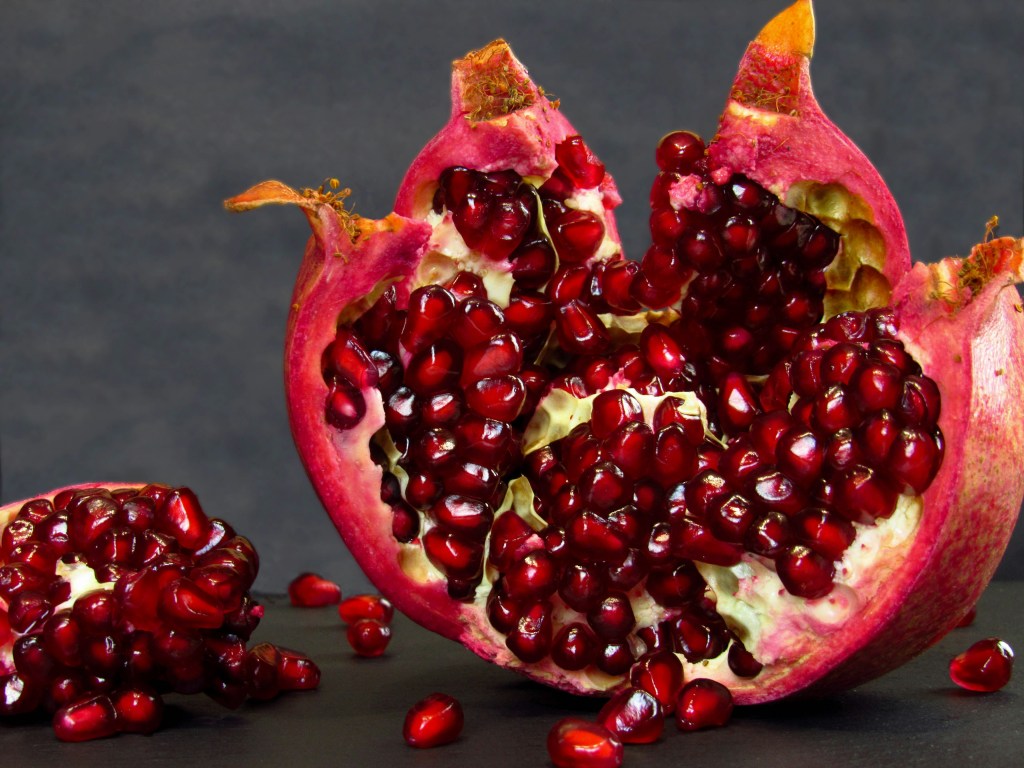
    She sits on the curb at the corner, banished from the house. Dad has given her his old tee shirt, and Mom has cut the pomegranate into pieces, revealing the crevasses where the red seeds hide. She digs her fingers into the fruit. She is red and pink and fuchsia, the tee shirt, her hands, her mouth. The juice is tangy and sweet, the seeds crunchy in her teeth, the voices from the house sharp and bitter.

    She sits on the curb, her feet in the gutter, and a car speeds around the corner, around her resting feet and her red-stained face. She feels the hot whoosh and the way it lifts her hair from her face. When it is gone, she wonders if it was real.

    It happened so quickly, there was no time for fear to take hold.

    After the car, she sits on the curb at the corner wondering if the driver saw her, if she almost died, if Mom and Dad knew what had happened. She has no words to explain the car, no words to explain how big the world and how small her feet in the gutter. The only words she has in that moment are the words she doesn’t know, but hears flung through the house, angry red biting words.  

    She peels back white skin in the pomegranate, uncovering another hidden red cluster of seeds, waiting for her parents to call her back inside.

    Later, Mom throws the tee shirt in the washing machine and scrubs the juice off her face and hands. Later, Dad leaves in his car, backing down the driveway into the street past her corner. She watches him go from the window, waving goodbye, and pressing her hand into the glass, a hand still pink from the scrub and the pomegranate.


    SHIRA MUSICANT, recently retired from her practice as a somatic psychotherapist, writes short fiction and creative nonfiction. Her work has received four Pushcart nominations and can be found in various literary journals including Star 82 Review, Vestal Review, Fourth Genre, SmokeLong Quarterly, Bending Genres, and Milk Candy Review.


    Featured image by Karyna Panchenko, courtesy of Unsplash.